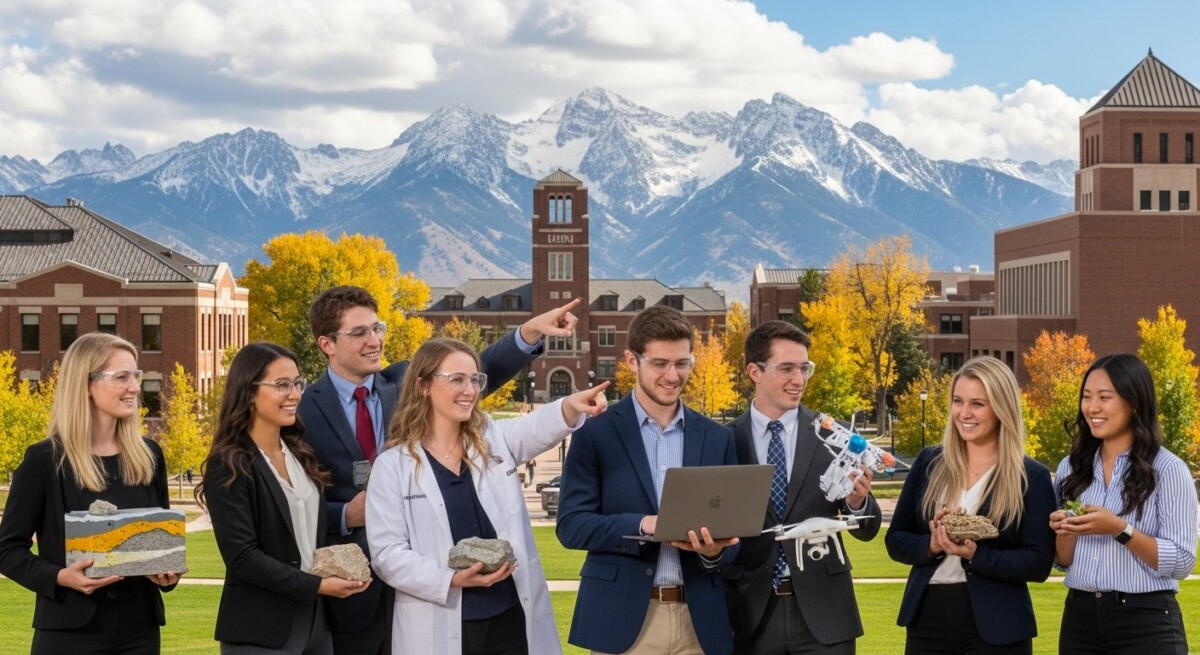
Wyoming’s economy is built on distinct pillars: energy, agriculture, tourism, and a growing technology sector. For students and career changers, choosing a college program that leads directly to a job in this state is critical. Unlike larger states with diverse metropolitan markets, Wyoming offers concentrated opportunities where specific degrees unlock high-demand roles. Understanding which programs provide the best return on investment can save years of uncertainty and student loan debt. This guide examines the degrees and institutions that consistently produce employed graduates in the Cowboy State.
Why Employment Outcomes Matter in Wyoming
Wyoming has a smaller population than many states, which means the job market is tightly connected to local industries. Employers in Cheyenne, Casper, and Laramie often recruit directly from the University of Wyoming and community colleges. Programs that align with state workforce needs, such as nursing, engineering, and energy management, have near-guaranteed placement rates. Students who select majors based on employment data rather than general interest often secure positions before graduation.
The Wyoming Department of Workforce Services regularly publishes data on high-growth fields. These reports show that healthcare, construction management, and information technology are expanding faster than the national average. College programs that incorporate internships, clinical rotations, or apprenticeships give graduates a significant advantage. When evaluating schools, you should look beyond reputation and examine specific job placement statistics for each major.
University of Wyoming: Flagship Programs with Proven Results
The University of Wyoming (UW) in Laramie is the state’s only four-year public research university. It offers several programs that lead to strong employment outcomes, particularly in fields where Wyoming has unique needs. UW’s engineering college, for example, graduates students who often work for energy companies, mining operations, or state infrastructure projects. The school’s career services office reports that 85 percent of engineering graduates have job offers within six months of graduation.
Engineering and Energy Management
Wyoming’s reliance on mineral extraction and energy production means that petroleum engineering, chemical engineering, and energy systems management are particularly valuable. UW’s School of Energy Resources partners with companies like Chevron and Halliburton to provide internships and research opportunities. Students in these programs often complete paid summer internships that transition into full-time roles. The median starting salary for petroleum engineering graduates at UW exceeds $75,000, which is well above the state average for new college graduates.
Nursing and Healthcare Administration
Wyoming faces a chronic shortage of healthcare professionals, especially in rural areas. The Fay W. Whitney School of Nursing at UW offers both undergraduate and graduate programs that address this gap. The BSN program has a 94 percent first-time NCLEX pass rate, and graduates often find employment at hospitals in Cheyenne, Casper, or smaller regional medical centers. The Master of Science in Nursing with a focus on family nurse practitioner is particularly in demand. Many students receive tuition reimbursement from healthcare systems in exchange for a commitment to work in Wyoming after graduation.
Community Colleges: Practical Pathways to Immediate Employment
Wyoming’s seven community colleges serve as critical engines for workforce development. These institutions offer associate degrees and certificates that prepare students for technical roles in welding, diesel mechanics, nursing assisting, and information technology. For many students, these programs provide a faster and more affordable route to a stable career than a four-year degree. The cost per credit hour at Wyoming community colleges is among the lowest in the nation, which reduces student debt burden significantly.
Below are some of the most in-demand community college programs in Wyoming, based on state labor data and employer feedback:
- Diesel Technology (Laramie County Community College): Prepares students for jobs in heavy equipment repair, which is essential for mining and agriculture. Graduates often start at $45,000 to $55,000 per year.
- Nursing Assistant/Patient Care Technician (Casper College): A four-month certificate that leads to entry-level healthcare roles. Many students use this as a stepping stone to LPN or RN programs.
- Wind Energy Technology (Laramie County Community College): Wyoming is a top state for wind energy production. This program trains technicians to maintain turbines, with starting salaries near $50,000.
- Computer Network Administration (Northern Wyoming Community College District): Covers cybersecurity, network setup, and system administration. Graduates fill IT roles in school districts and local government.
These programs are designed with input from local employers. Advisory boards that include business leaders ensure the curriculum matches current industry standards. Students also benefit from externships that count as academic credit.
Online and Hybrid Options for Working Adults
Not all students can relocate to Laramie or attend classes on a traditional campus. For working adults, parents, or those living in remote areas of Wyoming, online degree programs offer flexibility without sacrificing employment outcomes. Several accredited online programs allow students to complete coursework from home while still accessing career placement services. This is especially important for fields like business administration, accounting, and information technology, where remote work is increasingly common.
When evaluating online programs, you should prioritize institutions that offer regional accreditation and robust career support. For example, some programs provide virtual job fairs, resume workshops, and employer networking events. For those exploring academic pathways that fit a busy schedule, academic program insights can help you compare options that align with Wyoming’s job market. Choosing an online degree that includes a practicum or capstone project can make a significant difference in employer perception.
Internships and Apprenticeships as Employment Catalysts
Employers in Wyoming value practical experience as much as academic credentials. Programs that integrate internships or registered apprenticeships produce graduates who are ready to contribute from day one. The state has a robust apprenticeship system supported by the Wyoming Department of Workforce Services, which connects students with paid on-the-job training in fields like electrical work, plumbing, and healthcare.
For example, the University of Wyoming’s College of Business requires all students to complete at least one internship before graduation. This policy has led to a high conversion rate, with many students receiving job offers from their internship hosts. Similarly, Laramie County Community College’s apprenticeship in advanced manufacturing places students at local fabrication plants, where they earn wages while learning. Graduates of these programs often skip entry-level positions and move directly into journeyman or specialist roles.
How to Evaluate a Program’s Employment Success Rate
Making an informed decision requires digging into specific data points. Not all college programs publish transparent employment statistics, but the best ones do. When researching a program, you should ask the admissions office or career services department for the following information:
- Placement rate within six months of graduation: This is the most direct measure of employment success. Look for rates above 80 percent.
- Average starting salary by major: Compare this to the cost of the program. A higher salary may justify higher tuition.
- Employer partners: Schools that work with major Wyoming employers (e.g., Cheyenne Regional Medical Center, Black Hills Energy, the state government) offer stronger pipelines.
- Licensure exam pass rates: For nursing, engineering, and accounting programs, pass rates on professional exams indicate program quality.
- Graduate satisfaction surveys: Alumni feedback about whether their degree prepared them for the workforce is a useful qualitative measure.
Using this framework, you can compare programs across different institutions. For instance, a student interested in healthcare might compare UW’s BSN program with Casper College’s ADN program. The associate degree costs less and takes two years, but the bachelor’s degree offers higher earning potential over a career. Both programs have strong employment outcomes, but the right choice depends on the student’s timeline and financial situation.
For additional guidance on verifying program quality, readers can refer to our resource on accredited degree programs. This guide explains how to check accreditation status and why it matters for employment eligibility.
Frequently Asked Questions
What is the most employable degree in Wyoming right now?
Nursing and petroleum engineering are consistently the most employable degrees. Healthcare and energy are Wyoming’s largest industries, and both face ongoing labor shortages. Registered nurses and petroleum engineers command strong starting salaries and low unemployment rates.
Are Wyoming community college degrees respected by employers?
Yes, especially for technical and trade fields. Wyoming employers often prefer graduates of community college programs because the training is hands-on and directly applicable. Many companies in construction, manufacturing, and healthcare actively recruit from these programs.
Can I get a good job in Wyoming with an online degree?
Yes, if the degree is from an accredited institution and the field is in demand. Online degrees in accounting, IT, and business administration are widely accepted. However, you should ensure the program offers career placement services and that the degree is recognized by Wyoming licensing boards if applicable.
How long does it take to find a job after graduating from a Wyoming college?
Most graduates from top programs find employment within three to six months. Programs with built-in internships often lead to job offers before graduation. The state’s smaller job market means networking and in-person connections are especially important.
Do Wyoming colleges help with job placement after graduation?
Most do, but the level of support varies. The University of Wyoming has a centralized Career Center that offers resume reviews, interview coaching, and job fairs. Community colleges typically have smaller career services offices that focus on local employers. You should ask about specific placement rates for your intended major.
Graduates who want to pursue further education can explore pathways through accredited online associate degree programs, which can serve as a foundation for a bachelor’s degree at UW or out-of-state institutions.
Choosing the right college program in Wyoming is a strategic decision that affects your career trajectory for decades. By focusing on programs with proven employment outcomes, accredited curricula, and strong employer partnerships, you can maximize your return on educational investment. Whether you pursue a four-year degree at the University of Wyoming or a technical certificate at a community college, the key is alignment between your training and the state’s economic needs. Start your research by reviewing labor market reports, speaking with program advisors, and visiting campuses to see the facilities and meet faculty. The effort you invest now will pay off in the form of a stable, well-paying job in one of America’s most unique states.