Navigating the healthcare career ladder can seem daunting, especially for dedicated professionals eager to advance their practice and impact. For licensed practical nurses (LPNs), paramedics, or individuals with a non-nursing bachelor’s degree, the traditional path to becoming a registered nurse (RN) or a nurse with an advanced degree often requires starting from scratch, a prospect that is both time-consuming and financially burdensome. This is where the strategic power of nursing bridge programs comes into play. These innovative educational pathways are designed to build upon your existing knowledge, skills, and experience, providing a streamlined and efficient route to the next level of nursing licensure and expertise. By recognizing your prior education and clinical hours, leading nursing bridge programs empower you to accelerate your career progression, increase your earning potential, and meet the growing demand for highly skilled nurses without repeating foundational coursework.
Understanding the Landscape of Nursing Bridge Programs
Nursing bridge programs are specialized academic tracks that create a “bridge” from one credential or profession to a higher one. They are not a one-size-fits-all solution; rather, they are tailored to different starting points and career goals. The core principle is the awarding of advanced standing or credit for previous education and proven competencies. This model acknowledges that experienced LPNs, for instance, have already mastered fundamental patient care skills, or that a bachelor’s degree holder has developed critical thinking and research abilities applicable to advanced nursing practice. The most reputable programs conduct thorough evaluations of transcripts and professional portfolios to customize a plan of study that avoids redundancy and focuses on new, advanced material essential for the target role.
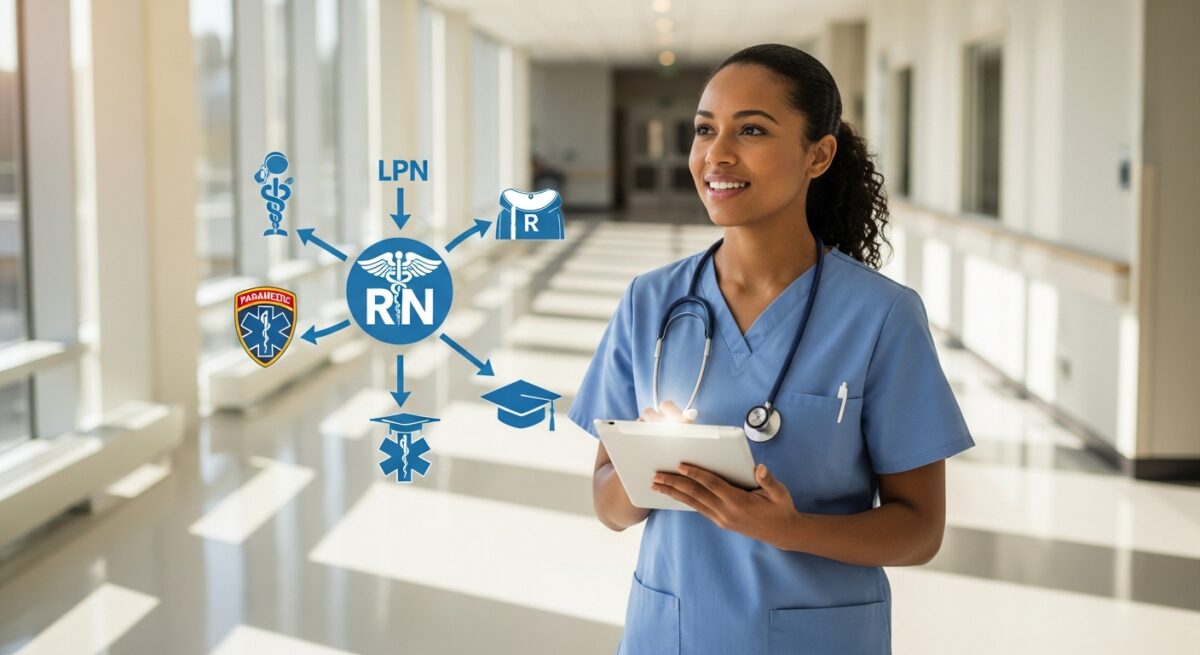
The primary types of bridge programs form the backbone of career mobility in nursing. The LPN to RN (or LPN to ADN/BSN) bridge is a common entry point, allowing licensed practical nurses to become registered nurses. For those already holding an RN license with an associate degree, the RN to BSN bridge is a pivotal step, increasingly required by magnet hospitals and for roles in leadership, public health, or specialty nursing. The most accelerated path for non-nurses with a bachelor’s degree in another field is the Accelerated BSN (ABSN) or Direct-Entry MSN. At the graduate level, RN to MSN programs allow associate-degree RNs to earn both a bachelor’s and a master’s degree in an integrated, efficient sequence, bypassing the standalone BSN. Finally, for BSN-prepared nurses aiming for advanced practice or leadership, the BSN to DNP (Doctor of Nursing Practice) bridge represents the pinnacle of clinical doctoral preparation.
Key Attributes of a High-Quality Bridge Program
Identifying a leading program requires looking beyond basic accreditation. First and foremost, ensure the program holds accreditation from either the Commission on Collegiate Nursing Education (CCNE) or the Accreditation Commission for Education in Nursing (ACEN). This is non-negotiable for licensure eligibility, federal financial aid, and employer recognition. Secondly, examine the program’s articulation agreements. Strong programs have formal partnerships with community colleges and other institutions, ensuring a smooth transfer of credits and a clear, guaranteed pathway. Thirdly, investigate NCLEX-RN or certification exam pass rates, which are a strong indicator of program effectiveness and graduate readiness. High pass rates suggest a curriculum that successfully prepares students for the rigors of licensure and practice.
Evaluating Program Format and Flexibility
The delivery format of a bridge program is a critical consideration for working healthcare professionals. Leading institutions have adapted to offer robust online degrees in nursing-focused education, providing the asynchronous flexibility needed to balance clinical shifts, family obligations, and studies. However, the best online nursing bridge programs are not entirely remote; they typically follow a hybrid model. Didactic coursework—lectures, readings, discussions—is conducted online, while clinical rotations, skills labs, and intensives are completed in person at approved healthcare facilities near the student. This blend ensures the acquisition of both theoretical knowledge and hands-on, competency-based clinical experience.
When assessing flexibility, consider factors like cohort models versus self-paced progress, the availability of multiple start dates per year, and the structure of clinical placements. Does the program assist in securing clinical sites, or is that responsibility placed on the student? A supportive program will have a dedicated clinical coordination team. Furthermore, evaluate the technological support and student services offered to online learners, including 24/7 library access, tutoring, writing centers, and dedicated academic advising. These resources are vital for success in an accelerated, demanding curriculum.
The Core Benefits of Accelerated Nursing Pathways
Choosing a leading nursing bridge program unlocks a suite of professional and personal advantages. The most immediate benefit is time savings. An LPN to RN bridge can often be completed in 12-18 months, compared to 2-3 years for a traditional ADN. An RN to BSN online program can frequently be finished in as little as 12-15 months of full-time study. This accelerated timeline allows you to enter the higher job market and start earning an RN or BSN-level salary much sooner.
Financial efficiency follows closely. By granting credit for prior learning, you pay for fewer credits overall. While the per-credit cost might be similar to a traditional program, the total tuition cost is typically lower because the program is shorter. This, combined with the earlier career advancement, leads to a faster return on investment. Professionally, bridge programs open doors to specialties that require a BSN or MSN, such as critical care, oncology, informatics, or nurse education. They fulfill the educational requirement for entrance into graduate programs (MSN, DNP) and are increasingly a baseline for management, coordinator, and public health nursing roles. The curriculum in these programs is designed to elevate your practice, focusing on leadership, evidence-based practice, community health, and systems thinking—skills that directly translate to improved patient outcomes and greater autonomy.
To summarize, the strategic advantages of enrolling in a top-tier bridge program are clear:
- Accelerated Career Advancement: Move to a higher licensure and pay grade in a fraction of the time of traditional routes.
- Financial Prudence: Reduce overall education costs by leveraging existing credits and experience.
- Enhanced Clinical Competence: Build on your current skills with advanced training in leadership, research, and specialized care.
- Greater Career Mobility: Qualify for specialized nursing roles, hospital promotions, and graduate-level education.
- Meeting Industry Demand: Position yourself at the forefront of addressing the nursing shortage with in-demand credentials.
Selecting the Right Program for Your Goals
The decision requires careful self-assessment and research. Begin by clarifying your ultimate objective: Do you want to become an RN, obtain your BSN for broader opportunities, or aim directly for an advanced practice role like Nurse Practitioner? Your starting point (LPN, ADN-RN, non-nurse bachelor’s) will determine which bridge path is available to you. Next, create a list of non-negotiable criteria, such as 100% online coursework availability, specific specialty tracks, or a program duration under two years.
Proceed with meticulous research. Visit program websites and attend virtual information sessions. Speak directly with admissions counselors and, if possible, current students or alumni. Key questions to ask include: What is the exact total cost, including fees? How are clinical placements handled? What is the structure of student support? Crucially, verify state authorization for online programs; the institution must be authorized to offer the program in your state of residence for you to be eligible for licensure there. Finally, prepare a strong application. Bridge programs are competitive and seek candidates who demonstrate clear potential for success in a rigorous, fast-paced environment.
A compelling application for leading nursing bridge programs typically includes:
- A High GPA: Most require a minimum 3.0 in previous college coursework, especially in science prerequisites.
- An Unencumbered License: For LPNs and RNs, an active, unrestricted license in good standing is mandatory.
- Prerequisite Completion: Courses like anatomy, physiology, microbiology, and statistics must often be completed with a grade of B or higher.
- Professional Experience: Many programs require one to two years of full-time clinical experience.
- Strong Letters of Recommendation: These should come from nursing supervisors or professors who can attest to your clinical skills and readiness for advanced study.
- A Purposeful Personal Statement: Articulate your career vision, why you are choosing the bridge path, and how you will contribute to the nursing profession.
Thorough preparation in these areas significantly strengthens your candidacy for these selective and impactful programs.
The Future of Nursing Education and Career Mobility
The trajectory of healthcare continues to emphasize higher levels of education for nurses. The seminal Future of Nursing reports have long advocated for increasing the proportion of BSN-prepared nurses to 80% and removing barriers to advanced practice. Bridge programs are the central engine for achieving these goals. They directly address the educational gap in the current nursing workforce in a practical, respectful, and efficient manner. As technology evolves, we can expect these programs to integrate more immersive simulation, adaptive learning platforms, and telehealth practicums, further enhancing accessibility and relevance.
For the ambitious healthcare professional, these pathways represent more than just a degree; they are a transformative investment. They validate your past experience while equipping you with the tools for future leadership. By carefully selecting a reputable, accredited bridge program that aligns with your lifestyle and aspirations, you are not just changing your job title—you are expanding your capacity to influence patient care, lead healthcare teams, and shape the systems in which you work. The journey through a bridge program is demanding, but the destination—a more fulfilling, impactful, and sustainable career at the forefront of nursing—is unequivocally worth the commitment.