
Building Clinical Expertise: The Core of Nursing Education
Expert education for future nurses builds clinical judgment and resilience through immersive simulation, deep science, and strong mentorship, creating adaptable, confident practitioners.

By Giovanna Rivera
The journey to becoming a nurse is a profound commitment, not merely to a career but to a vocation demanding profound knowledge, technical skill, and human compassion. While foundational training is necessary, the evolving complexity of healthcare, driven by technological advances, an aging population, and intricate comorbidities, demands a higher standard of preparation. The future of patient safety and quality care hinges on moving beyond basic competencies to fostering true clinical expertise. This requires a deliberate educational paradigm shift, one that prioritizes deep learning, critical thinking, and immersive clinical judgment from the very start of a nurse’s training. Expert education for future nurses is not an optional upgrade; it is the essential framework for building a resilient, adaptive, and highly capable healthcare workforce.
The Pillars of Expert Nursing Education
Expert nursing education is distinguished by its depth and integration. It moves past rote memorization of procedures to cultivate a nurse who can think like a clinician. This approach rests on several interconnected pillars that transform a student into a proficient practitioner. The first is a rigorous, science-driven curriculum that treats nursing theory and hard science as inseparable. Anatomy, physiology, pharmacology, and pathophysiology are not standalone classes but the foundational language for understanding patient presentations and interventions. This scientific literacy enables nurses to understand the ‘why’ behind every action, making them proactive partners in care rather than just task executors.
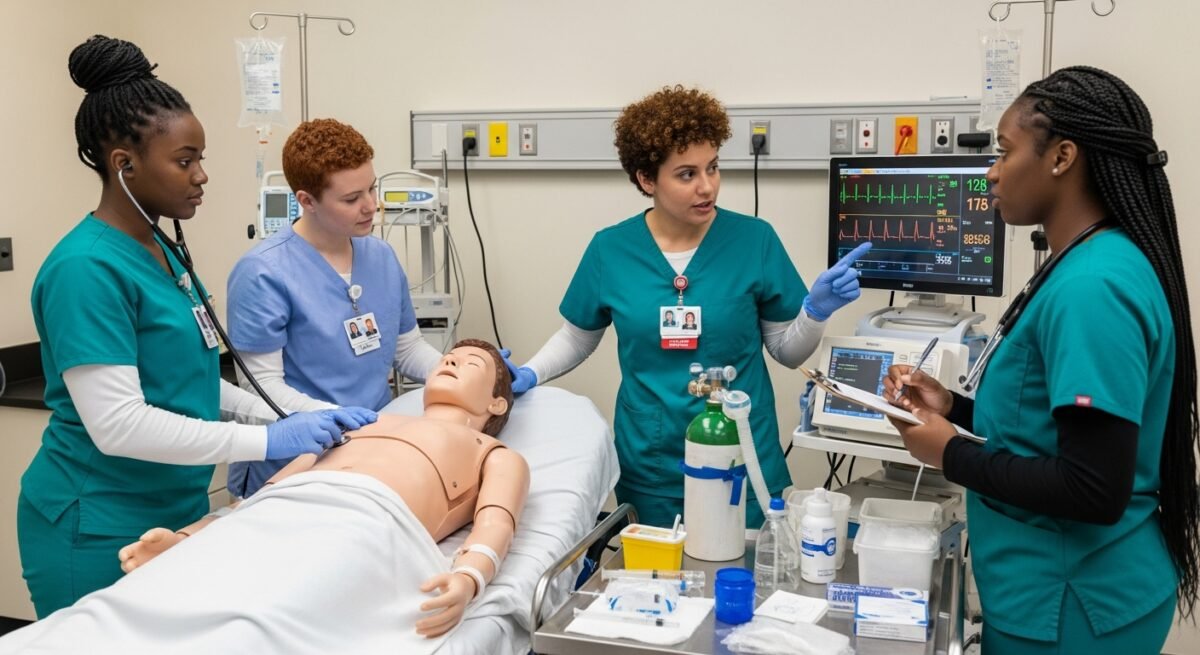
The second pillar is the deliberate cultivation of clinical judgment. This is the cognitive engine of nursing: the ability to notice relevant cues, interpret data, prioritize responses, and evaluate outcomes in dynamic, often ambiguous situations. Modern educational strategies, such as high-fidelity simulation and case-based learning, are critical here. In a simulation lab, students can safely manage a patient’s sudden cardiac decompensation or a complex medication error, receiving immediate feedback on their decisions. This repeated, guided practice in risk-free environments builds the mental models necessary for real-world crises. Furthermore, integrating concepts like the Clinical Judgment Measurement Model (CJMM) into coursework provides a structured framework for students to articulate and refine their thinking processes.
A third, often underestimated pillar is the development of systems thinking and leadership. Nurses are at the hub of the healthcare system, coordinating with physicians, therapists, social workers, and families. Expert education must, therefore, include training in interprofessional communication, healthcare informatics, and quality improvement principles. Understanding workflow, resource management, and how to advocate within a system empowers nurses to not only provide excellent individual care but also to improve the care environment for all patients. This systems awareness is what separates a competent staff nurse from a future charge nurse, educator, or administrator.
Beyond the Classroom: Immersive Clinical Experiences
Classroom and simulation learning must be seamlessly coupled with transformative clinical placements. The traditional model of shadowing and performing discrete tasks is insufficient for developing expertise. Instead, education programs must forge partnerships with clinical sites committed to a true preceptorship model. In this model, the student is progressively integrated into the preceptor’s assignment, assuming responsibility for patient care under close, expert guidance. This allows for continuity, where the student follows patient outcomes over shifts, witnessing the full arc of an illness and recovery.
The quality of the preceptor is paramount. Programs must invest in training their clinical partners to be educators themselves, skilled in the Socratic method: asking probing questions, encouraging exploration of alternatives, and guiding reflection. A masterful preceptor does not simply provide answers but challenges the student to articulate their rationale, consider evidence, and learn from both successes and mistakes. This mentorship relationship is perhaps the single most influential component of clinical education. To build true competency, these placements should also expose students to a variety of settings beyond the acute care hospital, including community health, public health, mental health facilities, and long-term care. This breadth builds adaptability and a holistic understanding of the patient journey across the care continuum.
Integrating Technology and Adaptive Learning
The modern healthcare landscape is digitally integrated, and nursing education must mirror this reality. Expert education leverages technology not as a gimmick but as a core pedagogical tool. Adaptive learning platforms can personalize the theoretical foundation, identifying knowledge gaps for individual students and providing targeted content until mastery is achieved. This ensures that every student enters the clinical setting with a solid, uniform knowledge base, allowing instructors to focus on higher-order application.
Virtual reality (VR) and augmented reality (AR) are moving beyond novelty into essential training tools. VR can immerse a student in a high-stress emergency department scenario or allow them to ‘walk through’ human anatomy in three dimensions. AR can overlay diagnostic information or procedural steps onto a training manikin. Furthermore, fluency with Electronic Health Records (EHRs) must be baked into the curriculum. Students should practice documentation, order reconciliation, and data retrieval in training EHRs that mirror those used in practice. This reduces the ‘transition shock’ new graduates often face and allows them to use the EHR as a clinical decision-support tool from day one. The strategic use of technology enables scalable, repeatable, and deeply engaging learning experiences that complement hands-on practice.
Fostering Resilience and Professional Identity
Technical skill and knowledge are futile without the resilience to apply them under pressure. Expert education explicitly addresses the psychological and emotional demands of nursing. This involves teaching evidence-based stress management techniques, ethical decision-making frameworks, and principles of self-care and professional boundaries. Courses on moral distress, compassion fatigue, and burnout prevention should be standard, equipping students with the vocabulary and tools to protect their own well-being, a non-negotiable prerequisite for sustaining a long career.
Concurrently, education must actively cultivate a strong, positive professional identity. This means moving the student’s self-concept from ‘student nurse’ to ‘nurse-in-training.’ It involves understanding nursing’s historical context, its ethical mandates, and its role as an autonomous profession within the healthcare team. Activities like participating in professional nursing organizations, engaging in policy discussions, and undertaking quality improvement projects help students internalize their role as advocates and leaders. A nurse with a strong professional identity practices with confidence, collaborates effectively, and drives the profession forward. The following elements are critical for building this resilience and identity:
- Debriefing Culture: Formal, structured debriefing after simulations and challenging clinical events to process emotions and extract learning.
- Mindfulness and Communication Training: Skills for staying present, managing anxiety, and conducting difficult conversations with patients and families.
- Interprofessional Education (IPE): Joint training sessions with medical, pharmacy, and social work students to break down silos and build team-based identity.
- Leadership Rotations: Experiences with nurse managers, clinical nurse specialists, and infection preventionists to see the breadth of the nursing role.
By embedding these supports, educational programs produce nurses who are not only clinically superb but also psychologically equipped to thrive. This holistic focus on the person behind the professional is what ensures the longevity and satisfaction of the nursing workforce, directly impacting patient care quality and safety.
The Path Forward for Nursing Programs
Implementing this vision of expert education requires intentional investment and collaboration from nursing schools, healthcare institutions, and accrediting bodies. Curriculum must be constantly evaluated and updated in partnership with frontline nurse leaders to ensure relevance. Faculty need support and time to develop expertise in simulation design, educational technology, and advanced pedagogies. Clinical partnerships must be viewed as strategic alliances, with hospitals and schools co-investing in preceptor development and creating dedicated education units.
Ultimately, the goal is to create a seamless continuum of learning that begins in pre-licensure education and extends throughout a nurse’s career. The expert education of future nurses sets the trajectory for lifelong learning, specialization, and leadership. It is an investment with an immeasurable return: a generation of nurses prepared not just to enter the workforce, but to shape the future of healthcare with confidence, competence, and unwavering compassion. By championing this deep, immersive, and holistic model, we honor the complexity of the nursing role and fulfill our collective responsibility to both the caregivers and the patients they serve.