
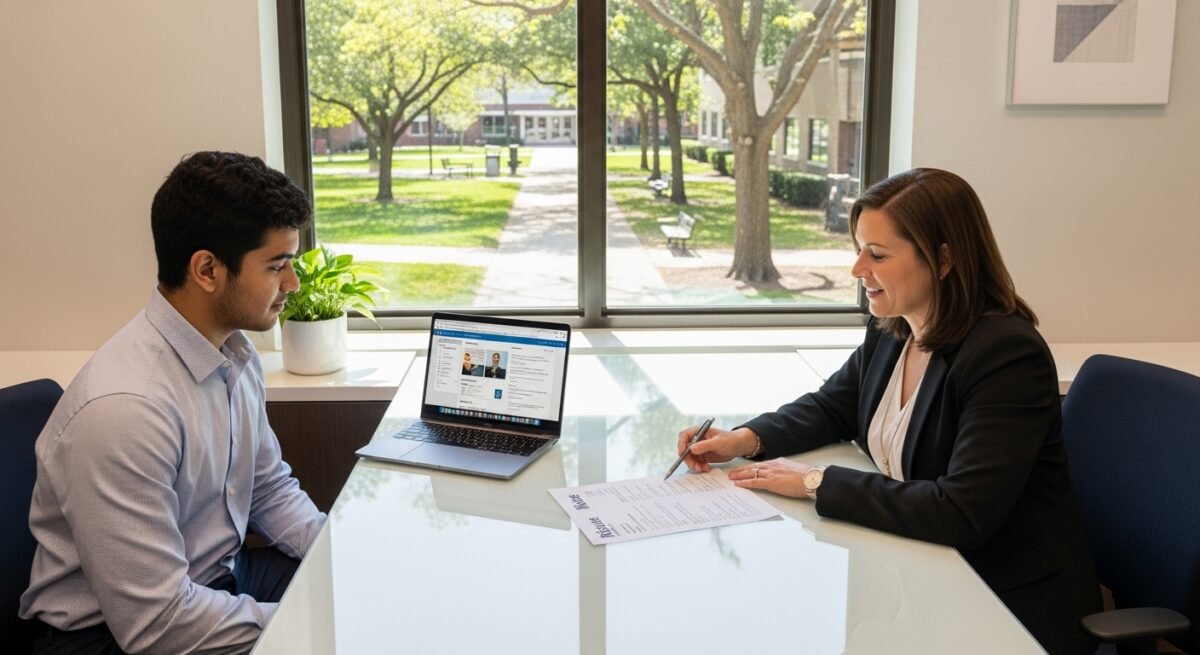
Degrees With Career Coaching: A Strategic Path to Employment
Degrees with career coaching integrate professional strategy into academics, leading to higher employment rates and salaries. This model provides a structured path from classroom to career.

By Stacy Cignetti
Choosing a college degree is a significant investment, but the ultimate return is measured in career success and fulfillment. In today’s competitive job market, academic knowledge alone is often insufficient. This reality has given rise to a powerful educational model: degrees with career coaching integrated directly into the curriculum. These programs recognize that securing a great job requires a dual focus, mastering your field while also mastering the job search process itself. They bridge the gap between the classroom and the boardroom, offering a structured, supportive pathway from enrollment to employment. For students and career changers alike, this integrated approach transforms the degree from a passive credential into an active launchpad for professional life.
The Integrated Advantage: Why Coaching Belongs in Your Degree
The traditional model separates education and career services, often leaving students to navigate a complex job market with sporadic, generic advice after graduation. Degrees with embedded career coaching dismantle this silo. From day one, career development is treated as a core academic component, not an optional add-on. This integration ensures that every academic assignment, project, and skill learned is consciously connected to real-world applications and career goals. The coaching relationship is sustained over months or years, allowing for deep personalization. A coach can help you identify niche specializations within your major, tailor your course selections to build a competitive skill set, and strategically seek out relevant internships or project work. This long-term partnership means your coach understands your evolving strengths, weaknesses, and aspirations, enabling guidance that is far more impactful than a single resume review.
This model is particularly valuable in addressing the “skills gap” often cited by employers. While you learn theoretical frameworks in class, your career coach helps you translate that knowledge into the specific competencies, software proficiencies, and industry jargon required for your target roles. They provide the context that turns academic learning into professional readiness. Furthermore, this integrated support significantly reduces post-graduation anxiety. The daunting transition from student to professional is managed in steps, with a trusted advisor providing structure and accountability. You graduate not just with a diploma, but with a refined resume, a robust professional network, practiced interview skills, and a clear strategic plan for your job search.
Identifying Programs With True Career Integration
Not all programs that mention “career support” offer the deep, integrated coaching model described here. When researching degrees with career coaching, it is crucial to look beyond marketing buzzwords and assess the structure and substance of the offering. The most effective programs formalize the coaching relationship, assigning you a dedicated career advisor or coach for the duration of your studies. This contrasts with a general career services office where you might see a different counselor each visit.
To evaluate a program’s commitment, investigate the following key components. A strong program will typically feature most, if not all, of these elements integrated into the degree pathway.
- Dedicated, Assigned Coaching: You have a primary point of contact, a professional coach who gets to know you and your goals personally.
- Curriculum Integration: Career development modules, workshops, or even for-credit courses are part of the required curriculum, not optional extras.
- Early and Ongoing Engagement: Coaching begins in the first term or year and continues through graduation and often for a period afterward (e.g., six months to a year post-graduation).
- Industry-Specific Guidance: Coaches have expertise in the specific industries related to the degree, offering insights on trends, key employers, and necessary certifications.
- Metrics and Accountability: The program sets clear milestones (e.g., building a LinkedIn profile by Term 1, completing a mock interview by Term 3, securing an internship by Term 4) and the coach holds you accountable.
When speaking with admissions counselors, ask specific questions about the coaching model. Inquire about the typical background of the coaches, the frequency of one-on-one sessions, and how coaching objectives are aligned with academic coursework. A robust program will have clear, detailed answers. Exploring comprehensive degree pathways for students can often highlight which institutions and programs are pioneering this integrated support model, giving you a clearer starting point for your research.
Core Components of an Effective Career Coaching Curriculum
What exactly do you do in these coaching sessions? Effective career coaching within a degree program is multifaceted and progressive. It moves from self-discovery and planning to execution and negotiation. The process is designed to build upon itself, ensuring you are fully prepared when it’s time to launch your job search.
The first phase typically focuses on assessment and goal clarification. Using personality inventories, skills assessments, and values exercises, you and your coach work to define a career vision that aligns with who you are and what you want from your professional life. This foundation is critical for making informed decisions about specializations, internships, and elective courses. The next phase involves strategic personal branding. This goes far beyond writing a resume. It encompasses crafting a compelling LinkedIn profile, developing an “elevator pitch,” building a professional portfolio (especially important in fields like design, writing, or tech), and learning how to articulate your academic experiences as professional assets.
A major, ongoing component is network development. Coaches teach proactive networking strategies, guide students in leveraging platforms like LinkedIn, and often facilitate connections with alumni and industry partners. They may host networking simulations or “meet-and-greet” events. Finally, the coaching intensifies around job search execution. This includes advanced interview training (behavioral, technical, and case-style), salary negotiation workshops, and strategies for evaluating job offers. The coach acts as a strategist and a sounding board throughout the actual application and interview process.
Maximizing Your Investment in a Coached Degree Program
Enrolling in a degree with career coaching is a proactive step, but the return on your investment depends heavily on your level of engagement. To fully benefit, you must be an active partner in the process. This means preparing for coaching sessions with specific questions or updates, completing any assigned exercises (like informational interview outreach or portfolio updates), and being open to constructive feedback. Your coach is a guide, not a magician, your effort directly correlates with the outcomes.
Proactively use your coach to pressure-test your ideas. If you are interested in a particular industry, ask your coach to help you set up informational interviews with alumni. Before choosing a capstone project topic, discuss which projects would most impress your target employers. When you receive an internship offer, use your coach’s expertise to evaluate the role’s long-term value for your resume. This level of strategic integration is what sets these programs apart. Furthermore, view your coach as a connector. Express your interests clearly so they can tap into their network and resources on your behalf. The relationship is a two-way street, built on clear communication and mutual commitment to your defined goals.
Frequently Asked Questions
Are degrees with career coaching more expensive?
Sometimes, but not always. Many universities are incorporating this model into their standard tuition for specific, often professionally-oriented, programs. The key is to evaluate the potential return on investment. The higher starting salary, reduced time-to-employment, and better job fit facilitated by intensive coaching can quickly offset a modestly higher tuition cost. Always compare the full package of support, not just the tuition sticker price.
Is this model only for business or tech degrees?
While prevalent in MBA, computer science, and engineering programs, the model is expanding rapidly. You can now find robust degrees with career coaching in fields like healthcare administration, data analytics, public policy, communications, and even the arts. The coaching is tailored to the norms and opportunities of that specific field.
How does this differ from my college’s general career center?
General career centers offer valuable services, but they are typically designed for high-volume, short-term interactions. Integrated coaching provides a consistent, long-term, and deeply personalized partnership. It’s the difference between getting occasional advice and having a dedicated strategist on your team for the entire duration of your academic journey.
What should I ask to verify the quality of a program’s coaching?
Ask for details: “How many one-on-one sessions are guaranteed per semester?” “What is the background and industry experience of the coaches?” “Can you share metrics on job placement rates and average starting salaries for graduates?” “How is the coaching curriculum structured and integrated with my academic courses?”
Is career coaching useful for online degree students?
Absolutely. In fact, it can be even more critical for online learners who may not have physical access to campus networks. Virtual coaching sessions, online career workshops, and digital networking events are core components of quality online degrees with career coaching, ensuring remote students receive equivalent support.
Pursuing a degree with career coaching represents a modern, strategic approach to higher education. It acknowledges that a successful career requires both expertise in a discipline and expertise in navigating the professional world. By choosing a program that blends these elements seamlessly, you invest not only in your education but also in your employability. You gain a trusted advisor, a structured plan, and a significant competitive edge. In an era where a degree is a necessary but not sufficient condition for career success, this integrated model provides the missing link, transforming academic effort into tangible professional achievement and setting a clear trajectory for long-term growth.