
Fairmont State Mechanical Engineering Tech Bachelor's
Earn a hands-on Mechanical Engineering Technology bachelor's degree in 4 years at Fairmont State. Gain practical skills and strong career outcomes.

By Emily Foster
Choosing the right engineering program can feel like standing at a crowded intersection with no street signs. You know you want to build things, solve problems, and work with machines, but the path from interest to career is not always obvious. A Mechanical/Mechanical Engineering Technology/Technician Bachelor's degree, usually 4 years In-person at Fairmont State University, offers a clear, hands-on route for students who prefer applied learning over abstract theory. This program blends engineering fundamentals with practical laboratory experience, preparing graduates for immediate entry into industries like manufacturing, energy, and aerospace. If you are weighing your options for a four-year technical degree, understanding what Fairmont State offers, how it differs from a traditional engineering track, and what outcomes you can expect will help you make a confident decision.
What the Mechanical Engineering Technology Degree at Fairmont State Covers
Fairmont State University, located in Fairmont, West Virginia, has built a reputation for accessible, career-focused education. The Bachelor of Science in Mechanical Engineering Technology (sometimes referred to as Mechanical Engineering Technician) is designed for students who want to apply engineering principles in real-world settings. Unlike a pure mechanical engineering degree, which leans heavily into calculus, physics, and theoretical design, this program emphasizes the application of engineering concepts through hands-on projects, laboratory work, and industry-standard software.
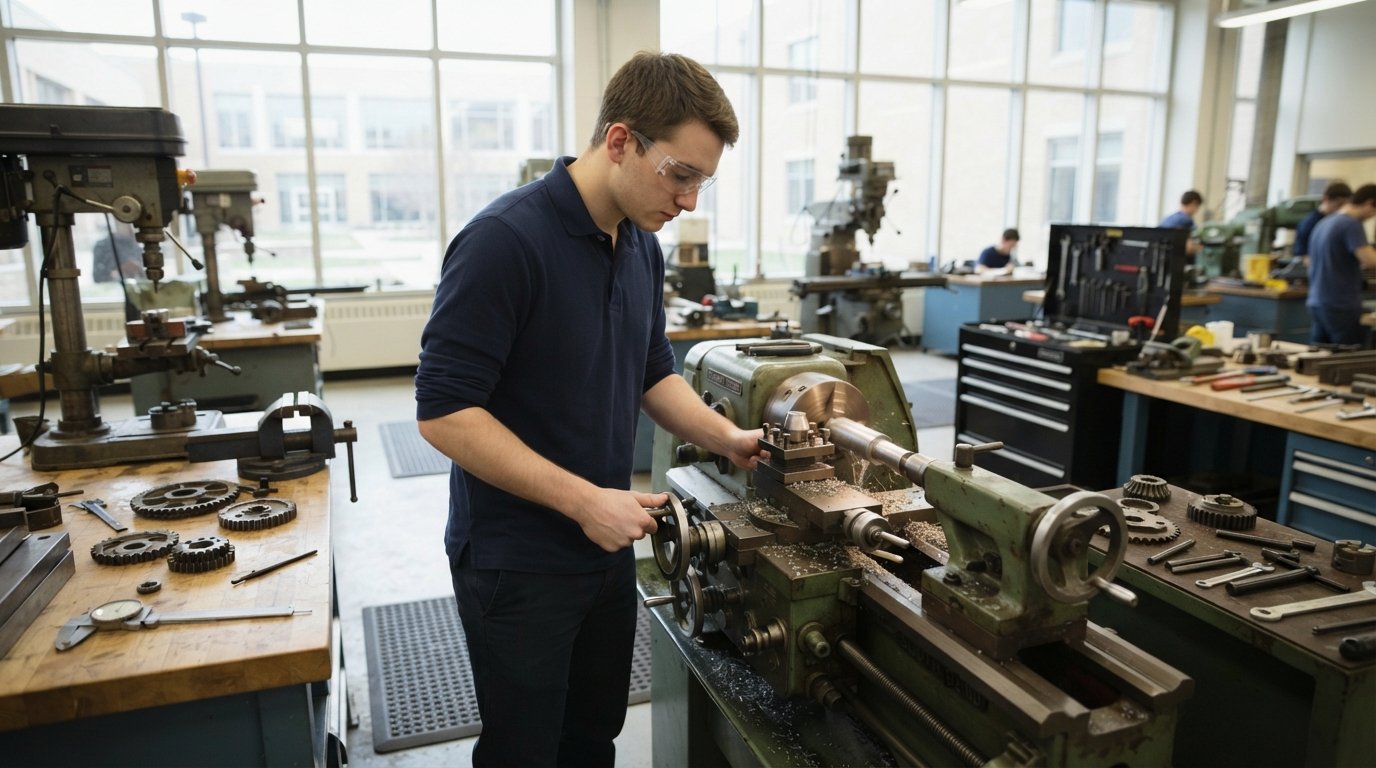
The curriculum typically spans four years of full-time, in-person study. Students take courses in statics, dynamics, thermodynamics, fluid mechanics, materials science, and computer-aided design (CAD). But the heart of the program lies in its applied nature: you will spend significant time in labs, working with actual machinery, testing materials, and building prototypes. This practical focus means graduates often enter the workforce with a portfolio of tangible skills, not just theoretical knowledge.
Because the program is delivered in person, students benefit from face-to-face interaction with faculty who often have industry experience. Small class sizes and accessible instructors create an environment where questions are encouraged and mentorship happens naturally. If you are someone who learns best by doing, this format may suit you better than an online or hybrid program. For a comparison of how other universities structure their in-person technical degrees, you might find value in resources like our BYU Computer Science Bachelor's Degree guide, which explores similar four-year, campus-based learning models.
Core Coursework and Hands-On Learning
The curriculum is structured to build competence progressively. In the first two years, students establish a foundation in mathematics, physics, and engineering graphics. Courses like Engineering Materials and Manufacturing Processes introduce the properties of metals, plastics, and composites, along with the methods used to shape them. Students learn to read and create technical drawings using CAD software, which is a critical skill in any engineering technology role.
In the third and fourth years, the focus shifts to more complex systems. Thermodynamics and heat transfer courses explore energy systems, while machine design and kinematics delve into the mechanics of moving parts. A capstone project, often completed in the senior year, challenges students to design a functional system or solve a real-world problem for an industry partner. This project serves as a bridge between academic learning and professional practice, giving graduates a concrete example of their capabilities to show employers.
Beyond the core, students may choose technical electives in areas like robotics, automation, or renewable energy. These electives allow you to tailor your degree to your career interests, whether you want to work in power generation, automotive design, or advanced manufacturing. The in-person format means you have direct access to the labs and equipment needed for these specialized topics, something that can be challenging to replicate online.
Mechanical Engineering vs. Mechanical Engineering Technology: What Is the Difference?
Prospective students often confuse mechanical engineering (ME) with mechanical engineering technology (MET). While both fields overlap in subject matter, they differ significantly in focus and career trajectory. A traditional ME degree is more theoretical, emphasizing design, analysis, and research. Graduates often pursue roles in product design, research and development, or go on to earn advanced degrees. The coursework is math-intensive, requiring differential equations, advanced calculus, and theoretical physics.
In contrast, the Mechanical/Mechanical Engineering Technology/Technician Bachelor's degree, usually 4 years In-person at Fairmont State University, is more applied. It focuses on the implementation, testing, and maintenance of mechanical systems. Graduates are often hired as engineering technologists or technicians, working alongside engineers to bring designs to life, troubleshoot production issues, and ensure quality control. The math and science requirements are still rigorous but are taught with an emphasis on application rather than derivation.
Which path is right for you? If you enjoy hands-on work, prefer concrete problems over abstract concepts, and want to enter the workforce quickly after four years, the MET path may be more satisfying. If you are drawn to research, design innovation, or eventually earning a master's or PhD, a traditional ME program might be a better fit. It is worth noting that both paths can lead to rewarding careers, and some technologists later pursue a master's in engineering or management to broaden their options. For students exploring how different degree types align with career goals, resources like Scholarship.Education can help you identify funding opportunities that make either path more affordable.
Admission Requirements and How to Apply
Fairmont State University maintains accessible admission standards, aiming to serve students from a variety of academic backgrounds. For first-time freshmen, the university typically requires a high school diploma or equivalent, with a recommended college preparatory curriculum that includes four years of English, three years of math (including algebra and geometry), and at least two years of science. While standardized test scores (ACT or SAT) are often optional or considered holistically, strong performance in math and science courses can strengthen your application.
Transfer students and adult learners are also welcome. If you have completed coursework at a community college or another university, credits may transfer, particularly for general education requirements and introductory engineering courses. Fairmont State works with students individually to evaluate transcripts and create a plan of study. Because the program is in-person, applicants should be prepared to attend classes on the Fairmont campus, though some general education courses may have online options.
The application process generally involves submitting an online application, official high school or college transcripts, and any required application fees. Prospective students are encouraged to visit campus, meet with faculty, and tour the engineering labs to get a feel for the learning environment. Early application is recommended, especially for those seeking financial aid or scholarships. For a broader look at how to plan for a four-year technical degree, you might explore guides on CollegeDegrees.School that cover degree pathways and exploration.
Career Outcomes and Earning Potential
Graduates of the Mechanical Engineering Technology program at Fairmont State are well-positioned for roles in a variety of industries. The applied nature of the degree makes them attractive to employers in manufacturing, energy, mining, aerospace, and automotive sectors. Common job titles include mechanical engineering technologist, manufacturing engineer, quality engineer, maintenance supervisor, and CAD designer. Because West Virginia and the surrounding region have a strong presence in energy production and advanced manufacturing, local job prospects are robust.
Earning potential for MET graduates is solid. According to national salary data, mechanical engineering technologists earn a median annual wage in the range of $60,000 to $75,000, with experienced professionals and those in specialized industries earning more. Graduates who pursue professional certifications, such as those offered by the American Society of Mechanical Engineers (ASME) or the National Institute for Certification in Engineering Technologies (NICET), can further enhance their earning potential and career advancement.
It is important to note that outcomes vary by institution, industry, and individual effort. Fairmont State's program includes career services, internship support, and industry connections that help students transition from classroom to career. Many students complete internships or cooperative education experiences during their studies, which often lead to full-time job offers upon graduation. For students concerned about the cost of a four-year degree, exploring scholarship databases and financial aid resources early can make a significant difference.
Why Choose In-Person Learning at Fairmont State?
The decision to pursue a Mechanical/Mechanical Engineering Technology/Technician Bachelor's degree, usually 4 years In-person at Fairmont State University, comes with distinct advantages. In-person learning provides structured schedules, immediate feedback from instructors, and access to specialized equipment that is difficult to replicate in a remote environment. Engineering technology is a tactile field; working with actual machines, tools, and materials is essential to developing competence and confidence.
Fairmont State's campus offers modern laboratories, machine shops, and computer labs dedicated to engineering technology students. The faculty, many of whom have industry backgrounds, bring real-world experience into the classroom. Networking opportunities abound, from student chapters of professional organizations to job fairs and industry-sponsored projects. For students who thrive in a collaborative, hands-on environment, the in-person format is a significant asset.
Additionally, the university provides support services such as tutoring, academic advising, and career counseling. These resources help students stay on track and make the most of their four years. While online programs offer flexibility, the structured, immersive experience of an in-person degree can be particularly beneficial for young adults or career changers who want a clear routine and direct access to mentors.
Financial Aid and Scholarship Opportunities
Paying for college is a major concern for many students and families. Fairmont State University offers various financial aid options, including federal grants, loans, work-study programs, and institutional scholarships. The Free Application for Federal Student Aid (FAFSA) is the primary tool for determining eligibility for need-based aid. Students are encouraged to submit the FAFSA as early as possible, as some funds are distributed on a first-come, first-served basis.
In addition to federal and state aid, private scholarships can reduce out-of-pocket costs. Organizations like the Society of Manufacturing Engineers (SME), the American Society of Mechanical Engineers (ASME), and local industry groups often offer scholarships for students pursuing engineering technology degrees. Websites like Scholarship.Education provide searchable databases of scholarships and financial aid opportunities, helping students identify awards they may qualify for. Taking the time to apply for multiple scholarships can significantly lower the overall cost of your degree.
It is also worth exploring payment plans and part-time work opportunities. Fairmont State's location in a small city means living costs are relatively affordable compared to major metropolitan areas. Some students work part-time while enrolled, gaining valuable experience and offsetting expenses. The university's financial aid office can provide personalized guidance on balancing work and study.
Comparing Fairmont State's Program to Other Options
When evaluating a Mechanical/Mechanical Engineering Technology/Technician Bachelor's degree, usually 4 years In-person at Fairmont State University, it helps to compare it with similar programs at other institutions. Many state universities offer MET degrees, but the specifics of curriculum, lab facilities, industry partnerships, and cost can vary widely. Fairmont State stands out for its focus on applied learning, small class sizes, and regional industry connections.
Prospective students should consider factors such as accreditation, faculty credentials, internship opportunities, and graduate outcomes. Programmatic accreditation, such as from ABET, is a strong indicator of quality, though not all technology programs pursue it. Fairmont State's program is designed to meet the needs of employers in the region, and faculty often have direct ties to local industries. Visiting campus, speaking with current students, and reviewing course catalogs can help you determine if the program aligns with your goals.
Cost is another critical factor. In-state tuition at Fairmont State is generally lower than at private institutions or out-of-state universities. For West Virginia residents, the program offers excellent value. Out-of-state students may still find the total cost competitive, especially when considering the hands-on learning and career support provided. Comparing financial aid packages and net price calculators across institutions can clarify the true cost of each option.
Steps to Enroll and Succeed in the Program
If you are ready to move forward, here is a practical roadmap to help you navigate the enrollment process and set yourself up for success.
- Research and Connect: Visit Fairmont State's website, review the MET curriculum, and reach out to the admissions office or program coordinator with any questions. Schedule a campus tour to see the labs and meet faculty.
- Prepare Your Application: Gather your high school transcripts, test scores (if applicable), and any other required documents. Submit your application early to maximize scholarship opportunities.
- File the FAFSA: Complete the Free Application for Federal Student Aid to determine your eligibility for grants, loans, and work-study. Explore private scholarships through resources like Scholarship.Education.
- Plan Your Finances: Review your financial aid package, consider part-time work or payment plans, and budget for living expenses. Apply for additional scholarships as needed.
- Engage in Your Studies: Once enrolled, take advantage of tutoring, office hours, and student organizations. Seek internships and co-op experiences to build your resume and network.
Following these steps can streamline the transition from applicant to student. Remember that success in the program requires consistent effort, curiosity, and a willingness to ask for help when needed. The hands-on nature of the degree means you will learn by doing, so embrace the lab work and projects as opportunities to grow.
Choosing a college and a major is a significant decision, but it does not have to be overwhelming. The Mechanical/Mechanical Engineering Technology/Technician Bachelor's degree, usually 4 years In-person at Fairmont State University, offers a structured, practical path for students who want to apply engineering principles in tangible ways. With strong career outcomes, accessible faculty, and a focus on real-world skills, it is a compelling option for anyone interested in the built world. Take the time to explore your options, ask questions, and envision where you want to be in four years. The right program can be the foundation for a rewarding and dynamic career.