
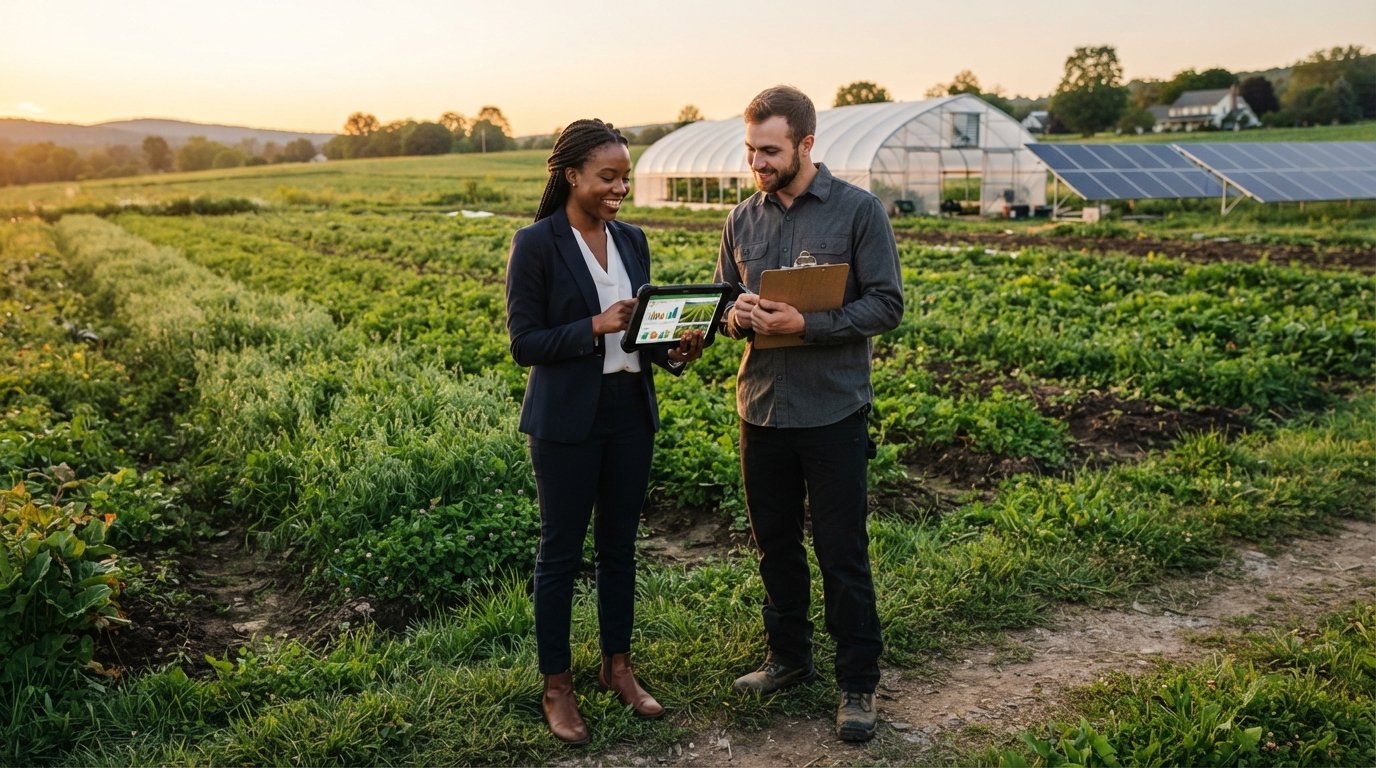
Green Careers Degrees in Sustainable Agriculture and Environmental Policy
Green careers degrees in sustainable agriculture and environmental policy prepare you for roles in conservation, policy analysis, and sustainable food systems.

By Henry Powell
Students who want their work to matter are increasingly drawn to the intersection of food systems and environmental governance. The demand for professionals who can design resilient farms, interpret environmental regulations, and translate science into public policy has never been higher. Earning one of the many green careers degrees in sustainable agriculture and environmental policy opens doors to roles that blend ecology, economics, and social responsibility. Whether you are a high school graduate mapping your first degree or a mid-career professional pivoting toward purpose-driven work, understanding the academic pathways and employer expectations is the first step toward a fulfilling and future-proof career.
Understanding the Green Careers Landscape
The green economy is not a single industry but a web of sectors including agriculture, conservation, renewable energy, waste management, and public administration. Within that web, sustainable agriculture and environmental policy represent two complementary pillars. Sustainable agriculture focuses on producing food and fiber without depleting natural resources, while environmental policy shapes the laws, incentives, and regulations that govern how land, water, and air are used. Graduates who understand both sides are uniquely positioned to solve complex problems, from reducing agricultural runoff to designing carbon markets.
Job growth in these areas is supported by shifting consumer preferences, corporate sustainability commitments, and government investment in climate resilience. Employers range from small organic farms and food cooperatives to federal agencies, environmental nonprofits, and multinational corporations with supply chain sustainability teams. The common thread is a need for workers who can combine scientific literacy with policy fluency and strong communication skills.
Degree Levels and Majors Tied to Sustainable Food and Land Systems
There is no single path into this field. The right degree depends on whether you want to work in a laboratory, a field, a courtroom, or a boardroom. Most students begin with a bachelor's degree and then specialize through a master's or certificate program. Below is a breakdown of the most common degree levels and the majors that align with sustainable agriculture and land systems.
- Associate degrees: Often in sustainable agriculture, agroecology, or environmental technology. These two-year programs prepare students for technician roles, farm management, or transfer to a four-year institution.
- Bachelor's degrees: Majors include sustainable agriculture, environmental science, agricultural economics, environmental policy, and natural resource management. These programs build foundational knowledge in soil science, ecology, economics, and political science.
- Master's degrees: Specialized programs in sustainable food systems, environmental policy, or agricultural economics allow students to deepen expertise and pursue leadership or research roles.
- Doctoral degrees: Ph.D. programs in agroecology, environmental governance, or related fields prepare graduates for academic research, senior policy analysis, and high-level consulting.
When evaluating programs, look for hands-on learning opportunities such as campus farms, policy clinics, or internships with agencies like the Natural Resources Conservation Service. Accreditation matters as well. Regional accreditation ensures the institution meets recognized quality standards, which can affect financial aid eligibility and employer recognition. For students exploring related fields that combine technology and ethics, our guide on degrees for AI ethics and governance careers offers a useful parallel for understanding how interdisciplinary programs are structured.
Core Coursework and Skills You Will Build
Most sustainable agriculture and environmental policy programs share a common core. Students take courses in soil science, plant biology, ecology, environmental economics, and policy analysis. They also study research methods and data analysis, because modern sustainability work relies heavily on measurement and reporting. Writing and public speaking are embedded throughout, since graduates must communicate with farmers, legislators, and the public.
Beyond the classroom, employers consistently seek graduates with practical skills. A survey of job postings in the field reveals recurring requirements: experience with geographic information systems (GIS), familiarity with environmental regulations such as the Clean Water Act, and the ability to facilitate stakeholder meetings. Students should use electives and internships to build these competencies before graduation.
Environmental Policy Roles in Government, Nonprofits, and Industry
Environmental policy is where science meets governance. Graduates with policy training find work in three main sectors: government, nonprofits, and private industry. Each sector offers distinct rewards and challenges.
In government, policy analysts and environmental specialists work at the local, state, and federal levels. They draft regulations, review permits, and evaluate the environmental impact of proposed projects. Federal agencies such as the Environmental Protection Agency and the Department of Agriculture employ thousands of professionals with backgrounds in environmental policy and sustainable agriculture. State and local governments also hire policy staff to manage land use, water resources, and climate adaptation plans.
Nonprofits range from large international organizations focused on conservation to community groups working on food justice. Roles include policy advocates, campaign organizers, and program managers. These positions often require strong writing and coalition-building skills, as staff must persuade decision-makers and mobilize public support.
In the private sector, corporations are hiring sustainability officers, environmental compliance managers, and supply chain analysts. Food companies, agribusinesses, and retailers need professionals who can audit supplier practices, reduce waste, and report on environmental metrics. Consulting firms also hire policy graduates to advise clients on regulatory compliance and sustainability strategy.
For students who want to explore the broader landscape of mission-driven work, resources like Careers.org provide detailed occupational profiles, including typical duties, education requirements, and work settings for environmental policy roles.
Skills Employers Seek in Sustainability-Focused Graduates
Technical knowledge alone is not enough. Employers in sustainable agriculture and environmental policy look for a blend of hard and soft skills that allow graduates to operate effectively in complex, multi-stakeholder environments. Based on interviews with hiring managers and a review of job descriptions, the most valued skills include:
- Systems thinking: The ability to see how agricultural practices, environmental regulations, and economic incentives interact. Graduates should be comfortable mapping feedback loops and unintended consequences.
- Data literacy: Proficiency in spreadsheet software, statistical analysis, and ideally GIS or remote sensing. Many policy and farm management decisions rely on quantitative evidence.
- Communication and translation: The capacity to explain technical concepts to non-experts, whether a farmer, a legislator, or a corporate board. Writing clear memos, reports, and grant proposals is essential.
- Stakeholder facilitation: Experience bringing together people with conflicting interests to reach consensus. This is especially important in policy mediation and cooperative extension work.
- Regulatory knowledge: Familiarity with key laws and programs, such as the Farm Bill, the Clean Water Act, and organic certification standards. Graduates should know where to find updates and how to interpret them.
Students can build these skills through internships, research assistantships, and volunteer work with local conservation districts or farmers markets. A portfolio of projects, such as a policy brief or a farm sustainability plan, can be more persuasive to employers than a transcript alone.
Combining Science Coursework with Policy or Communications Training
The most versatile graduates are those who bridge the science-policy divide. A student who understands soil chemistry but cannot explain it to a county board will be less effective than one who can do both. Fortunately, many programs allow students to design a hybrid course of study.
At the undergraduate level, consider a double major or a major with a minor. For example, a Bachelor of Science in Sustainable Agriculture paired with a minor in public policy or communication studies creates a strong foundation. Some universities offer interdisciplinary majors such as environmental studies that integrate natural science, social science, and humanities. These programs are ideal for students who want a broad base before specializing in graduate school.
At the graduate level, master's programs in environmental policy often include science courses, while sustainable agriculture programs increasingly require policy coursework. Students should review curricula carefully and look for capstone projects that involve real clients, such as a state agency or a food hub. These experiences provide concrete examples of interdisciplinary work that employers value.
For those already in the workforce, certificates in environmental policy, sustainable food systems, or science communication can add credentials without committing to a full degree. Many universities offer these certificates online, making them accessible to working professionals. When selecting a program, check that it is offered by an accredited institution and that credits can be applied toward a future degree if desired.
Choosing the Right Program and Building Your Career
With so many options, prospective students should approach program selection systematically. Start by clarifying your career goal: do you want to manage a farm, analyze regulations, or lead sustainability strategy for a company? That answer will determine whether you prioritize a science-heavy or policy-heavy curriculum. Next, evaluate programs on factors such as faculty expertise, internship networks, and alumni outcomes. Request information from several schools and compare their responses.
Financial considerations also matter. Green careers degrees can be affordable, especially at public institutions, and scholarships are available from professional associations and government agencies. Students should complete the FAFSA and explore assistantships at the graduate level. It is also wise to calculate the return on investment for each program by comparing tuition to expected salaries in target roles.
Finally, build professional experience early. Join student chapters of organizations like the Soil and Water Conservation Society or the National Association of Environmental Professionals. Attend conferences, even virtually, and connect with practitioners on LinkedIn. These steps turn a degree into a network, and a network into a job.
The path to a green career in sustainable agriculture and environmental policy is not always linear, but it is increasingly well-marked. By choosing a program that balances science, policy, and communication, and by seeking hands-on experience, graduates can position themselves for meaningful work in a growing field. The planet needs problem-solvers who can farm, analyze, and advocate. A well-chosen degree is the first seed.