
Athletic Trainer Certificate at Chabot College: 12 Weeks to 1 Year
Earn your Athletic Training/Trainer Certificate at Chabot College in 12 weeks to less than a year, in person, and start a career in sports medicine support.

By Grace Carter
If you want to break into the sports medicine field without committing to a four-year degree, an athletic training certificate can be your fastest route. At Chabot College, the Athletic Training/Trainer Certificate, 12 weeks to less than 1 year In-person at Chabot College, is designed for students who need practical, hands-on skills and want to enter the workforce quickly. This program combines classroom instruction with real-world application, giving you a foundation in injury prevention, evaluation, and rehabilitation. Whether you are a recent high school graduate, a career changer, or a current student looking to add a credential, this certificate offers a focused path to entry-level opportunities in athletic training and sports medicine support roles.
Why Choose the Athletic Training Certificate at Chabot College?
Chabot College, located in Hayward, California, has a long history of providing career-focused education in the East Bay. The athletic training certificate stands out because it condenses essential training into a short timeframe. In 12 weeks to less than one year, you can complete the required coursework and be ready to apply for entry-level positions. The program is delivered entirely in person, which means you get direct access to instructors, equipment, and hands-on practice. This format is ideal for students who learn best by doing and want to build a professional network within the local sports community.
Another key advantage is cost. Community college certificates are significantly more affordable than four-year degree programs, allowing you to gain skills without accumulating large debt. The certificate also serves as a stepping stone: many students use it to gain employment while continuing their education toward an associate or bachelor's degree in kinesiology or athletic training. According to career resources like Careers.org, athletic training and related fields are projected to grow, especially in high school and collegiate sports settings.
The program at Chabot College is also well-regarded locally. The college has partnerships with local high schools and sports organizations, which can provide internship or volunteer opportunities. These connections can be invaluable when you are starting out, as they give you real experience to list on your resume and potential references for future jobs.
Program Overview and Curriculum
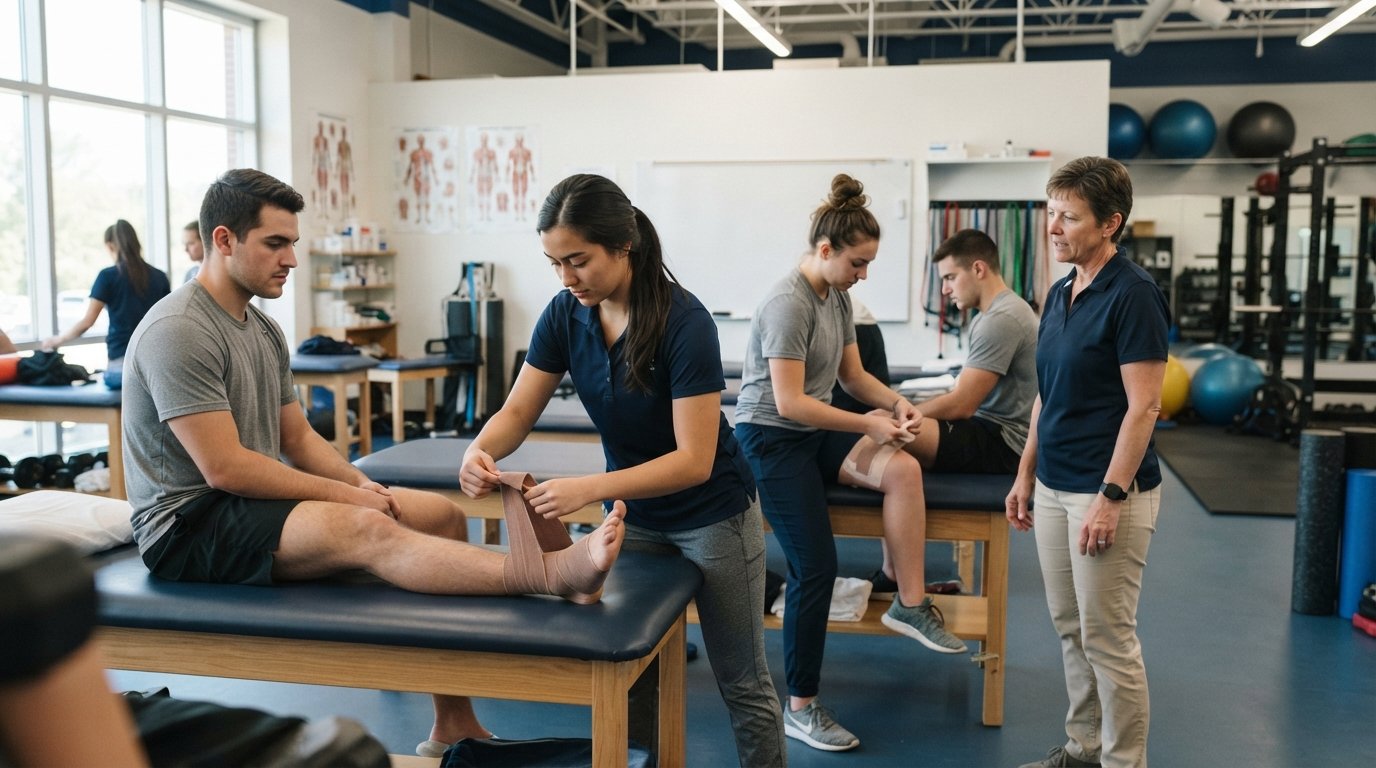
The athletic training certificate at Chabot College is structured to cover the core competencies required for entry-level athletic training support. The curriculum typically includes courses in anatomy, physiology, sports injury management, first aid and CPR, and therapeutic modalities. You will learn how to assess injuries, apply taping and bracing techniques, and assist with rehabilitation exercises. The hands-on component is emphasized, with labs and practical sessions that simulate real scenarios you might encounter in a gym, on a field, or in a clinic.
Because the program can be completed in as little as 12 weeks to less than a year, it is intensive. You should expect a full schedule, with classes and labs during the day. The in-person format means you will be on campus regularly, which fosters a strong learning community. Instructors are typically experienced professionals in the field, bringing practical insights that go beyond textbooks. You will also have opportunities to work with student-athletes at Chabot College, as the program often collaborates with the college's athletic teams.
To give you a clearer picture, here are the key components you can expect in the certificate program:
- Core coursework in anatomy, physiology, and kinesiology fundamentals.
- Practical training in injury prevention, taping, and bracing techniques.
- Instruction in first aid, CPR, and emergency procedures.
- Introduction to therapeutic modalities and rehabilitation protocols.
- Supervised practical experience or internship with local sports programs.
These components are designed to prepare you for entry-level roles such as athletic training aide, physical therapy aide, or sports medicine assistant. They also provide a solid foundation if you decide to pursue further education and certification.
Admission Requirements and How to Apply
Admission to the athletic training certificate at Chabot College is straightforward. You need to be a high school graduate or have a GED, and you must complete the college's application process. There may be additional requirements such as a background check or proof of immunizations, especially if you will be working with minors or in healthcare settings. Because the program is in person, you will also need to be available to attend classes on campus in Hayward.
The application process typically involves applying to Chabot College as a new student, then declaring your intent to pursue the certificate. You may need to meet with a counselor to create an educational plan. It is recommended to check the college's website for specific deadlines and any prerequisite courses. Some students may need to take placement tests or complete basic skills courses before starting the program.
Financial aid is available for eligible students, including grants, scholarships, and work-study. The California College Promise Grant can waive enrollment fees for qualifying students. Because the program is short, you can complete it quickly and start earning, which improves your return on investment. For those considering other short-term career programs, you might also explore our guide on the Cosmetology Instructor Certificate at Delaware to compare formats and outcomes.
Career Outcomes and Earning Potential
After completing the athletic training certificate, you will be qualified for a range of entry-level positions. The most common job titles include athletic training aide, physical therapy aide, sports medicine assistant, and fitness center assistant. These roles are typically found in high schools, colleges, sports clubs, physical therapy clinics, and community recreation centers. While the certificate alone does not make you a certified athletic trainer (that requires a bachelor's or master's degree and certification), it provides a strong foundation and can lead to meaningful employment.
Earnings for entry-level positions vary by location and employer. In California, athletic training aides and physical therapy aides earn an average of $16 to $22 per hour, according to data from the Bureau of Labor Statistics. With experience and additional certifications, such as becoming a Certified Personal Trainer or obtaining a massage therapy license, you can increase your earning potential. Many students use this certificate as a stepping stone to pursue an associate degree in kinesiology or a bachelor's in athletic training, which opens up higher-paying roles.
Career advancement often depends on continuing education. The certificate program at Chabot College can be a launchpad: you might work as an aide while studying for a higher degree, gaining valuable experience along the way. The field of sports medicine is growing, and employers value practical skills and hands-on experience, which this program provides.
Is This Certificate Right for You?
The athletic training certificate is ideal for individuals who are passionate about sports, fitness, and helping others recover from injuries. If you enjoy working in a dynamic environment and are comfortable with physical activity, this could be a great fit. It is also suitable for those who want to enter the workforce quickly without committing to a long degree program. The in-person format at Chabot College means you will need to be available during the day, but the intensive schedule allows you to finish quickly.
However, it is important to understand the limitations. This certificate does not qualify you to work as a certified athletic trainer, which requires national certification and a degree from an accredited program. It is best seen as an entry-level credential or a stepping stone. If your goal is to become a head athletic trainer for a professional team, you will need to continue your education. But for many, the certificate provides a foot in the door and a way to earn while learning.
Before enrolling, consider your career goals and whether you plan to pursue further education. Speak with a counselor at Chabot College to ensure the program aligns with your plans. Also, check the college's website for the most current program requirements, as curriculum and schedules can change.
Comparing Short-Term Programs
Chabot College's athletic training certificate is one of many short-term programs that can lead to quick employment. When evaluating options, consider factors like program length, cost, hands-on training, and job placement support. The 12 weeks to less than one year format is among the fastest, making it attractive for those who need to start earning soon. In-person instruction provides immediate feedback and networking opportunities that online programs may lack.
If you are exploring other fast-track career paths, you might also look at certificate programs in medical assisting, phlebotomy, or emergency medical technology. Each has different requirements and outcomes. The key is to match your interests and strengths with the demands of the field. For athletic training, a background in sports or fitness is helpful, but not required.
Finally, consider the location. Chabot College serves the East Bay and surrounding areas, with access to local sports teams and healthcare facilities. This can be a significant advantage for finding internships and jobs. If you are willing to relocate, similar programs exist at other community colleges, but Chabot's established reputation and industry connections are worth considering.
In summary, the Athletic Training/Trainer Certificate at Chabot College offers a fast, affordable, and practical path to a career in sports medicine support. With a completion time of 12 weeks to less than a year, in-person instruction, and strong local ties, it is a compelling option for motivated students. To learn more about how certificates fit into broader career planning, explore resources on career pathways and educational planning.