
How to Identify and Choose Expert College of Nursing Programs
Learn to identify nursing programs with superior faculty, strong clinical partnerships, and proven graduate success to launch a rewarding healthcare career.

By Benjamin Clarke
Choosing the right nursing program is a pivotal decision that shapes your clinical skills, professional network, and career trajectory. While many colleges offer nursing degrees, the distinction lies in identifying programs that are truly expert, those that go beyond basic accreditation to deliver an education of exceptional depth, rigor, and relevance. An expert college of nursing programs provides a curriculum grounded in the latest evidence-based practice, is taught by seasoned faculty who are leaders in the field, and offers robust clinical placements that transform students into confident, competent nurses. This guide will help you discern the markers of excellence and navigate the selection process to find a program that aligns with your highest professional aspirations.
Defining the Hallmarks of an Expert Nursing Program
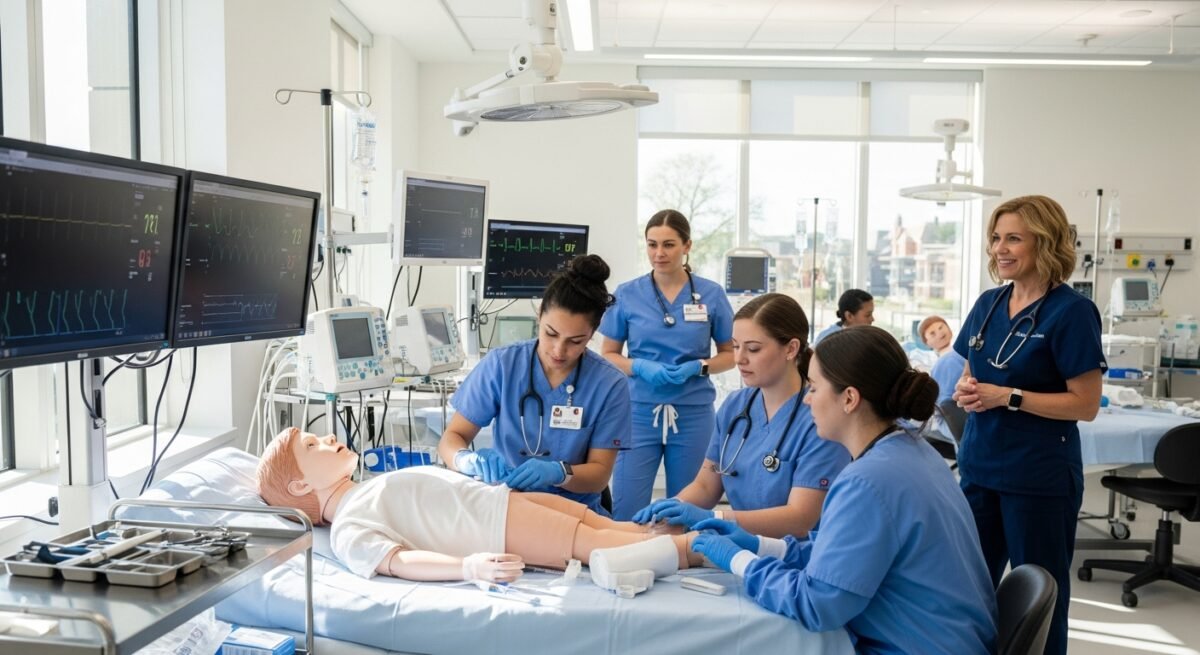
An expert nursing program is not defined by a single factor but by a confluence of elements that create an environment of superior education. The first and most critical hallmark is accreditation. While state approval is mandatory, national accreditation from bodies like the Commission on Collegiate Nursing Education (CCNE) or the Accreditation Commission for Education in Nursing (ACEN) is the baseline standard for quality. These accreditations ensure the program meets rigorous standards for curriculum, faculty, and student outcomes. However, expertise goes further. It involves a curriculum that is not static but dynamically evolves in response to advancements in healthcare technology, treatment modalities, and population health needs. The integration of simulation labs with high-fidelity manikins, electronic health record training, and interprofessional education opportunities are indicators of a program committed to modern, realistic preparation.
Furthermore, expert programs demonstrate exceptional outcomes. These are quantifiable metrics that speak to the program’s effectiveness. Prospective students should investigate the program’s NCLEX-RN first-time pass rates for pre-licensure tracks, which are publicly reported and a strong indicator of how well the program prepares students for the national licensing exam. For graduate programs, look at certification exam pass rates for specialties like Family Nurse Practitioner or Nurse Anesthetist. Other key outcomes include graduation rates, job placement rates within six months of graduation, and the percentage of graduates who pursue higher education. A program that proudly and transparently shares this data is confident in its results. The caliber of clinical partnerships is another decisive factor. Programs with strong relationships with major teaching hospitals, specialized clinics, and community health networks provide students with diverse, high-quality clinical experiences that are essential for building a versatile skill set.
The Central Role of Faculty Expertise and Student Support
The faculty are the engine of any academic program, and in nursing, their real-world experience is as important as their academic credentials. In an expert college of nursing programs, the faculty are not merely teachers, they are active scholars, clinicians, and policy influencers. Look for programs where professors maintain clinical practice, conduct publishable research, or hold leadership positions in professional nursing organizations. This ensures that classroom instruction is infused with current, practical insights from the bedside, the clinic, and the boardroom. Faculty accessibility and mentorship are equally vital. A low student-to-faculty ratio, especially in clinical and lab settings, allows for personalized instruction and feedback, which is crucial for mastering complex psychomotor skills and clinical judgment.
Comprehensive student support services are the scaffolding that enables success, particularly in a demanding field like nursing. Expert programs invest in structures that guide students from admission to graduation and beyond. This includes dedicated academic advisors who understand the nursing curriculum’s sequencing and challenges, robust tutoring centers for mastering difficult subjects like pathophysiology or pharmacology, and writing labs to help with the rigorous academic papers required at higher degree levels. Furthermore, mental health and wellness resources are critical, as nursing students face significant stress. Programs that offer counseling, stress management workshops, and peer support groups demonstrate a holistic commitment to student well-being. Career services tailored to nursing are also a key differentiator, offering resume reviews focused on healthcare, interview coaching, and networking events with potential employers. This level of support is a hallmark of an institution that is invested in its students’ long-term success, not just their enrollment.
Evaluating Program Format and Specialization Options
The landscape of nursing education has expanded to include various formats catering to different learner needs. Traditional on-campus programs offer the classic collegiate experience with immediate access to labs, libraries, and face-to-face faculty interaction. Hybrid or blended programs combine online theoretical coursework with in-person labs and clinicals, offering flexibility while maintaining hands-on components. Fully online nursing programs, particularly for RN-to-BSN completion or graduate degrees, have become increasingly sophisticated, using synchronous and asynchronous models to serve working professionals. An expert program delivers a consistently high-quality educational experience regardless of format, with intuitive online learning platforms, proactive technical support, and intentional efforts to build community among remote learners.
Specialization is where many nurses advance their careers and find their professional passion. An expert college of nursing programs will offer a range of specialized tracks or concentrations, especially at the Master of Science in Nursing (MSN) and Doctor of Nursing Practice (DNP) levels. When evaluating these, consider both the breadth and depth of offerings.
- Family Nurse Practitioner (FNP): Prepares nurses for primary care across the lifespan, one of the most in-demand roles.
- Psychiatric-Mental Health Nurse Practitioner (PMHNP): Addresses the critical shortage in behavioral health. For a detailed look at this vital specialty, explore our resource on finding the best psychiatric nursing programs for career preparation.
- Nurse Educator: Trains nurses to teach the next generation in academic or clinical settings.
- Nurse Executive/Administration: Focuses on leadership, finance, and systems management for healthcare settings.
- Specialized Clinical Tracks: Such as Adult-Gerontology Acute Care, Pediatric Acute Care, or Women’s Health.
The availability of these specializations, coupled with the expertise of faculty within them, signals a program’s capacity to support advanced career goals. Additionally, look for post-master’s certificates for nurses who already hold an MSN but wish to train in a new specialty area efficiently.
A Strategic Guide to Researching and Selecting Your Program
Making a final choice requires systematic research and self-reflection. Begin by conducting an honest self-assessment of your career goals, learning style, financial resources, and personal obligations. Do you aim to be a bedside leader, an advanced practitioner, a researcher, or an executive? Your long-term goal will dictate the necessary degree level (BSN, MSN, DNP, PhD). Next, create a list of non-negotiable criteria, such as program format (on-campus, online, hybrid), location constraints, and must-have specializations. Use this list to filter programs during your initial search.
Once you have a shortlist, move into deep evaluation. Scrutinize each program’s website for the hallmarks discussed: accreditation status, faculty bios, NCLEX or certification pass rates, and detailed curriculum outlines. Attend virtual or in-person open houses and information sessions. These events are invaluable for gauging the program’s culture and directly questioning administrators. Speaking directly with current students and alumni provides unfiltered insights into the student experience, workload, and career outcomes. Finally, conduct a thorough financial analysis. Compare tuition costs, but also investigate the availability of scholarships, grants, graduate assistantships, and employer tuition reimbursement benefits. The total investment must be weighed against the program’s reputation and the potential return in terms of career advancement and earning potential. Remember, the most expensive program is not always the best, and a public university with strong outcomes may offer exceptional value.
Ultimately, selecting an expert college of nursing programs is an investment in your future as a healthcare leader. It requires looking beyond marketing brochures to the substantive indicators of quality: outcomes, faculty, support, and curriculum. By methodically researching and aligning a program’s strengths with your personal and professional objectives, you can confidently choose a path that will provide the knowledge, skills, and credentials to excel in the dynamic and rewarding field of nursing. Your education is the foundation of your practice, choose a foundation built on expertise.