
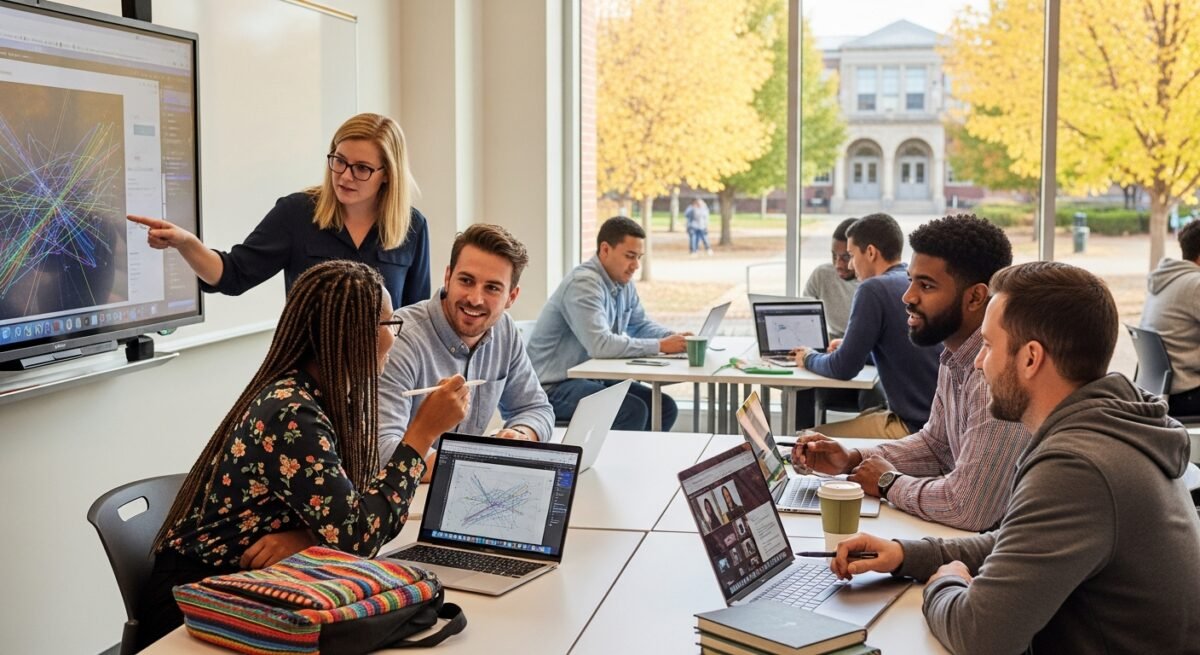
Hybrid Degree Programs: Balancing Online and In-Person Learning
Hybrid degree programs blend online flexibility with essential in-person learning, offering a practical path for working professionals and hands-on fields. Explore how degrees with hybrid formats provide balance and career-focused education.

By Giovanna Rivera
For many students, the traditional choice between a fully online degree and a rigid on-campus schedule feels like an impossible compromise. You want the flexibility and accessibility of digital learning, but you also crave the hands-on experience, networking, and structured environment that a physical campus provides. This is where the modern educational solution shines: degrees with hybrid formats. These innovative programs are systematically dismantling the old either/or paradigm, creating a tailored pathway that merges the best of both worlds. By intentionally blending synchronous online classes with scheduled in-person sessions, hybrid degrees offer a pragmatic, student-centered model that aligns with the demands of contemporary life and the workforce. This approach is not a temporary fix but a fundamental evolution in how higher education delivers value, making advanced learning more accessible without sacrificing quality or connection.
What Defines a Hybrid Learning Degree?
At its core, a hybrid degree program, sometimes called a blended or mixed-mode degree, is a deliberate integration of online and face-to-face instructional methods. Unlike programs that are merely “online with an optional orientation,” a true hybrid format has a structured, required in-person component that is essential to the curriculum. The ratio varies significantly. Some programs might follow a 70/30 model, with 70% of coursework completed asynchronously online and 30% consisting of intensive weekend labs, monthly seminars, or week-long residencies. Others might use a synchronous hybrid model, where students attend live virtual lectures but are required to be on campus for specific practicums, exams, or group projects. The key differentiator is intentionality: the in-person elements are designed to complement the online work, focusing on activities that benefit most from physical presence, such as laboratory science, clinical skills, studio art, high-level discussion seminars, or complex team-based simulations.
The Tangible Benefits of Choosing a Hybrid Format
The rising popularity of degrees with hybrid formats is driven by a clear set of advantages that address the limitations of purely online or purely traditional programs. For working professionals and adult learners, the flexibility is paramount. Hybrid models allow you to maintain employment and family commitments while pursuing education, reducing the need for relocation or completely upending your weekly schedule. This flexibility directly translates to financial accessibility, as students can often continue earning an income while studying. Furthermore, the reduced frequency of commuting to campus saves both time and money. From a learning perspective, hybrid formats foster the development of crucial digital literacy and self-discipline skills that are highly valued in today’s remote and hybrid workplaces. Students learn to manage projects, communicate effectively across digital platforms, and take ownership of their learning timeline.
Perhaps the most significant benefit, however, is the preservation of the human element in education. Fully online programs can sometimes lead to feelings of isolation. Hybrid degrees strategically combat this by building in opportunities for meaningful peer-to-peer interaction, mentorship from professors, and professional networking. That face-to-face time is where spontaneous ideas are exchanged, professional relationships are solidified, and complex concepts are clarified through direct dialogue. This blend ensures graduates are not only academically proficient but also socially and professionally connected. For those navigating these choices, seeking expert college degree guidance can help clarify which hybrid structure aligns best with personal learning styles and career objectives.
Ideal Candidates for Hybrid Degree Programs
While hybrid programs offer broad appeal, they are particularly well-suited for specific student profiles. Understanding if you fit these profiles can help in making an informed decision.
- The Working Professional: Individuals seeking career advancement or a pivot who cannot afford to leave their job. The hybrid model lets them apply new concepts in real-time at work while gaining academic credentials.
- The Commuter Student: Learners who live within a drivable distance of a campus but for whom a daily commute is impractical. Monthly or bi-weekly sessions are manageable and worthwhile.
- The Hands-On Learner: Students in fields like nursing, engineering, lab sciences, education, or the arts who need physical equipment, clinical placements, or studio space that cannot be replicated online.
- The Balance-Seeker: Those who thrive with structured deadlines and personal interaction but also need control over their study environment and schedule. Hybrid programs provide external accountability without suffocating rigidity.
- The Career Changer: Individuals building a new professional network. The in-person components of hybrid degrees are invaluable for making connections with faculty, peers, and industry guests in their new field.
If you see yourself in one or more of these descriptions, a hybrid format may be the key to unlocking your educational goals without the sacrifices required by traditional programs.
Popular Academic Fields Offering Robust Hybrid Options
The adoption of hybrid learning is widespread, but it is especially prevalent and effective in certain disciplines. In Business Administration (MBA and BBA), programs often deliver core theory online while holding in-person sessions for live case competitions, networking events, and leadership workshops. Nursing and Healthcare degrees are natural fits, with online coursework covering anatomy and pharmacology, paired with mandatory on-campus lab skills days and clinical rotations at local facilities. Education programs utilize the hybrid model for teaching methodology online while requiring student teaching placements and classroom observations in person.
Computer Science and Information Technology degrees blend coding and theory online with intensive, collaborative hackathons or hardware labs on campus. Engineering Technology programs rely on hybrid formats to teach design principles digitally while reserving campus time for hands-on work with machinery and materials. Even fields like Psychology and Counseling are leveraging this model, teaching foundational knowledge online while requiring in-person practicum training and supervised clinical hours. The common thread is a curriculum design that logically separates theoretical knowledge transmission (ideal for online) from applied, skill-based practice (requiring in-person guidance).
Critical Considerations Before Enrolling
Choosing a hybrid program requires more due diligence than a standard degree path. You must scrutinize the program’s structure. What is the exact ratio and schedule of in-person requirements? Are residencies concentrated in one week per semester, or are they spread out as weekly evening labs? You must assess your own logistics: Can you reliably meet the on-campus obligations given your location, work schedule, and family needs? Technology is another cornerstone. You will need consistent, high-speed internet access, a reliable computer, and potentially specific software. Your own learning style is paramount: Hybrid learning demands high levels of self-motivation, time management, and organizational skill during the online phases.
Accreditation is non-negotiable. Ensure the institution and the specific program hold recognized accreditation. This safeguards the quality of your education and the value of your degree to employers. Finally, investigate the support systems. Does the program offer dedicated tech support for online platforms? Is there an advisor specifically for hybrid students? How are on-campus resources (library, career services, tutoring) made accessible to you during your online weeks? Answering these questions upfront prevents unforeseen challenges and ensures a smooth academic journey.
Navigating the Hybrid Learning Experience Successfully
Success in a hybrid program hinges on proactive strategies. First, master time and space management. Treat online coursework with the same respect as in-person class. Block out specific, consistent times in your calendar for reading, lectures, and assignments. Create a dedicated, distraction-free study space. Second, communicate relentlessly. Engage actively on discussion boards, reach out to professors with questions early, and connect with classmates online to form study groups before you meet on campus. Third, leverage the in-person time strategically. Come to campus sessions prepared with questions, ready to participate in discussions, and intent on building relationships. Use these moments for the complex, interactive learning that is harder to achieve online.
Fourth, utilize all available resources. Access online library databases, writing centers, and tutoring. Many schools offer these services virtually. Finally, practice integration. Consciously look for ways to connect the concepts you learn online with the practical applications you experience in person. This synthesis is where deep, lasting learning occurs and is the ultimate promise of a well-designed hybrid degree.
Frequently Asked Questions About Hybrid Degrees
Are hybrid degrees viewed as legitimate by employers?
Yes, absolutely. Employers primarily care about accreditation and skills. A degree from a properly accredited institution, whether hybrid, online, or traditional, holds equal weight. In fact, the self-discipline and tech-savviness demonstrated by hybrid graduates are often seen as assets.
How does the cost compare to traditional and fully online degrees?
Costs vary. Often, hybrid programs are priced similarly to on-campus programs, but you save significantly on commuting, relocation, and sometimes campus fees. Some schools charge a unified tuition rate, while others may have separate online and on-campus rates. Always request a detailed cost breakdown.
Can I access financial aid for a hybrid program?
If the institution is accredited and eligible for federal aid, then yes, hybrid students typically have access to the same financial aid (loans, grants, scholarships) as traditional students. Confirm this directly with the school’s financial aid office.
What if I cannot attend a required in-person session?
This is a critical question. Policies differ. Some programs are strict, as the in-person component is integral. Others may offer make-up sessions or, in rare cases, remote alternatives. You must understand the attendance policy before enrolling and have a contingency plan.
Is a hybrid degree faster than a traditional degree?
Not necessarily. The timeline is usually similar to a traditional program (e.g., 2 years for a Master’s, 4 years for a Bachelor’s). However, the flexibility may allow you to continue working full-time, effectively accelerating your career progression even if the academic calendar length is standard.
The educational landscape is no longer binary. Degrees with hybrid formats represent a sophisticated, responsive model that honors the complexity of modern learners’ lives. They provide a pragmatic bridge between the digital convenience we need and the human-centered learning we value. By offering a structured yet flexible path, these programs democratize access to quality education, empower working professionals, and produce graduates who are adept in both virtual collaboration and personal interaction. For anyone seeking a relevant, resilient, and balanced approach to higher education, exploring the world of hybrid degree programs is not just an option, it is a strategically sound investment in a future where flexibility and connection are equally paramount.