Choosing a college major is one of the most consequential decisions a student can make, especially when long-term earning potential is a priority. For students in the Hawkeye State, the landscape of higher education offers several pathways that lead directly to high-paying, in-demand careers. Understanding which programs deliver the strongest return on investment can help prospective students align their academic interests with financial goals. This article explores Iowa’s premier college majors for lucrative careers, examining the specific programs, institutions, and industry connections that make these fields particularly rewarding.
Iowa’s economy is anchored by agriculture, manufacturing, insurance, and healthcare, but the state also boasts a growing technology sector and a robust financial services industry. Colleges across Iowa have responded by designing majors that feed directly into these high-wage industries. From engineering at Iowa State University to actuarial science at the University of Iowa, students have access to programs that consistently place graduates in well-compensated roles. The key is knowing which majors offer the best combination of starting salary, growth potential, and job stability.
Engineering and Technology: The High-Wage Leaders
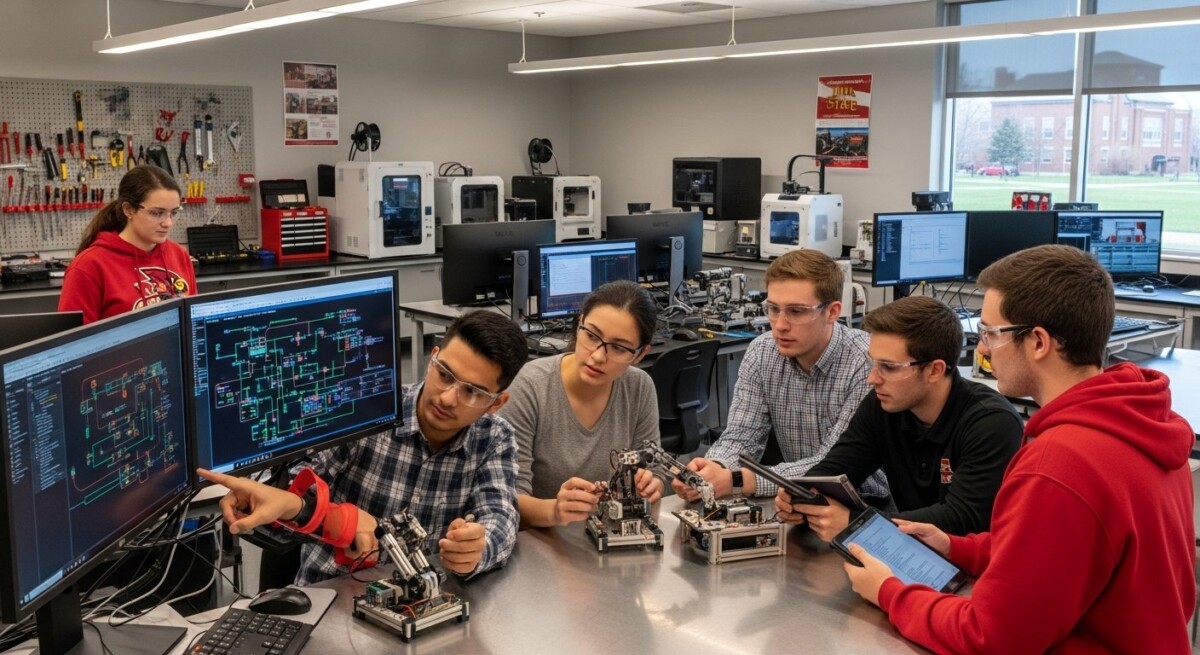
Engineering remains one of the most reliable paths to a lucrative career, and Iowa’s universities are nationally recognized for their programs. Iowa State University’s College of Engineering is particularly strong, offering majors in mechanical, electrical, computer, and aerospace engineering. Graduates from these programs often secure positions at major employers like John Deere, Collins Aerospace, and Rockwell Collins, with starting salaries frequently exceeding $70,000 annually.
Computer science and software engineering have seen explosive growth in recent years. The demand for skilled developers, data scientists, and cybersecurity specialists continues to outpace supply. The University of Iowa and Iowa State both offer rigorous computer science programs that emphasize hands-on learning through capstone projects and internships. Graduates often accept offers from tech firms in Des Moines’ growing Silicon Sixth district or remote positions with national companies, earning median salaries above $85,000 within five years of graduation.
For students interested in emerging fields, Iowa State recently expanded its data science and artificial intelligence offerings. These programs combine computer science with statistics and domain-specific knowledge, preparing graduates for roles in healthcare analytics, agricultural technology, and financial modeling. The interdisciplinary nature of these majors makes graduates highly adaptable and valuable to employers across multiple sectors.
Internship and Co-op Opportunities in Engineering
One reason Iowa’s engineering programs are so effective is their strong industry partnerships. Many programs mandate or strongly encourage cooperative education experiences, where students alternate between classroom study and paid work terms. These experiences not only offset tuition costs but also build professional networks that lead to job offers before graduation. Students in engineering co-ops at Iowa State typically earn $18 to $25 per hour while gaining resume-building experience.
In our guide on Georgia college majors that lead to top jobs, we discuss similar high-ROI programs in another state. The same principles apply in Iowa: hands-on learning, employer partnerships, and a focus on practical skills dramatically improve career outcomes.
Business and Finance: The Actuarial Science Advantage
Iowa holds a unique position in the insurance and financial services industry. Des Moines is often called the “Insurance Capital of the World,” home to industry giants like Principal Financial Group, Nationwide, and EMC Insurance. This concentration of employers creates exceptional opportunities for students pursuing business and finance majors. The University of Iowa’s Tippie College of Business offers a highly respected actuarial science program that consistently ranks among the top in the nation.
Actuarial science combines mathematics, statistics, and financial theory to assess and manage risk. Graduates who pass the rigorous professional exams can expect starting salaries around $75,000, with experienced actuaries earning well over $150,000. The University of Iowa’s program provides dedicated exam preparation resources, faculty with industry experience, and direct recruiting pipelines to major insurance companies. Students also benefit from internships where they apply classroom knowledge to real-world risk models.
Beyond actuarial science, finance and accounting majors from Iowa universities also perform strongly. Drake University’s business school and the University of Northern Iowa’s accounting program both produce graduates who find roles in corporate finance, investment banking, and public accounting. Median starting salaries for finance majors in Iowa hover around $60,000, but rapid advancement is common for those who earn certifications like the CFA or CPA.
Healthcare and Nursing: Stable and Growing Fields
Healthcare remains one of the most stable and well-compensated sectors in Iowa. The state’s aging population and rural healthcare needs drive consistent demand for medical professionals. Nursing, in particular, offers a clear path to a lucrative career with multiple advancement opportunities. The University of Iowa’s College of Nursing is a top-tier program, offering BSN, MSN, and DNP degrees. Graduates from the BSN program often start at $65,000 or more in Iowa hospitals, with experienced nurse practitioners earning above $110,000.
Pharmacy and physician assistant programs also deliver strong returns. Drake University’s College of Pharmacy and Health Sciences is renowned, and its graduates command starting salaries around $120,000 for pharmacists. The University of Iowa’s Carver College of Medicine offers physician assistant and physical therapy programs that lead to median salaries exceeding $95,000. These programs are competitive, but the investment in education pays off quickly given the high demand for healthcare providers in Iowa’s medical systems.
For students interested in shorter pathways, Iowa’s community colleges offer associate degree programs in nursing and allied health fields. Graduates can enter the workforce quickly and often pursue bridge programs to earn bachelor’s or master’s degrees while working. This approach allows students to minimize student debt while building a career that offers both stability and growth potential.
Agriculture and Agribusiness: Leveraging Iowa’s Core Industry
Agriculture is the backbone of Iowa’s economy, and the state’s universities have developed specialized programs that prepare students for high-paying roles in this sector. Iowa State University’s College of Agriculture and Life Sciences is a global leader, offering majors in agronomy, animal science, agricultural business, and food science. These programs combine scientific rigor with business acumen, producing graduates who can manage farms, develop agricultural technologies, or lead food processing companies.
Agricultural engineers, in particular, enjoy excellent salaries. They design equipment, irrigation systems, and processing facilities that improve efficiency and sustainability. Starting salaries for agricultural engineers in Iowa often exceed $70,000, with experienced professionals earning six-figure incomes. The demand for these specialists is driven by the need to feed a growing global population while managing environmental challenges.
Agribusiness majors focus on the financial and management side of agriculture. They learn about commodity markets, supply chain logistics, and farm management. Graduates find roles with companies like Cargill, John Deere, and local cooperatives, often earning $55,000 to $75,000 to start. The University of Northern Iowa also offers a strong agribusiness program with a focus on sustainable practices and international trade.
Choosing the Right Major: A Practical Framework
Selecting a major requires balancing personal passion with practical considerations. Students should start by assessing their strengths in mathematics, science, writing, and communication. Engineering and actuarial science demand strong quantitative skills, while business and healthcare require both analytical and interpersonal abilities. Taking career aptitude tests and speaking with academic advisors can provide clarity.
Next, research the specific programs at Iowa’s colleges. Look at graduation rates, job placement statistics, and average starting salaries. Many universities publish this data on their websites. Visiting campuses, attending open houses, and talking to current students or alumni can provide insider perspectives that go beyond brochures.
Consider the total cost of education, including tuition, fees, and living expenses. Iowa’s public universities offer competitive in-state tuition, and many students receive scholarships or grants. The net cost of a degree should be weighed against expected starting salaries to calculate return on investment. For most of the majors discussed in this article, the ROI is strongly positive within three to five years of graduation.
Finally, think about lifestyle preferences. Some high-paying careers, such as engineering or finance, may involve long hours or travel. Healthcare roles often require shift work and emotional resilience. Agriculture careers may be tied to rural locations. Students should choose a path that aligns with their desired quality of life, not just their earning potential.
Frequently Asked Questions
What is the highest-paying college major in Iowa? Engineering, particularly aerospace and computer engineering, typically offers the highest starting salaries in Iowa, often exceeding $80,000 annually. Actuarial science and pharmacy also rank among the top earners.
Are online degree programs available for these majors? Yes, several Iowa universities offer online or hybrid options. The University of Iowa and Iowa State provide online RN-to-BSN programs, business administration degrees, and some graduate engineering courses. Students should verify accreditation and program requirements before enrolling. For those exploring flexible learning formats, online academic pathways can provide additional options for completing degrees while working.
How important are internships for landing a high-paying job? Extremely important. Most employers in Iowa prefer candidates with internship or co-op experience. These experiences build practical skills, professional references, and often lead to full-time job offers before graduation.
Can I switch majors if I start in a lower-paying field? Yes, many students change majors. However, switching late may extend graduation time and increase costs. It is wise to explore career options early through introductory courses and career counseling services.
Do Iowa colleges offer financial aid for these programs? Yes. Iowa’s public universities, private colleges, and community colleges all offer need-based and merit-based financial aid. Students should complete the FAFSA and research scholarships specific to their intended major.
Iowa’s premier college majors for lucrative careers offer a blend of academic rigor, industry connections, and real-world experience that positions graduates for success. Whether a student chooses engineering, actuarial science, nursing, or agribusiness, the state’s universities provide the resources needed to build a prosperous future. The key is to start planning early, take advantage of experiential learning opportunities, and remain flexible as career interests evolve.