
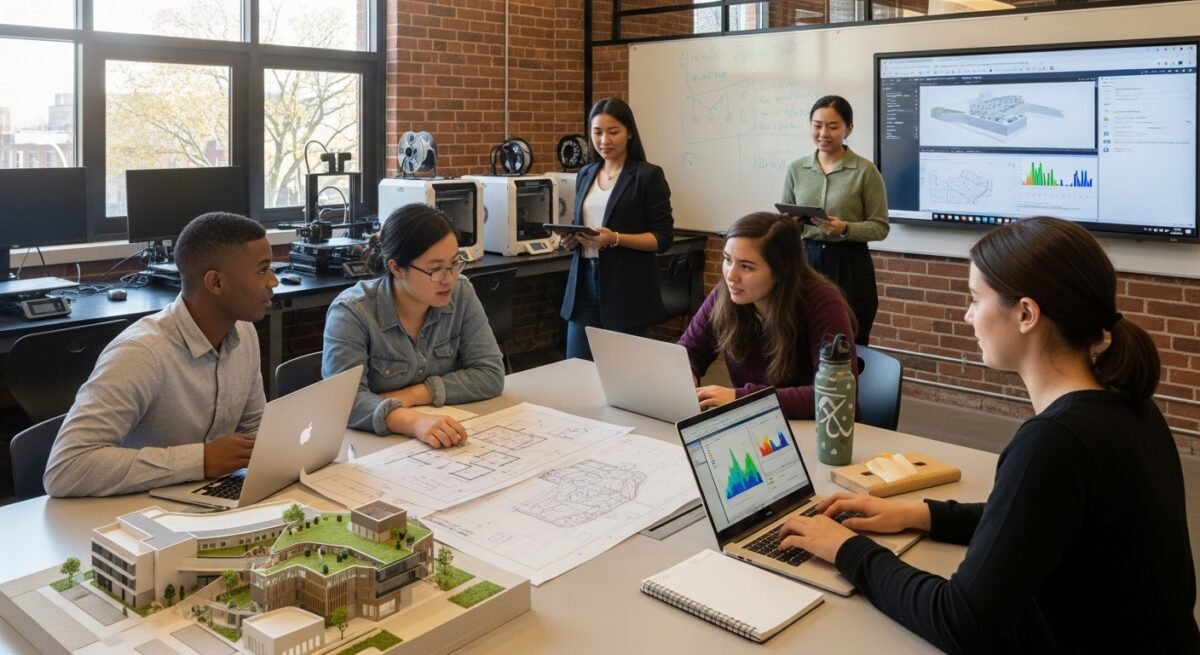
Project Based Learning Degrees For Career Ready Graduates
Earn a degree that builds a professional portfolio through real-world projects. Graduates from project based learning programs enter the job market with demonstrable skills and experience.

By Jeffrey Hartford
Imagine graduating from college with more than a diploma. Imagine walking into your first job interview with a portfolio of completed, real-world projects that demonstrate exactly what you can do. This is the powerful advantage offered by degrees with project based learning, an educational approach rapidly moving from the periphery to the core of modern higher education. Unlike traditional lecture-heavy models, these programs immerse students in hands-on, collaborative projects from day one, bridging the often-cited gap between academic theory and professional practice. For students seeking an education that builds demonstrable skills, resilience, and immediate workplace value, understanding the landscape of project based learning degrees is the first critical step.
What Are Project Based Learning Degrees?
At its essence, a degree built on project based learning (PBL) structures the entire curriculum around complex, authentic challenges rather than a sequence of discrete subjects taught in isolation. Students don’t just learn about engineering principles, business strategies, or software development, they apply them to solve problems that mirror those faced by professionals in the field. A project might involve designing a sustainable building prototype, developing a full marketing campaign for a local nonprofit, coding a functional application, or conducting community-based research. The project is not an add-on assignment, it is the central vehicle for learning.
The pedagogical shift is significant. In a PBL environment, faculty act as coaches and mentors, guiding student teams through the process of inquiry, research, prototyping, and revision. Assessment is continuous and multifaceted, evaluating not just the final product but also the process, collaboration, critical thinking, and communication skills demonstrated along the way. This model cultivates a deeper, more integrated understanding because knowledge is acquired in the context of its use. Students in these programs consistently report higher levels of engagement and retention, as they see the direct relevance and impact of their work. For a deeper exploration of how different degree structures can support various learning styles, you can learn more about college degrees and their evolving formats.
The Core Benefits Of A Project Based Education
Choosing a degree centered on project based learning offers a suite of advantages that extend far beyond the classroom. The most immediate benefit is the development of a robust professional portfolio. Graduates don’t just list courses on a resume, they can present concrete examples of their work to potential employers, providing tangible proof of their capabilities. This portfolio becomes a powerful differentiator in competitive job markets.
Furthermore, these degrees excel at building the durable, transferable skills often called “soft skills” or “power skills.” Through relentless collaboration on projects, students master teamwork, conflict resolution, and project management. Presenting their work to peers, faculty, and sometimes real-world clients hones their communication and public speaking abilities. Navigating the inevitable obstacles of a complex project builds problem-solving resilience and adaptability. Employers increasingly prioritize these competencies, and PBL graduates have practiced them intensively throughout their academic journey. The experiential nature of the learning also leads to stronger knowledge retention and a more intuitive understanding of how different concepts interconnect within a discipline.
Identifying And Selecting The Right PBL Program
Not all programs labeled as “hands-on” or “experiential” embody a true project based learning philosophy. To find a genuine PBL degree, prospective students must look beyond marketing language and examine the curriculum structure. Key indicators include a syllabus dominated by multi-week team projects, assessment criteria that evaluate process and collaboration, and physical or virtual spaces designed for group work and prototyping. Research the faculty: do they have industry experience relevant to guiding practical projects? Investigate industry partnerships, as these often provide the authentic problems and client feedback that fuel high-quality PBL.
When evaluating programs, consider asking these specific questions during campus visits or admissions consultations:
- What percentage of my total course credit hours will be earned through project work versus traditional exams?
- Can you provide examples of recent capstone or signature projects completed by students?
- How are student teams formed, supported, and assessed for collaborative work?
- What mechanisms exist for incorporating feedback from industry professionals or community partners?
- What resources (e.g., maker labs, software, research databases) are dedicated to supporting student projects?
The answers will help you distinguish between a program with occasional projects and one where project based learning is the foundational pedagogy. Your choice should align with your learning style: if you thrive on autonomy, collaboration, and seeing direct results from your effort, a PBL environment will likely be highly motivating.
Top Fields And Degrees Excelling With Project Based Learning
While project based learning can be adapted to almost any discipline, it has found particularly fertile ground in fields where applied skills and iterative creation are paramount. Engineering is a classic example, where degrees often revolve around design-build-test cycles, culminating in senior capstone projects that solve real engineering challenges for corporate sponsors. Computer Science and Software Engineering programs increasingly use PBL, with students spending semesters developing software applications, contributing to open-source projects, or participating in hackathons as core coursework.
In Business and Entrepreneurship, PBL takes the form of developing business plans for startup ventures, consulting for real companies, or managing simulated investment portfolios. Design fields (Graphic, UX/UI, Industrial) are inherently project-based, with portfolios built course-by-course. Even fields like Nursing and Health Sciences are incorporating sophisticated simulation labs and community health projects that require diagnosis, planning, and execution. The common thread is an emphasis on creating a product, solution, or analysis that would be recognized and valued within the professional community. This approach ensures that graduates of degrees with project based learning are not just knowledgeable, but immediately functional and productive.
The Challenges And Considerations For Students
It is important to acknowledge that the project based learning model is not the easier path. It demands a high degree of self-motivation, time management, and interpersonal skills. The open-ended nature of projects can be stressful for students accustomed to clear instructions and defined rubrics. Group dynamics present another common challenge, requiring students to navigate differing work ethics, communication styles, and schedules. The workload is often intense and nonlinear, with crunch periods leading up to project deadlines.
Successful PBL students tend to be proactive communicators, willing to seek help from faculty mentors early and often. They develop strong organizational systems to manage long-term projects and are adaptable when initial ideas fail and require pivoting. For those considering this path, a readiness to engage deeply, embrace ambiguity, and commit to teamwork is essential. The reward for navigating these challenges, however, is an unparalleled preparation for the complexities and collaborative nature of the modern workplace. The resilience built through this process is itself a major career asset.
The Future Of Higher Education And Employer Demand
The trajectory of higher education points toward greater integration of experiential and project based methodologies. As employer feedback consistently highlights a need for graduates who can apply knowledge, think critically, and work in teams, universities are responding by redesigning curricula. Accreditation bodies in many professional fields now explicitly require evidence of applied learning outcomes, further propelling the adoption of PBL frameworks. This shift is evident across institution types, from progressive liberal arts colleges to major research universities and specialized technical institutes.
For employers, candidates from rigorous PBL programs represent a reduced training burden. These graduates have already navigated project lifecycles, dealt with client or stakeholder expectations, and delivered on team objectives. They understand the iterative nature of professional work and are less likely to be paralyzed by the absence of a textbook answer. As the job market continues to evolve, the value of demonstrable, portfolio-ready skills will only increase, solidifying the position of high-quality project based learning degrees as a premier pathway for career-focused education. The degree, therefore, transforms from a certificate of completion into a documented record of competent practice.
In an educational landscape rich with options, degrees with project based learning stand out for their commitment to producing capable, confident, and career-ready graduates. They represent a dynamic partnership between knowing and doing, where students actively construct their expertise through meaningful challenge. For the learner who wants to build more than a GPA, to create a portfolio of proof, this immersive approach offers a powerful and relevant path through higher education and into a fulfilling professional life.