
Rethinking Higher Ed Curricula for a Dynamic World
Explore how modern higher ed curricula are integrating real-world skills and interdisciplinary learning to boost graduate employability and adaptability.

By Giovanna Rivera
For centuries, the design of higher education curricula followed a predictable rhythm, built on disciplinary silos and a model of knowledge transmission. Today, that rhythm is being disrupted by technological acceleration, shifting workforce demands, and a new generation of learners questioning the return on investment. The very architecture of a college degree, the core sequence of courses and requirements that forms a student’s academic journey, is under intense scrutiny. This moment demands more than incremental tweaks, it calls for a fundamental reimagining of what we teach, how we teach it, and why. The future relevance of higher education hinges on curricula that are agile, integrated, and demonstrably connected to the complex realities graduates will face.
The Pressures Driving Curricular Change
Multiple converging forces are compelling institutions to scrutinize and overhaul their academic programs. The most prominent is the persistent skills gap, where employers consistently report that graduates lack vital competencies like critical thinking, complex problem-solving, and adaptability. This disconnect suggests a curriculum too focused on content mastery at the expense of skill application. Simultaneously, the digital transformation of every industry demands new literacies. Data analysis, digital communication, and an understanding of artificial intelligence are no longer niche skills but foundational requirements across fields from marketing to microbiology.
Student demographics and expectations are also shifting. Learners are increasingly diverse in age, background, and life experience. They seek flexibility, often balancing education with work and family obligations, which challenges the traditional semester-based, full-time model. Furthermore, students and their families are more cost-conscious, viewing education through a lens of tangible outcomes and career readiness. They ask not just what they will learn, but what they will be able to do. This economic pressure forces institutions to justify their value proposition, with the curriculum as the central product under review.
Core Trends Reshaping Modern Academic Programs
In response to these pressures, several key trends are emerging as hallmarks of forward-thinking higher ed curricula. These are not isolated experiments but represent a broader philosophical shift in educational design.
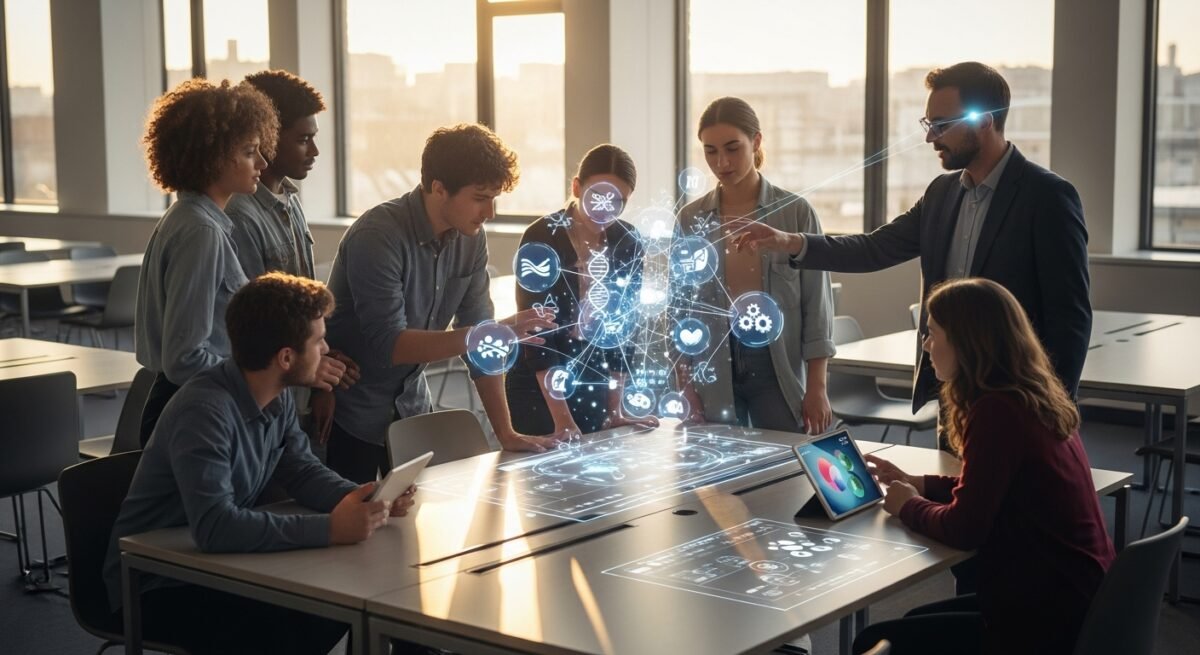
The most significant trend is the move toward interdisciplinary and experiential learning. Rigid departmental boundaries are dissolving in favor of problem-centered learning that draws from multiple disciplines. A course on climate change, for example, might integrate science, policy, economics, and ethics. This is closely paired with experiential learning, where students apply theory in real-world settings through robust internships, client-based projects, simulation labs, and community-engaged research. This integration ensures that learning is contextual and skills are developed through practice.
Another major shift is the embedding of career readiness and so-called soft skills directly into the curriculum. Rather than treating communication, teamwork, and ethical reasoning as optional extras, they are being scaffolded into course outcomes and assessments across all majors. A computer science program might include modules on project management and ethical AI development, while a history major might emphasize persuasive writing and analytical reasoning explicitly framed as professional assets. This represents a holistic approach where liberal arts and professional preparation are synergistic, not antagonistic.
The structure and pacing of curricula are also becoming more flexible. Institutions are expanding modular courses, badging for specific skill attainment, and competency-based education (CBE) models where advancement is based on demonstrating mastery, not seat time. This supports lifelong learners and provides more accessible pathways for non-traditional students. Furthermore, there is a growing emphasis on digital fluency and data literacy as core graduation requirements, ensuring all graduates can navigate an information-rich world.
Implementing Effective Curricular Reform
Designing a modern curriculum is one challenge, implementing it successfully is another. The process requires careful strategy, collaboration, and a focus on sustainable change. It begins with a comprehensive needs assessment, engaging all key stakeholders: faculty across departments, current students, alumni, and regional employers. This research should identify not only skill gaps but also opportunities for innovation unique to the institution’s mission and strengths.
With insights in hand, the next phase involves collaborative design teams. These teams should include faculty, instructional designers, career services professionals, and industry partners. Their goal is to map learning pathways that are coherent and integrative. A crucial framework for this work is backwards design: first defining the desired competencies and outcomes for graduates, then determining the evidence that will demonstrate achievement, and finally designing the learning experiences and courses that lead to that evidence.
To illustrate, here are five critical steps for a successful curricular overhaul:
- Convene a Broad-Based Task Force: Move beyond a single committee to include diverse voices from across the campus and local community.
- Audit Existing Programs with an Outcomes Lens: Map current courses against stated learning goals and identify redundancies, gaps, and misalignments.
- Prototype and Pilot New Structures: Test new interdisciplinary courses or experiential modules on a small scale before institution-wide rollout.
- Invest in Faculty Development: Provide resources and training for professors to design and teach in new, integrated, and technology-enhanced ways.
- Establish Continuous Assessment Loops: Build mechanisms to collect data on graduate outcomes, employer satisfaction, and student learning, using it to inform ongoing refinement.
Assessment is the engine of continuous improvement. Modern curricula require robust, direct assessment of both disciplinary knowledge and cross-cutting competencies. This goes beyond grades to include portfolios, project evaluations, and performance-based assessments. Feedback from this data must be routinely cycled back to faculty and administrators to inform iterative updates, ensuring the curriculum remains dynamic and responsive.
Overcoming Obstacles and Resistance
Change in academia is often slow and met with resistance. Common obstacles include deeply entrenched departmental cultures, faculty who are experts in their discipline but may lack training in integrated curriculum design, and bureaucratic governance processes that can stifle innovation. The “this is how we’ve always done it” mentality is a powerful force. Overcoming these hurdles requires transparent leadership that clearly communicates the “why” behind the changes, linking them directly to student success and institutional vitality.
Resource allocation is another significant challenge. Developing new courses, training faculty, and building out experiential learning infrastructure requires investment. Institutions must strategically reallocate existing resources and seek new funding streams, potentially through industry partnerships or grants focused on educational innovation. It is also vital to recognize and reward faculty for their central role in this transformative work, considering contributions to curricular redesign in tenure, promotion, and merit processes.
The Future Horizon for Academic Programs
Looking forward, higher ed curricula will likely become more personalized and modular. Advances in learning analytics and AI could enable adaptive learning pathways that adjust to a student’s pace and interests, while still ensuring mastery of core competencies. The concept of the “degree” may further unbundle into stacks of credentials, badges, and micro-credentials that individuals collect over a lifetime of learning. However, the enduring value of a cohesive, guided educational experience, one that builds intellectual capacity and ethical grounding, will remain the differentiator for degree-granting institutions.
The ultimate goal is to create curricula that are not just collections of courses, but coherent, transformative journeys. These journeys should equip students not only with a first-job skill set, but with the cognitive tools, practical wisdom, and adaptive capacity to navigate a lifetime of career shifts and societal challenges. By embracing integration, flexibility, and a steadfast focus on demonstrable outcomes, colleges and universities can ensure their curricula, the very heart of their mission, remain powerful engines of opportunity and innovation.
The evolution of higher ed curricula is an ongoing process of alignment, between the timeless goals of education and the timely needs of a changing world. Success lies in building academic programs that are rigorous yet relevant, specialized yet connected, and fundamentally designed to empower graduates to thrive in uncertainty and contribute meaningfully to their communities.