
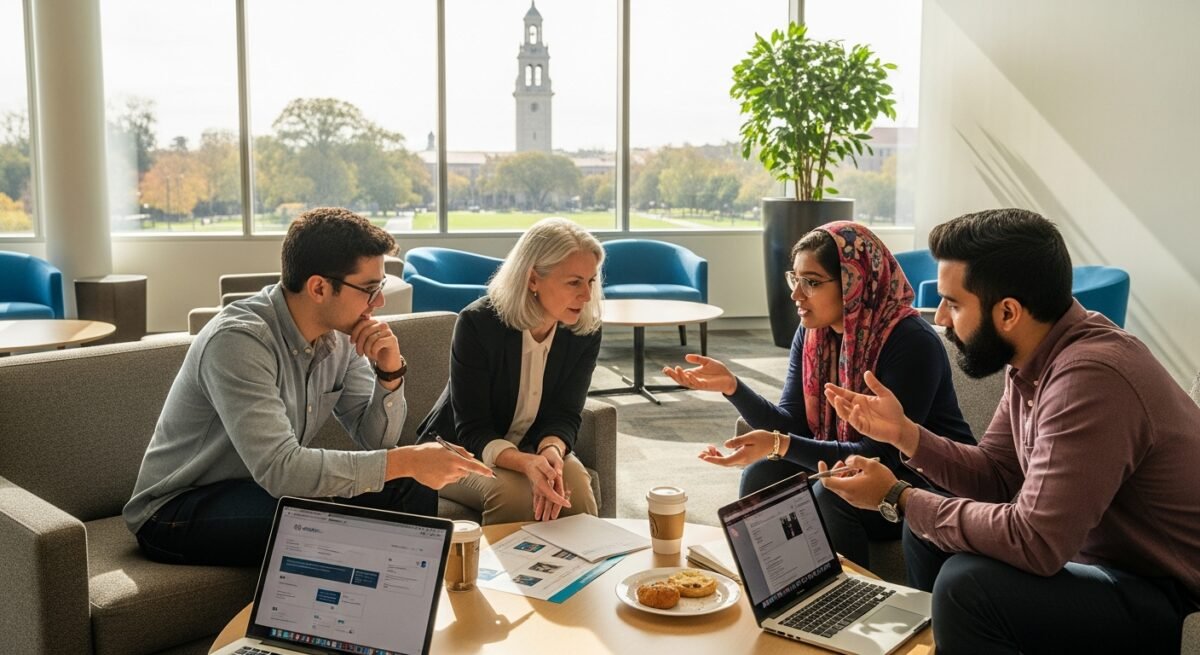
Top Colleges With Strong Alumni Mentoring Programs
Discover how colleges with strong alumni mentoring provide students with career guidance, industry connections, and a competitive professional advantage.

By Giovanna Rivera
Choosing a college is about more than just academics and campus life, it’s about investing in a network that will support you long after graduation. For many students, the presence of a robust, structured alumni mentoring program is a decisive factor, one that bridges the gap between classroom theory and real-world success. These programs connect current students with graduates who have walked the same paths, offering guidance, industry insights, and professional connections that can dramatically accelerate career trajectories. This article explores the institutions that have mastered the art of alumni engagement, turning their graduate networks into powerful, active mentoring communities that give their students a distinct and lasting advantage.
What Defines a Strong Alumni Mentoring Program?
Not all alumni networks are created equal. A strong alumni mentoring program is characterized by intentional structure, accessibility, and measurable outcomes. It moves beyond a simple LinkedIn group or an annual networking dinner. The hallmark of an effective program is its integration into the student experience, offering formal pathways for connection that are supported by the institution’s career services and alumni relations offices. These programs often feature dedicated staff, matching algorithms based on career interests and personalities, and structured timelines with clear objectives for both mentor and mentee.
The best programs are also scalable and inclusive, ensuring opportunities are available to students across all majors and backgrounds, not just those in business or engineering. They provide training for both mentors and mentees to set expectations and maximize the relationship’s value. Furthermore, strong programs track their success through metrics like internship placement rates, job offer statistics, and longitudinal surveys of participant satisfaction. This data-driven approach ensures the program evolves and meets the changing needs of students entering a dynamic global workforce.
Institutional Models for Alumni Mentorship
Colleges implement alumni mentoring through various models, each with its own strengths. Some institutions embed mentorship directly into the academic curriculum, pairing students with alumni in their specific field of study for project-based learning or career exploration assignments. Others operate through centralized career centers that offer mentorship as a standalone service, often with an online platform facilitating introductions and communication. A hybrid model is increasingly common, combining the broad reach of a central office with the tailored focus of individual schools or departments within the university.
Another effective model is the cohort-based approach, where a small group of students is mentored by one or two alumni, fostering peer learning and a broader network. Some colleges with strong alumni mentoring tie their programs to specific milestones, such as first-year transition, junior-year internship searches, or senior-year job placement. The most comprehensive systems offer tiered mentoring, allowing students to connect with alumni at different career stages, from recent graduates to seasoned executives, gaining varied perspectives. Understanding these models helps prospective students identify which structure aligns best with their personal learning style and professional goals.
Examples of Colleges Excelling in Alumni Mentorship
Several institutions stand out for their commitment to building and maintaining powerful alumni-student connections. These programs are often deeply woven into the campus culture and are a point of pride for the alumni community itself.
Liberal Arts Colleges and Private Universities
Liberal arts colleges, with their traditionally tight-knit communities, often excel in fostering deep, lasting mentor relationships. Schools like Williams College, Amherst College, and Pomona College have highly active alumni networks where graduates feel a strong sense of duty to give back. Their programs frequently emphasize one-on-one, long-term relationships, with alumni offering not just career advice but also guidance on graduate school applications and personal development. Similarly, elite private universities like Stanford, Duke, and the University of Notre Dame have built vast, well-organized networks. Stanford’s “Stanford Alumni Mentoring” platform and Duke’s “Duke Connect” are exemplary, using sophisticated technology to match thousands of students and alumni based on detailed profiles, ensuring highly relevant connections.
Research Universities and Specialized Institutions
Large public research universities can also offer exceptional mentoring by leveraging their enormous alumni bases. The University of Michigan’s “Alumni Mentorship Program” and the University of Texas at Austin’s “Texas Exes Career Network” are massive in scale but maintain a personal touch through regional chapters and affinity groups (e.g., by major, identity, or industry). For students in specialized fields, institutes like MIT, Georgia Tech, and the Rochester Institute of Technology provide mentorship deeply connected to specific technical and engineering sectors. Their alumni, often leaders in innovation, provide unparalleled access to cutting-edge industries. This is complemented by resources that explore broader colleges with strong career pipelines, which often rely heavily on these alumni networks to function effectively.
The Tangible Benefits for Students
The value of a strong alumni mentor extends far beyond a single conversation. The benefits are multifaceted and can shape a student’s professional journey in profound ways. First, it provides crucial industry insight and career navigation. An alumnus can explain the day-to-day realities of a job, suggest valuable skills to develop, and warn of common pitfalls. This inside knowledge is rarely available in a classroom setting. Second, it builds professional confidence and soft skills. Regular interactions with a professional in the field help students develop communication skills, business etiquette, and professional demeanor.
Third, and perhaps most concretely, it opens doors to internships and jobs. Alumni mentors often provide referrals, recommend opportunities within their organizations, and offer to review resumes and cover letters. This direct line to hiring managers is an invaluable advantage in a competitive job market. Fourth, it expands a student’s professional network exponentially. A single mentor can introduce a mentee to other contacts, creating a ripple effect. Finally, it offers psychosocial support, reducing the anxiety associated with career planning and providing a trusted sounding board for ideas and concerns. For students considering non-traditional or online degree pathways for students, an alumni mentor can provide essential guidance on how to leverage that format for career success.
How to Evaluate a College’s Alumni Mentoring Program
When researching colleges, prospective students should actively investigate the strength and accessibility of alumni mentoring. This requires going beyond marketing brochures and asking pointed questions. Start by exploring the career services website: look for a dedicated mentorship section, online portal access, and clear instructions on how to get involved. During campus visits or virtual sessions, ask current students about their experiences. Questions like, “Were you able to connect with an alum in your field?” and “How supportive was the process?” yield honest feedback.
Reach out to the alumni association or career center directly. Inquire about key metrics:
- The number of active alumni mentors registered in the program.
- The percentage of students who participate before graduation.
- Examples of successful mentorship outcomes or stories.
- Training and resources provided to both mentors and mentees.
- How matches are made (random, self-selected, or algorithm-based).
Also, consider the network’s reach in your desired geographic region or industry. A college may have a strong program overall, but if its alumni base is thin in your target field, the utility may be limited. Finally, assess the culture of giving back. Colleges where alumni participation in giving and volunteering is high generally indicate a more engaged and willing mentor pool.
Frequently Asked Questions
Q: Are these mentoring programs only for seniors or business majors?
A: Absolutely not. The most effective colleges with strong alumni mentoring offer programs for all class years and across all academic disciplines. Many encourage first- and second-year students to join to begin exploring careers early. Specialized programs often exist for STEM, arts, healthcare, and liberal arts majors.
Q: Is there a cost for students to participate?
A> Typically, no. These programs are almost always funded by the institution’s alumni association, career services budget, or donor gifts as a free benefit of enrollment. Their goal is to enhance student success, which in turn strengthens the alumni network.
Q: What is the typical time commitment for a mentorship?
A> It varies by program. Some are structured as short-term connections (e.g., a semester-long project or a series of three conversations). Others are designed to be long-term, even lasting beyond graduation. The commitment is usually mutually agreed upon at the start, often ranging from a few hours per month to more frequent contact.
Q: Can I have more than one mentor?
A> Yes, and this is often encouraged. Different mentors can provide guidance on different areas: one for industry-specific advice, another for leadership development, and perhaps a recent graduate for insights on transitioning from college to work. Many platforms allow you to connect with multiple alumni.
Q: What if the match with my alumni mentor isn’t a good fit?
A> Reputable programs have a clear rematch policy. They understand that personalities and expectations may not always align. Students should feel empowered to contact the program administrator to discuss the issue and request a new match without any negative consequence.
The strength of an alumni network is a critical, yet sometimes overlooked, component of a college’s value proposition. A purposeful, well-supported alumni mentoring program transforms a theoretical network into a practical, career-accelerating tool. For students making one of life’s most significant investments, prioritizing colleges with strong alumni mentoring is a strategic decision that pays dividends in confidence, connections, and career readiness, creating a supportive bridge that lasts a lifetime.