
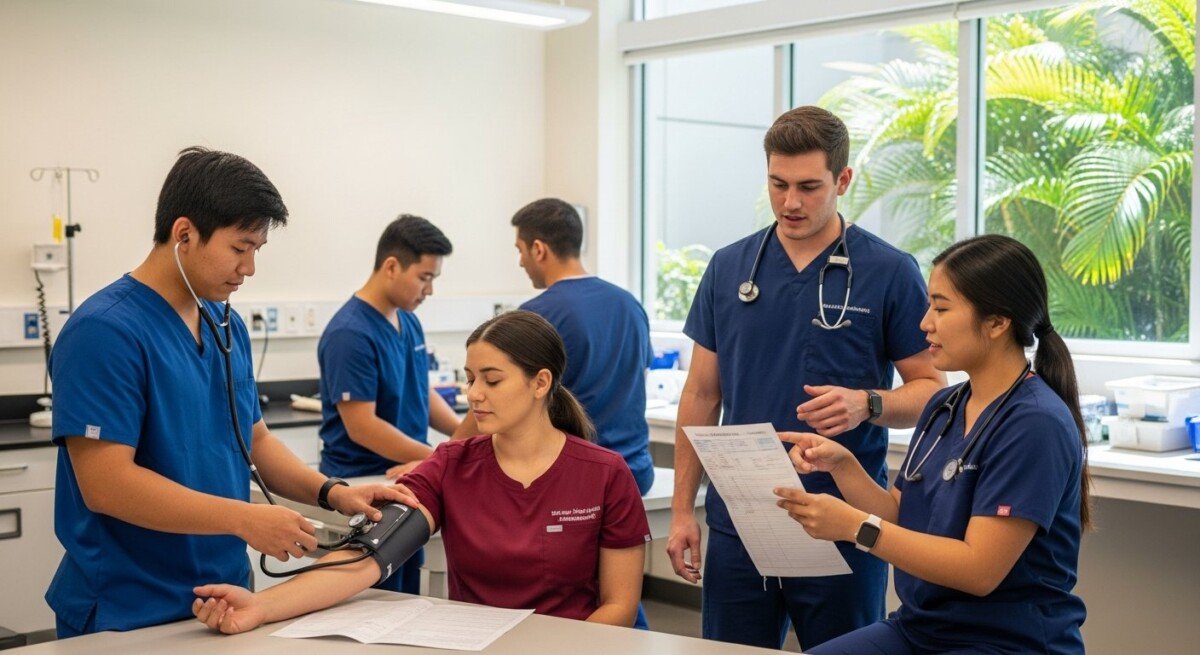
Top Health Degrees in Hawaii for Aspiring Professionals
Explore top health-related degrees available in Hawaii, where programs blend modern medicine with cultural competency for unique career advantages in nursing, public health, and tropical medicine.

By Giovanna Rivera
Hawaii’s unique cultural landscape and diverse population create a compelling environment for healthcare education, blending traditional knowledge with modern medical science. For students seeking a career in health, the islands offer specialized programs that address local and global health challenges, from tropical medicine to community wellness. Pursuing one of the top health-related degrees available in Hawaii provides not only a quality education but also immersive clinical experiences within a distinct healthcare ecosystem. This guide explores the leading academic pathways, helping you align your passion for health with the right program in the Aloha State.
Why Pursue a Health Degree in Hawaii?
Hawaii presents a distinctive setting for health education that extends far beyond its scenic beauty. The state’s healthcare system serves a uniquely diverse population, including Native Hawaiians, Pacific Islanders, and a mix of Asian and mainland American communities. This diversity requires a culturally competent approach to care, something deeply integrated into the curriculum of local institutions. Students learn to navigate and respect different health beliefs and practices, a skill increasingly valuable in our globalized world.
Furthermore, Hawaii faces specific public health challenges that provide real-world learning opportunities. These include addressing health disparities among indigenous populations, managing chronic diseases like diabetes and heart disease, and providing care across a dispersed island chain. Educational programs often incorporate these issues directly into coursework and research projects. The state’s geographic isolation also fosters innovation in telehealth and remote care delivery, areas of growing importance nationwide. For a broader perspective on digital learning paths that complement these on-island programs, our resource on online nutrition degrees for health careers explores flexible educational options.
Leading Universities and Their Health Program Offerings
The University of Hawaii system is the cornerstone of health education in the state, with multiple campuses offering specialized degrees. The flagship campus at Manoa houses the renowned John A. Burns School of Medicine (JABSOM), a leader in tropical medicine and biomedical research. Beyond the medical school, UH Manoa offers a comprehensive suite of undergraduate and graduate health programs through its College of Health Sciences and Social Welfare. These include public health, nursing, communication sciences, and kinesiology. The university’s strong emphasis on research, particularly in areas like cancer, genetics, and Native Hawaiian health, provides students with opportunities to participate in groundbreaking work.
Chaminade University of Honolulu offers a more intimate, liberal-arts-focused approach to health education. Its nursing program is highly respected, emphasizing holistic care and ethical leadership. Chaminade also provides strong programs in forensic sciences, behavioral sciences, and pre-health tracks that prepare students for professional schools. Hawaii Pacific University (HPU) contributes with its College of Health and Society, offering degrees in nursing, social work, and health sciences with a focus on urban and global health perspectives. HPU’s location in downtown Honolulu facilitates clinical partnerships with major urban medical centers.
For those interested in complementary and integrative health, the Hawaii campus of the National University of Natural Medicine offers accredited programs in naturopathic medicine. Community colleges within the UH system, such as Kapiolani Community College, provide essential entry points through Associate in Science degrees in nursing, dental hygiene, radiologic technology, and emergency medical services. These programs are critical for building the state’s healthcare workforce and often feature seamless transfer pathways to four-year institutions.
In-Demand Health Degrees and Career Pathways
Nursing remains one of the most critical and sought-after health professions in Hawaii. The state consistently faces nursing shortages, creating strong job prospects for graduates. Bachelor of Science in Nursing (BSN) programs prepare students for registered nurse licensure and cover topics from acute care to community health. Advanced practice roles, such as Nurse Practitioner (NP), require a Master of Science in Nursing (MSN) or a Doctor of Nursing Practice (DNP). These advanced degrees allow nurses to diagnose, prescribe, and manage patient care, often serving as primary care providers, especially in rural areas. Hawaii’s nursing programs frequently incorporate content on transcultural nursing and the social determinants of health prevalent in the islands.
Public Health is another cornerstone degree, addressing population-wide health issues. Bachelor’s and Master of Public Health (MPH) programs focus on epidemiology, biostatistics, health policy, and environmental health. In Hawaii, public health students might work on projects related to vector-borne diseases, disaster preparedness for volcanic activity or tsunamis, or programs to reduce obesity rates. Graduates find careers with the Hawaii Department of Health, non-profit organizations, hospitals, and international agencies. The connection between environmental stewardship and community wellness is a particularly strong theme in local public health education.
Allied Health degrees encompass a wide range of essential technical roles. These programs are typically hands-on and career-focused, leading directly to licensure or certification. Key allied health programs in Hawaii include:
- Clinical Laboratory Science: Trains professionals to perform diagnostic tests in medical labs.
- Radiologic Technology: Prepares students to operate imaging equipment like X-ray and CT scanners.
- Dental Hygiene: Focuses on oral health promotion and clinical dental care.
- Respiratory Therapy: Educates specialists in cardiopulmonary care and life support.
- Physical Therapist Assistant: Provides training to work under a PT to help patients regain mobility.
These programs are often offered at the community college level and are in high demand due to Hawaii’s aging population and expanding healthcare infrastructure. For students considering the flexibility of digital education to start or advance in these fields, valuable academic program insights can be found through dedicated online education resources.
Specialized and Unique Health Programs in the Islands
Hawaii is home to several health programs that leverage its unique environment and cultural context. Tropical Medicine is a premier specialization offered primarily at the graduate level through JABSOM. This field studies diseases prevalent in tropical and subtropical climates, such as dengue fever, leptospirosis, and certain parasitic infections. Research opportunities are abundant, given Hawaii’s location as a gateway to the Asia-Pacific region. Students in this field contribute to global health security and outbreak response.
Native Hawaiian Health is a dedicated field of study and practice aimed at eliminating health disparities and improving wellness for Native Hawaiian communities. Programs incorporate traditional healing practices (laau lapaau), cultural concepts of wellness (lokahi), and modern medical science. The Department of Native Hawaiian Health at JABSOM offers training, research, and community service focused on this model. This approach is not only culturally significant but also serves as a model for indigenous health initiatives worldwide.
Health Sciences with a focus on Gerontology is increasingly important. Hawaii has one of the longest life expectancies in the U.S. and a rapidly growing elderly population. Degrees and certificates in gerontology prepare students to work in aging services, long-term care administration, and elder health policy. Coursework covers the biological, psychological, and social aspects of aging, with particular attention to multicultural elder care. Marine and Environmental Health is another niche area, examining how ocean and ecosystem health directly impact human health through food safety, water quality, and recreation. These specialized programs offer graduates distinctive expertise that sets them apart in the job market.
Admissions, Costs, and Financial Aid Considerations
Gaining admission to health programs in Hawaii is competitive, with requirements often extending beyond standard academic metrics. Most programs require prerequisite courses in biology, chemistry, anatomy, and mathematics. Competitive GPA thresholds, typically 3.0 or higher for bachelor’s programs and 3.5+ for graduate and clinical programs, are common. Standardized tests like the TEAS (for nursing) or the GRE (for graduate public health) are frequently required. However, many Hawaii-based programs also value experiential components. These can include volunteer work in healthcare settings, community service, especially within Native Hawaiian or Pacific Islander communities, and personal statements that demonstrate an understanding of Hawaii’s specific health landscape and a commitment to serving its people.
The cost of attendance varies significantly between public and private institutions. For residents of Hawaii, tuition at University of Hawaii campuses is relatively affordable. Non-resident tuition, however, can be substantially higher. Private universities like Chaminade and HPU have higher sticker prices but also offer more institutional aid. All students should complete the Free Application for Federal Student Aid (FAFSA) to qualify for federal grants, loans, and work-study. Hawaii-specific financial aid opportunities are crucial to explore. The Hawaii State Postsecondary Education Commission administers several grants and scholarships for residents studying in-state, particularly in high-need fields like nursing and allied health. Many healthcare facilities in Hawaii, such as the Hawaii Pacific Health system or the Queen’s Health Systems, offer tuition reimbursement or scholarship-for-service programs where they pay for education in exchange for a work commitment after graduation.
Frequently Asked Questions
What is the job market like for health graduates in Hawaii?
The job market is strong but varies by specialization. Nursing, allied health technologists (like radiology and lab techs), and mental health professionals are in consistently high demand due to ongoing shortages. Competition can be stiffer for some administrative or generalist public health roles. Willingness to work on neighbor islands (outside of Oahu) often opens up more opportunities.
Can I become licensed in another state after graduating from a Hawaii program?
Most clinical programs in Hawaii (nursing, medicine, therapy, etc.) are accredited by national bodies, ensuring their curricula meet standards for licensure across the United States. Graduates must still meet individual state requirements, which may include additional jurisprudence exams or fees, but the educational foundation is transferable. It is always wise to verify with the licensing board of the state where you intend to practice.
Are there online options for health degrees in Hawaii?
Yes, many Hawaii institutions offer hybrid or fully online options, especially for graduate degrees and certain bachelor’s completion programs. The University of Hawaii’s online system, UH Online, provides a platform for many courses. This can be ideal for working professionals or those on neighbor islands. However, fully clinical degrees (like nursing or dental hygiene) will always have in-person lab and practicum requirements.
How important is cultural competency in Hawaii’s health programs?
It is paramount. Health programs in Hawaii heavily emphasize cultural competency, respect for Native Hawaiian healing traditions, and understanding the diverse values of Pacific Islander and Asian populations. This training is not an elective add-on, it is a core component of the curriculum and clinical training, considered essential for providing effective, respectful care in Hawaii’s communities.
What are the clinical placement opportunities like?
Students gain clinical experience in a wide variety of settings, from large urban hospitals like The Queen’s Medical Center in Honolulu to rural community health centers on Molokai or Lanai, and in unique facilities like the Hawaii State Hospital or the Tripler Army Medical Center. This diversity provides a rich, comprehensive training experience.
Choosing to pursue a health degree in Hawaii is a decision that blends academic rigor with profound cultural and environmental learning. The programs available are designed not only to build clinical expertise but also to foster a deep sense of community responsibility and cultural humility. Whether your interest lies in direct patient care, public health policy, or groundbreaking research, Hawaii’s educational institutions provide a unique platform to launch a meaningful career. By investing in your education here, you gain the skills to improve health outcomes in the islands and beyond, carrying forward a model of integrated, respectful healthcare.