
Top Michigan Degrees for High Job Placement and Career Success
Discover Michigan college degrees with superior job placement rates, often exceeding 95%, due to embedded co-ops and direct industry partnerships.

By Jeffrey Hartford
Choosing a college degree is one of the most significant investments a student can make, and in Michigan, where industries from automotive to healthcare drive a dynamic economy, the return on that investment is often measured by one critical metric: job placement. For prospective students and career changers, the ultimate question isn’t just about getting a degree, but about securing a direct pathway to a stable, rewarding career. Michigan’s higher education landscape is uniquely positioned to answer this need, with several universities and programs boasting exceptional job placement rates that consistently outperform national averages. This success is not accidental, it is the result of strategic curriculum design, deep industry partnerships, and a relentless focus on career readiness that begins on day one of a student’s academic journey.
Why Michigan Universities Excel in Career Placement
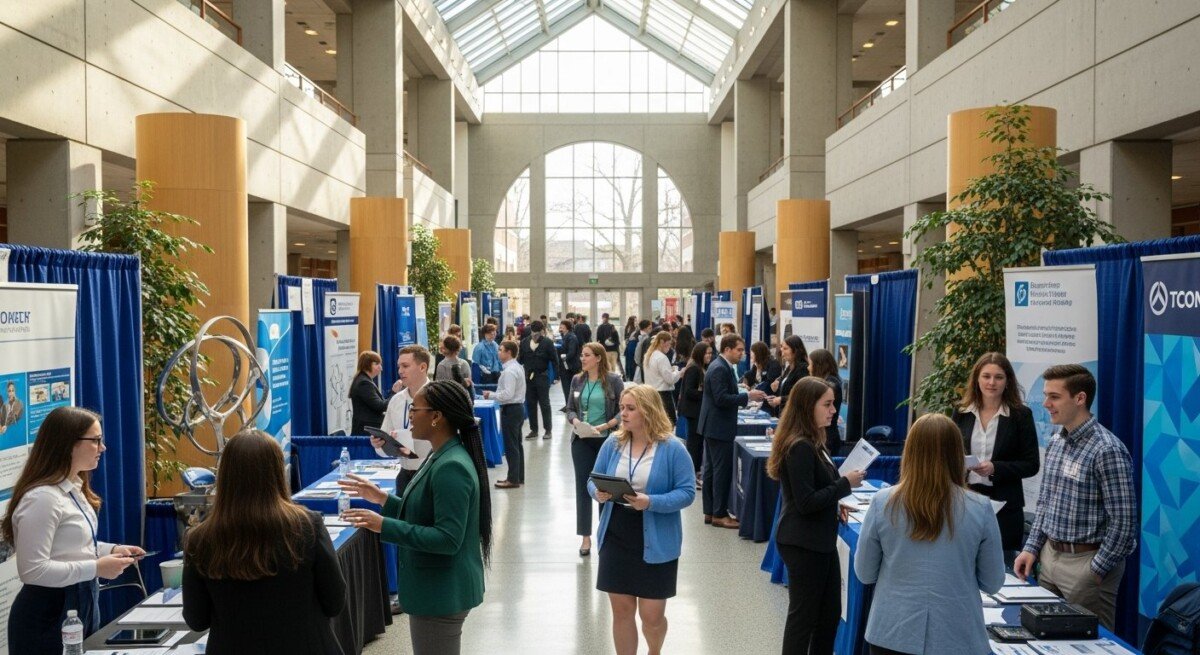
Michigan’s institutions have cultivated an environment where academic theory and practical application are seamlessly integrated. This is largely due to the state’s robust industrial base, which includes legacy sectors like advanced manufacturing and engineering, alongside booming fields in technology, life sciences, and business services. Universities have responded by building degree programs in direct collaboration with these employers. For instance, co-op programs and required internships are not extracurricular options but are often embedded into the credit requirements for degrees known for high job placement. This model ensures students graduate with not only a diploma but also a full year of relevant work experience, a professional network, and, in many cases, a job offer in hand. Furthermore, career services offices at top Michigan schools are exceptionally proactive, functioning more like corporate talent acquisition partners than traditional campus support services. They host industry-specific career fairs, facilitate on-campus recruiting from major companies, and provide intensive coaching on resume building and interview skills tailored to Michigan’s key employers.
The proof of this effectiveness is visible in post-graduation outcome reports. Many Michigan universities publicly track and report first-destination data, showing the percentage of graduates employed or in graduate school within six months of graduation. For the top-performing programs, these figures regularly reach 90% to 95% or higher, a testament to the strong pipeline between classroom and career. This focus on outcomes is a defining characteristic of Michigan higher education, making it a prime destination for students who prioritize employment security. For a broader look at degrees that lead to stable careers, our resource on the best college degrees for high employment provides a national perspective that complements this Michigan-specific analysis.
Michigan Degree Programs with Proven Job Placement Records
While many programs offer value, certain degrees stand out for their nearly guaranteed pathway to employment. These programs are typically in high-demand fields where the supply of qualified graduates has not kept pace with industry need. They are also characterized by accreditation from prestigious professional bodies, which signals to employers that the curriculum meets rigorous industry standards.
Engineering disciplines, particularly those tied to Michigan’s automotive and manufacturing core, are perennial leaders. Degrees in Mechanical Engineering, Electrical Engineering, and Computer Science from schools like the University of Michigan, Michigan Technological University, and Kettering University see placement rates often exceeding 95%. The demand is so high that recruiting for these roles often occurs a full year before graduation. Similarly, programs in Nursing and Health Sciences are in critical demand across the state. With Michigan facing healthcare workforce shortages, graduates from accredited nursing programs at institutions like Michigan State University or the University of Detroit Mercy frequently have multiple job offers before they even sit for their licensing exams. Another standout sector is Business Information Systems and Supply Chain Management. Given Michigan’s role as a logistics hub, graduates with expertise in managing complex global supply chains from schools like Wayne State University or Grand Valley State University are highly sought after by major corporations.
To identify programs with the strongest outcomes, prospective students should look beyond general university rankings and examine specific department or college employment reports. Key indicators include the percentage of students participating in internships or co-ops, the average number of job offers per graduate, and the median starting salary for the program. These data points offer a more accurate picture of career readiness than prestige alone. For students considering the financial return of their education, exploring high paying college degrees for a secure career path can help connect placement rates with long-term earning potential.
The Role of Industry Partnerships and Experiential Learning
The cornerstone of superior job placement for Michigan college degrees is the deep, symbiotic relationship between academia and industry. These partnerships take several forms, each designed to bridge the gap between learning and doing. Apprenticeship-style degree programs, particularly in engineering technology and skilled trades, allow students to earn a salary while they learn, graduating with zero debt and a guaranteed position. Corporate-sponsored capstone projects are another common feature, where student teams work for an entire semester to solve a real-world problem presented by a company like Ford, Dow, or Whirlpool. These projects serve as an extended interview, with many students receiving offers from the sponsoring company upon successful completion.
Furthermore, many Michigan colleges have established dedicated research parks and innovation centers that house both university labs and startup or corporate offices. This physical proximity fosters collaboration and creates a direct talent funnel. For example, a student studying computer science might work part-time at a tech startup located in their university’s research park, gaining invaluable experience that makes them a top candidate upon graduation. This model of integrated experiential learning ensures that students develop not just technical knowledge, but also the soft skills, professional demeanor, and problem-solving abilities that employers value most. When evaluating programs, the strength and number of these industry partnerships are a leading indicator of job placement success.
Navigating Your Options: Online and Traditional Pathways
Michigan’s commitment to career-focused education extends beyond the physical campus. Many of the state’s universities offer highly regarded online degree programs in high-demand fields, designed with the same focus on job placement as their on-campus counterparts. These programs are ideal for adult learners, career changers, or those who need flexibility while they work. The key is to ensure the online program maintains the same access to career services, virtual recruiting events, and faculty with industry experience. Reputable online programs will proudly share their job placement statistics and career support resources for remote students.
Whether choosing an online or traditional pathway, students should adopt a strategic approach to maximize their job placement potential. This begins with selecting a program that is transparent about its outcomes. The following checklist outlines critical steps for prospective students:
- Request First-Destination Data: Contact the admissions or career services office of your target program and ask for their official post-graduation employment report.
- Investigate Required Experiential Learning: Determine if an internship, co-op, or clinical is mandatory for graduation, as this is a strong predictor of job readiness.
- Research Career Service Engagement: Look into the specific services offered, such as resume reviews tailored to your industry, mock interviews, and exclusive job boards.
- Analyze Alumni Network Strength: Search LinkedIn to see where graduates of the program are currently employed and in what roles.
- Verify Professional Accreditation: Confirm the program holds accreditation from the relevant professional body (e.g., ABET for engineering, AACSB for business, CCNE for nursing).
By thoroughly researching these elements, students can make an informed decision that aligns their educational goals with a clear career trajectory. For those exploring digital education pathways, valuable academic program insights can be found through dedicated online education resources that compare program structures and outcomes.
Frequently Asked Questions
Which Michigan university has the highest overall job placement rate?
Job placement rates vary significantly by program rather than university-wide. However, institutions like the University of Michigan (Ann Arbor), Michigan Technological University, and Kettering University consistently report high average placement rates, often driven by their top-ranked engineering, business, and computer science programs. It is always best to check the specific data for your intended major.
Are degrees from Michigan’s public universities better for job placement than private colleges?
Not necessarily. Both public and private institutions in Michigan offer degrees with excellent job placement. Large public research universities often have vast industry networks, while smaller private colleges may offer more personalized career coaching and direct connections with regional employers. The quality of the specific program and its industry ties is more important than the public/private designation.
How important is the co-op program for engineering job placement in Michigan?
Extremely important. Co-op programs, where students alternate semesters of study with full-time paid work in their field, are a hallmark of engineering education in Michigan. Graduates from co-op programs typically have over a year of professional experience, a refined resume, and a professional network that makes them exceptionally competitive. Many receive full-time offers from their co-op employer.
Do online degrees from Michigan schools have the same job placement success?
Accredited online degrees from reputable Michigan institutions are designed to offer the same rigorous curriculum and often provide access to similar career services as on-campus programs. Success depends heavily on the student’s proactive engagement with virtual career support, networking events, and internship opportunities. Employers increasingly value the discipline and time-management skills demonstrated by successful online graduates.
What should I do if my desired degree program doesn’t publish job placement data?
A lack of transparent outcome data is a red flag. If a program does not publish placement rates, directly ask the department for this information. If they cannot or will not provide it, consider it a sign that career outcomes may not be a priority. You should strongly favor programs that are proud and transparent about their graduates’ success.
Ultimately, pursuing a Michigan college degree with a proven track record of job placement is a strategic decision that mitigates risk and maximizes future opportunity. By focusing on programs that prioritize experiential learning, maintain strong industry alliances, and offer transparent outcome data, students can transform their educational investment into a launching pad for a successful and secure career. The state’s diverse economic landscape and its universities’ commitment to career readiness create an ideal environment for turning academic achievement into professional fulfillment.