
Top Nursing Associate Degrees for a Fast-Track Healthcare Career
Launch your nursing career efficiently with a top Associate Degree in Nursing (ADN). This path offers a fast, affordable route to becoming a licensed RN.

By Emily Foster
Choosing the right educational path is the most critical decision for aspiring nurses. In a field demanding both rigorous skill and deep compassion, an Associate Degree in Nursing (ADN) stands out as one of the most efficient and respected routes to entering the profession. These programs, often offered at community colleges, provide the foundational knowledge and clinical training needed to sit for the NCLEX-RN licensing exam and begin practicing as a Registered Nurse (RN). For many, the foremost nursing associate degrees represent a perfect balance of affordability, accelerated timeline, and high-quality education, opening the door to a stable, rewarding career in just two to three years. This guide explores what makes these programs exceptional and how to identify the top options for your future.
Understanding the Value of an ADN
An Associate Degree in Nursing is a two-year program that blends classroom instruction in sciences and nursing theory with hands-on clinical experience. Its primary objective is to prepare competent, entry-level nurses who can provide safe, effective patient care across various healthcare settings. The value proposition is compelling. Compared to a four-year Bachelor of Science in Nursing (BSN), an ADN offers a significantly faster and often more affordable path to RN licensure and employment. This allows graduates to start earning a competitive nursing salary and gaining invaluable real-world experience years sooner. Furthermore, the structure of associate degrees, as detailed in our resource on what associate degrees are, makes them highly accessible, particularly through community college systems.
The demand for RNs remains consistently high, and hospitals, clinics, and long-term care facilities actively hire ADN graduates. While some healthcare systems, particularly large academic medical centers, express a preference for BSN-prepared nurses, the current nursing shortage ensures robust job opportunities for ADN holders. Many nurses then leverage tuition reimbursement benefits from their employers to complete an RN-to-BSN bridge program online while working, a strategic and cost-effective career advancement path. Therefore, the ADN is not a dead-end, but rather a powerful launchpad.
Key Hallmarks of a Top-Tier ADN Program
Not all nursing programs are created equal. The foremost nursing associate degrees distinguish themselves through several critical attributes that directly impact student success and career readiness. Accreditation is the non-negotiable first filter. You must ensure the program is accredited by either the Accreditation Commission for Education in Nursing (ACEN) or the Commission on Collegiate Nursing Education (CCNE). This accreditation guarantees that the program meets national standards of quality and, most importantly, that its graduates are eligible to take the NCLEX-RN exam.
Beyond accreditation, several other factors define program quality. High NCLEX-RN first-time pass rates are the most telling metric of a program’s effectiveness. Consistently high rates (often above 90%) indicate strong curriculum and preparation. The depth and variety of clinical partnerships are equally vital. Top programs have relationships with multiple healthcare facilities, exposing students to diverse patient populations and specialties, from pediatrics and obstetrics to medical-surgical and mental health nursing. Finally, the qualifications of the faculty, the student-to-faculty ratio in clinical settings, and the availability of academic support services like tutoring and simulation labs are all indicators of a program committed to student success.
Choosing the Right Program for You
Selecting among the foremost nursing associate degrees requires careful personal evaluation. Your decision should align with your lifestyle, learning preferences, and career goals. The first major consideration is format. Traditional on-campus programs offer a structured, cohort-based experience with in-person labs and scheduled clinical rotations. Hybrid or online ADN programs provide greater flexibility for theory coursework but still require in-person clinical components arranged locally. Your choice will depend on your need for schedule flexibility and your self-discipline.
Location and cost are inevitably major factors. Community college-based ADN programs are famously cost-effective, but you should investigate all associated expenses, including fees, books, uniforms, and testing. Proximity to clinical sites can reduce commute stress. Furthermore, investigate the program’s specific admission requirements, which are often highly competitive. Prerequisites like anatomy, physiology, and microbiology, along with minimum GPA standards and entrance exams like the TEAS (Test of Essential Academic Skills), are common. Planning to meet these requirements ahead of time is crucial.
To organize your research, consider these essential criteria when comparing programs:
- Accreditation Status: Confirm ACEN or CCNE accreditation is current.
- NCLEX Pass Rates: Review at least the last three years of first-time pass rate data.
- Program Completion Rate: This indicates student retention and program support.
- Clinical Rotation Sites: Ask for a list of partner hospitals and clinics.
- Tuition and Total Cost: Include all mandatory fees and estimated additional expenses.
- Admission Competitiveness: Understand average accepted GPA and test scores.
The Journey from Student to Registered Nurse
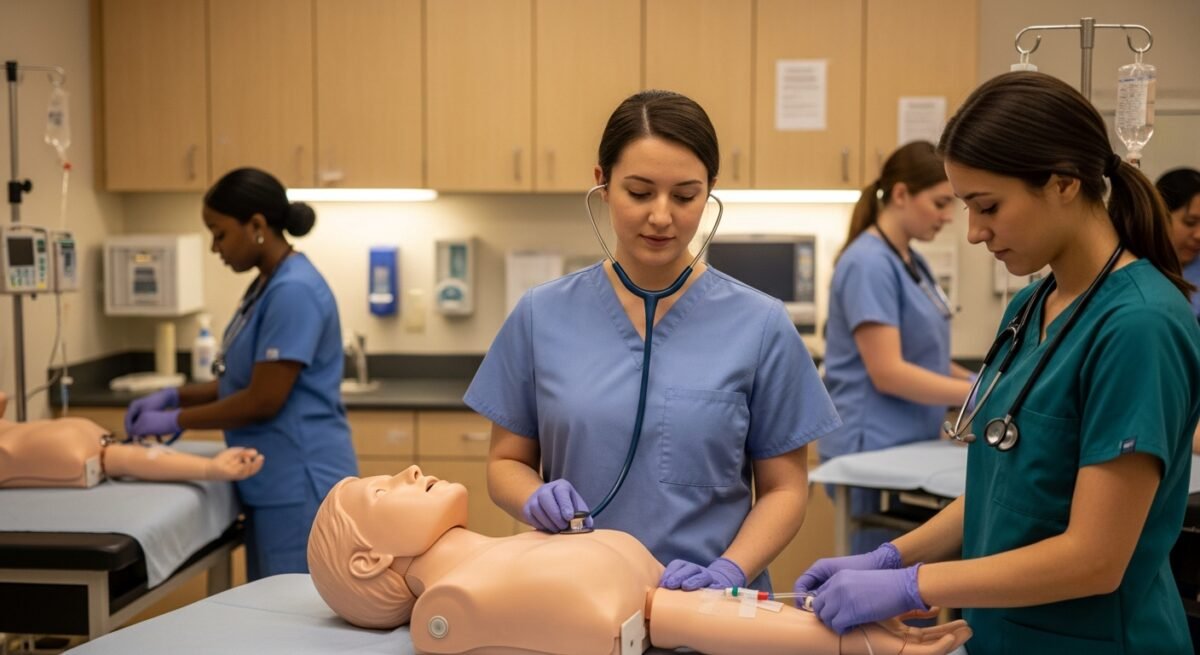
Enrolling in a top ADN program is the beginning of an intensive and transformative journey. The curriculum is demanding, designed to build competency systematically. The first year typically focuses on prerequisite sciences and introductory nursing concepts, while the second year delves into complex medical-surgical nursing, pharmacology, and specialized care areas. Time management becomes an essential skill as you balance lectures, skills labs, simulation exercises, and mandatory clinical hours. Clinical rotations are the heart of the training, where you apply textbook knowledge to real patients under the supervision of clinical instructors and staff nurses.
Upon successful completion of the program, you will receive your associate degree and be eligible to apply for the NCLEX-RN. This standardized computer-adaptive test is the final hurdle to obtaining your RN license. The foremost programs integrate NCLEX preparation throughout their curriculum, often culminating in a comprehensive review course. Passing the NCLEX allows you to apply for state licensure and begin your job search. With license in hand, ADN graduates are qualified for a wide array of entry-level RN positions in hospitals, physician offices, outpatient surgery centers, home healthcare, and long-term care facilities.
Maximizing Your ADN Career Trajectory
Graduating and securing your first RN position is a monumental achievement. To maximize the long-term potential of your ADN, proactive career planning is key. The first step is to excel in your initial role, building clinical confidence and a strong professional reputation. Simultaneously, you should explore your employer’s benefits, particularly tuition assistance for continuing education. Enrolling in an RN-to-BSN completion program, often available entirely online, allows you to earn your bachelor’s degree while working. This not only fulfills the “BSN-in-10” laws emerging in some states but also opens doors to leadership roles, specialty certifications, and higher pay scales.
Specialization is another powerful avenue for advancement. After gaining one to two years of general experience, you can pursue certifications in areas like critical care, oncology, or emergency nursing. These credentials demonstrate expertise and can lead to more specialized and higher-paying positions. Furthermore, the ADN provides a solid foundation for pursuing advanced practice roles later, such as Nurse Practitioner or Nurse Anesthetist, though those paths require a master’s or doctoral degree. The investment in a quality ADN program pays continuous dividends, serving as the resilient and respected cornerstone of a lifelong nursing career.
The path to becoming a Registered Nurse through an associate degree is a proven and pragmatic choice. By focusing on accredited programs with strong outcomes, you invest in an education that delivers a rapid return in terms of career opportunity, professional satisfaction, and the ability to make a meaningful difference. The foremost nursing associate degrees are those that not only prepare you to pass a test but to excel in the complex, human-centered world of healthcare, providing a launchpad for as far as you wish to go in the nursing profession.