
Top Ranked Nursing Schools for Aspiring Healthcare Leaders
Identify top nursing programs by evaluating key factors like accreditation, NCLEX pass rates, and clinical partnerships to launch a successful healthcare career.

By Giovanna Rivera
Choosing the right nursing program is one of the most critical decisions for your future in healthcare. The quality of your education directly impacts your clinical skills, career opportunities, and ability to provide exceptional patient care. With hundreds of programs available, from local community colleges to prestigious research universities, identifying the best schools for nursing requires careful consideration of factors beyond simple rankings. This guide will help you navigate the essential criteria for selecting a top-tier nursing program that aligns with your professional ambitions and educational needs.
Defining Excellence in Nursing Education
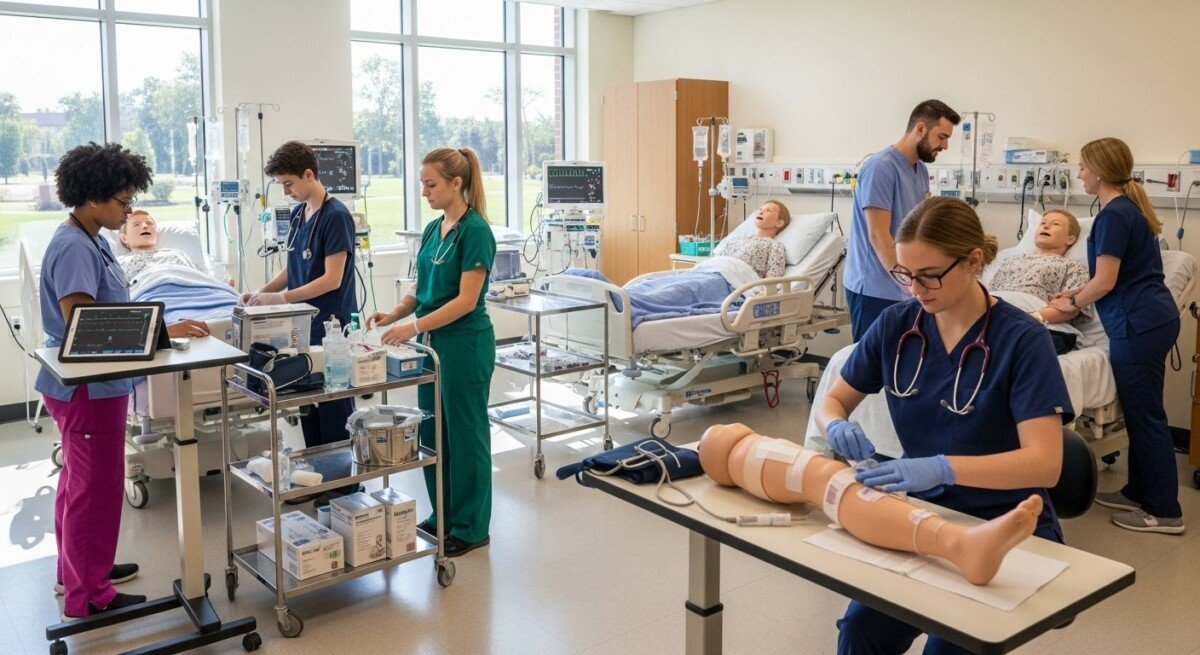
What truly makes a nursing school “the best”? The answer varies significantly depending on a student’s individual goals, financial situation, and preferred learning style. A program that is perfect for a high school graduate seeking a traditional four-year Bachelor of Science in Nursing (BSN) experience may not suit a career-changer looking for an accelerated second-degree track. Therefore, excellence must be evaluated through a personalized lens. However, several universal markers of quality distinguish outstanding nursing programs from average ones. These include rigorous accreditation, which ensures the curriculum meets national standards for nursing practice, and consistently high NCLEX-RN pass rates, demonstrating that graduates are well-prepared for licensure. Furthermore, the best schools for nursing invest heavily in simulation labs that mirror real clinical environments, foster strong partnerships with leading healthcare systems for student placements, and are staffed by faculty who are both accomplished educators and experienced practitioners.
Key Factors to Evaluate in a Nursing Program
Before examining any list of schools, you must establish your own personal criteria. A program’s prestige is meaningless if it does not offer the pathway, support, or specialization you need. Start by clarifying your own objectives. Are you aiming for an entry-level RN role, or do you have ambitions for advanced practice, leadership, or research? Your long-term vision will dictate whether you need a program with strong BSN foundations, robust MSN and DNP pathways, or a culture that encourages undergraduate research. Next, consider the practicalities of program format and delivery. The rise of high-quality online and hybrid programs has expanded access dramatically, but some students thrive in a structured, on-campus environment. You must also scrutinize the clinical rotation opportunities. A program’s connections to diverse healthcare settings (hospitals, community clinics, public health agencies) are invaluable for building a well-rounded skill set.
To systematically compare programs, focus on the following core elements:
- Accreditation: Ensure the program is accredited by either the Commission on Collegiate Nursing Education (CCNE) or the Accreditation Commission for Education in Nursing (ACEN). This is non-negotiable for licensure, federal financial aid, and future education.
- NCLEX Pass Rates: Publicly available pass rates for first-time test-takers are a strong indicator of how effectively a program prepares its graduates for the national licensing exam. Consistently high rates (e.g., above 90%) are a positive sign.
- Program Outcomes and Support: Investigate graduation rates, job placement statistics, and the types of academic support offered, such as tutoring, NCLEX prep courses, and dedicated student success advisors.
- Faculty Credentials and Ratios: Learn about the faculty’s clinical and research expertise. A low student-to-faculty ratio, especially in clinical and lab settings, often leads to more personalized instruction and mentorship.
- Cost and Financial Aid: Calculate the total cost of attendance, including fees, and research the availability of scholarships, grants, and work-study programs specifically for nursing students.
Exploring Different Types of Top Nursing Programs
The landscape of nursing education offers multiple entry points and pathways, each with its own set of leading institutions. For those beginning their journey, Associate Degree in Nursing (ADN) programs at highly-regarded community colleges provide a cost-effective and faster route to becoming an RN. Many of these programs have articulation agreements with universities, making the transition to a BSN seamless. For the traditional path, four-year BSN programs at universities are often considered the gold standard for entry-level preparation. These programs integrate more liberal arts education with deep nursing science and leadership training, which is increasingly preferred by major hospital employers.
For individuals who already hold a bachelor’s degree in another field, Accelerated BSN (ABSN) programs are an intensive, fast-track option. The best schools for nursing in this category design rigorous curricula that condense learning without sacrificing clinical quality. At the graduate level, the definition of “best” shifts toward specialization and research. Master of Science in Nursing (MSN) programs are evaluated on their advanced practice tracks (like Nurse Practitioner, Nurse Anesthetist, or Clinical Nurse Specialist), the success of their graduates on certification exams, and their integration of clinical hours. Doctor of Nursing Practice (DNP) and PhD programs represent the pinnacle of clinical and research leadership, respectively. Top schools here are distinguished by their faculty research funding, policy influence, and partnerships with national health organizations.
The Importance of Specialization and Clinical Opportunities
As you narrow your search, look for programs that offer strengths in your area of interest. A school might be nationally ranked overall but have a particularly renowned pediatric nursing specialty or a unique partnership with a Veterans Affairs hospital for those interested in veteran health. The quality and diversity of clinical placements are arguably the most practical aspect of your education. The best schools for nursing secure placements in Level I trauma centers, specialized children’s hospitals, community health networks, and global health initiatives, giving students a comprehensive view of the healthcare system. This experiential learning is where theoretical knowledge transforms into clinical competence.
Beyond the Classroom: Resources and Career Launchpads
A top nursing school functions as a career launchpad. This involves more than just a graduation ceremony, it encompasses a sustained institutional investment in student success. Look for schools with dedicated career service offices that have strong relationships with regional and national healthcare employers. These offices often host exclusive job fairs, facilitate residency and internship applications (like coveted Nurse Residency Programs), and provide coaching for interviews and contract negotiations. Furthermore, the strength and engagement of an alumni network can be a tremendous professional asset. An active network can provide mentorship, job referrals, and continuing education connections throughout your career.
Another critical resource is the school’s investment in simulation technology. Advanced simulation centers that use high-fidelity manikins and virtual reality scenarios allow students to practice complex, high-risk procedures in a safe, controlled environment before ever touching a patient. This builds confidence and critical thinking. Finally, consider the school’s culture and student support systems. Nursing school is demanding, and programs that offer robust wellness resources, peer mentoring groups, and a collaborative rather than hyper-competitive atmosphere can make a significant difference in your personal and academic resilience.
Frequently Asked Questions
Is an expensive, top-ranked university always the best choice for a nursing degree?
Not necessarily. While prestigious universities offer significant resources and name recognition, many public universities and regional colleges provide exceptional nursing education at a fraction of the cost. Your focus should be on accreditation, NCLEX pass rates, and clinical opportunities. A graduate from a well-respected state school with a 95% NCLEX pass rate is just as licensed as one from an Ivy League institution.
How important is it for a nursing school to be affiliated with a major hospital?
Extremely important. A direct affiliation or strong partnership with a large hospital system or academic medical center typically translates into higher-quality, more diverse, and more secure clinical placement opportunities for students. It can also streamline the transition to a first job.
Can I become a nurse through an online program, and are they considered reputable?
Yes, especially for RN-to-BSN and graduate-level degrees. Many highly reputable universities offer accredited online nursing programs. The key is that while theoretical coursework can be completed online, the program must arrange for in-person clinical practicums in your geographic area. Always verify the program’s accreditation and how they facilitate clinical placements.
What is the single most important data point to check when researching nursing schools?
The first-time NCLEX-RN pass rate is the most critical, standardized outcome measure. It is a direct reflection of how well the program’s curriculum prepares students for the actual practice of nursing. Consistently low pass rates are a major red flag, regardless of other attractive features.
Should I choose a BSN program over an ADN program?
The BSN is increasingly becoming the educational standard for registered nurses, especially in hospital settings, and is required for many advanced roles and graduate programs. An ADN is a faster, more affordable path to RN licensure. A strategic approach is to complete an ADN at a quality community college, begin working as an RN, and then enroll in an RN-to-BSN online program, often with employer tuition assistance.
Selecting the right nursing school is a deeply personal investment in your future as a healthcare professional. By looking beyond generic rankings and focusing on the specific factors that align with your goals, from accreditation and outcomes to clinical culture and career support, you can identify a program where you will not only succeed but thrive. The best schools for nursing are those that equip you with the knowledge, skills, and confidence to excel on the NCLEX and, far more importantly, at the bedside and beyond, making a meaningful difference in the lives of patients and communities.