
Top-Tier Nursing Bachelor’s Degrees: A Guide to Elite Programs
A top-tier nursing bachelor’s degree provides superior clinical training, leading to higher NCLEX pass rates and better career placement in prestigious hospitals.

By Jeffrey Hartford
Choosing the right nursing program is one of the most critical decisions a future healthcare professional can make. A Bachelor of Science in Nursing (BSN) is more than just a degree, it’s the foundational credential that unlocks advanced clinical roles, leadership opportunities, and a resilient career in a high-demand field. However, not all BSN programs are created equal. The distinction between a standard program and a top-tier nursing bachelor’s degree can significantly impact your education, your clinical preparedness, and your long-term career trajectory. This guide delves into what defines an elite nursing program and how to identify the one that will best serve your ambitions.
Defining “Top-Tier” in Nursing Education
The label “top-tier” encompasses a combination of quantitative metrics and qualitative characteristics that signal excellence. It’s not merely about prestige or name recognition, though those can be factors. A truly elite nursing program consistently produces graduates who are exceptionally prepared, highly sought after, and positioned to become leaders in the field. The hallmarks of such programs are multifaceted, blending rigorous academics with unparalleled practical experience.
First and foremost is accreditation. While regional accreditation of the university is essential, programmatic accreditation from the Commission on Collegiate Nursing Education (CCNE) or the Accreditation Commission for Education in Nursing (ACEN) is non-negotiable for a top-tier program. This ensures the curriculum meets national standards for quality and rigor, a prerequisite for licensure and further education. Beyond accreditation, key indicators include consistently high NCLEX-RN first-time pass rates (often well above the national average), which demonstrate the program’s effectiveness in preparing students for the licensing exam. Other critical factors are the credentials and clinical activity of the faculty, the depth and variety of clinical placement partnerships with leading hospitals and healthcare systems, and a curriculum that integrates the latest evidence-based practice, technology, and healthcare trends.
Core Components of an Elite BSN Curriculum
The curriculum is the engine of a top-tier nursing degree. It moves beyond rote memorization of medical facts to cultivate clinical judgment, critical thinking, and compassionate care. A robust BSN curriculum is built on a strong foundation of sciences (anatomy, physiology, microbiology, chemistry) and liberal arts, followed by sequential nursing courses that increase in complexity. What sets elite programs apart is how these elements are integrated and taught.
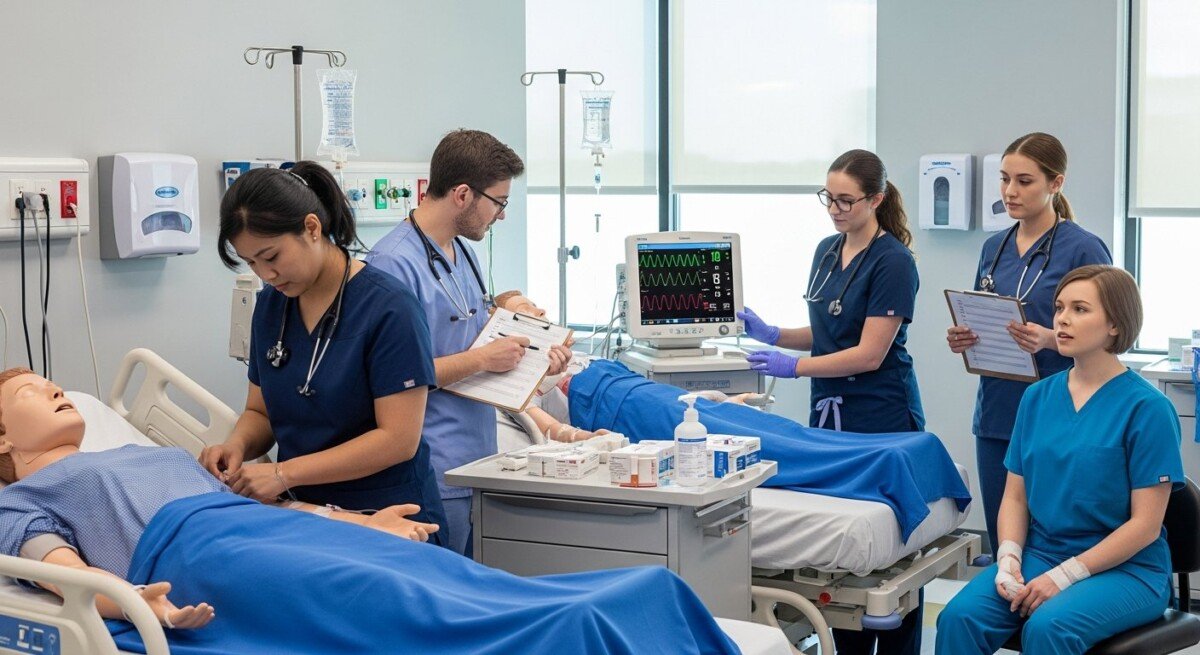
Innovative programs often employ simulation-based learning in high-fidelity labs that mimic real clinical environments, allowing students to practice skills and decision-making in a risk-free setting. They emphasize interprofessional education, where nursing students collaborate with those in medicine, pharmacy, and social work to understand team-based care. Furthermore, top-tier programs embed concepts of population health, healthcare policy, informatics, and leadership throughout the curriculum, preparing graduates not just to work within the system, but to understand and improve it. Research literacy is another key component, with students learning to appraise and apply scientific evidence to their practice.
The Critical Role of Clinical Experiences
Classroom and lab learning are vital, but nursing is ultimately a practice discipline. The quality, diversity, and mentorship during clinical rotations are where top-tier nursing bachelor’s degrees truly separate themselves. Elite programs have established, long-term relationships with a wide network of clinical sites, including major academic medical centers, specialized pediatric hospitals, community health clinics, and mental health facilities.
This access provides students with a comprehensive view of healthcare across the lifespan and in various settings. It’s not just about logging hours, it’s about the quality of the preceptorship. In the best programs, students are paired with experienced nurse preceptors who provide guided, hands-on learning and progressively increase student responsibility. These rotations expose students to advanced technologies, complex patient cases, and specialized units they might not encounter elsewhere, building confidence and competence that is immediately apparent to future employers.
Pathways and Program Formats for Aspiring Nurses
Top-tier nursing education is accessible through multiple pathways, designed to meet the needs of different types of students. Understanding these options is crucial for selecting the right program for your background and goals.
The traditional, pre-licensure BSN is a four-year program designed for students entering college with no prior nursing education. An accelerated BSN (ABSN) is an intensive, full-time program for individuals who already hold a bachelor’s degree in another field, allowing them to earn a BSN in as little as 12 to 18 months. For Registered Nurses with an Associate Degree in Nursing (ADN) or a diploma, the RN-to-BSN completion program is a pivotal pathway, often offered online, that builds upon existing clinical knowledge with bachelor’s-level coursework in leadership, research, and community health. Many top schools offer this format, allowing working nurses to advance their education flexibly.
When evaluating program formats, consider these key questions:
- Learning Modality: Is the program offered on-campus, online, or in a hybrid format? Top-tier online programs have robust student support and structured clinical coordination in your local area.
- Program Length and Intensity: How does the schedule align with your other commitments (work, family)? Accelerated programs are demanding but fast.
- Admission Competitiveness: What are the prerequisites, minimum GPA, and testing requirements (e.g., TEAS or HESI)? Competitive programs have stringent criteria.
- Support Services: Does the program offer dedicated academic advising, tutoring, NCLEX preparation, and career placement assistance?
Evaluating Return on Investment and Career Outcomes
Pursuing a top-tier nursing bachelor’s degree is a significant investment of time, effort, and finances. Assessing the potential return on investment (ROI) is a practical necessity. The ROI extends beyond starting salary, though BSN-prepared nurses typically command higher wages and are eligible for more positions than those with an ADN. The long-term career ceiling is substantially higher.
Graduates from elite programs often benefit from direct pipelines to nurse residency programs at prestigious hospitals, which provide structured support for new graduates and lead to higher retention rates. They are also strongly positioned for rapid advancement into charge nurse, nurse educator, or unit manager roles. Furthermore, a BSN from a respected program is a prerequisite for admission to competitive graduate programs for advanced practice roles like Nurse Practitioner, Clinical Nurse Specialist, or Nurse Anesthetist. The network you build, the reputation of your alma mater, and the skills you acquire collectively contribute to a lifetime of enhanced earning potential and professional opportunities.
Financial Considerations and Aid Strategies
The cost of a BSN program can vary widely, from public state universities to private institutions. However, the sticker price is not always the final price. Top-tier programs, especially at private universities, often have substantial endowments dedicated to scholarships and grants. It is essential to thoroughly research all financial aid options.
Start by completing the Free Application for Federal Student Aid (FAFSA) to determine eligibility for federal grants, work-study, and loans. Investigate program-specific scholarships offered by the nursing school, often based on merit, financial need, or commitment to a specific population or region. Many healthcare systems offer tuition reimbursement or loan forgiveness programs in exchange for a service commitment after graduation. State-based nursing incentive programs may also provide funding. When comparing programs, look at the net cost after aid is applied, not just the tuition rate.
Frequently Asked Questions
Is a top-tier BSN worth the potentially higher cost compared to a local community college ADN program?
For long-term career goals, the investment in a BSN is generally worthwhile. The BSN is increasingly becoming the industry standard, required for many hospital positions (especially Magnet-status hospitals) and essential for graduate study. While an ADN is a valid and faster route to RN licensure, many nurses later pursue an RN-to-BSN, so consider the total time and cost of your educational journey from the outset.
How important is the ranking of a nursing school?
Published rankings (like those from U.S. News & World Report) can be a useful starting point for identifying well-regarded programs, as they often consider factors like research activity and reputation. However, they should not be the sole deciding factor. A program that is a perfect fit for you in terms of location, format, clinical opportunities, and culture may be more valuable than a highly-ranked program that is not a good personal match.
Can I get a top-tier nursing education online?
Absolutely. Many respected universities offer accredited RN-to-BSN programs online, and a growing number offer pre-licensure ABSN programs with online coursework and in-person clinicals arranged locally. The key is to verify accreditation, understand how clinical placements are handled, and assess the level of faculty interaction and student support services.
What should I look for during a campus visit or virtual open house?
Ask detailed questions about clinical placement processes, NCLEX pass rates for the last five years, student-to-faculty ratios in labs and clinicals, and career support services. If possible, speak to current students about their experiences. Tour the simulation labs to assess the technology and resources available.
Selecting the right nursing program is a decision that shapes your professional identity and capabilities. By focusing on the markers of quality, accreditation, clinical excellence, and strong outcomes, you can identify a top-tier nursing bachelor’s degree that will provide not just a credential, but a transformative educational experience. This foundation will empower you to deliver exceptional patient care, adapt to the evolving healthcare landscape, and build a fulfilling, impactful career dedicated to the health and well-being of others.