
What Defines an Elite Department of Nurse Education?
Elite nursing programs are defined by distinguished faculty, pioneering curriculum, and top-tier clinical partnerships. Graduates experience accelerated career trajectories and leadership readiness.

By Benjamin Clarke
In an era of complex healthcare challenges and a global nursing shortage, the distinction between a standard nursing program and an elite department of nurse education has never been more critical. Aspiring nurses and seasoned professionals seeking advancement are not just looking for accreditation; they are seeking transformative educational environments that cultivate clinical mastery, leadership, and innovative thinking. The hallmarks of such elite departments extend far beyond high NCLEX pass rates, weaving together distinguished faculty, pioneering curriculum design, deep clinical partnerships, and a culture of scholarly inquiry. Understanding these defining characteristics is the first step for any student or institution aiming for the pinnacle of nursing preparation.
The Core Pillars of Excellence in Nursing Education
True excellence in nursing education is not a monolith but a structure built upon several interdependent pillars. An elite department of nurse education distinguishes itself through a synergistic combination of intellectual rigor, practical immersion, and professional ethos. These programs view education not as a transaction of information but as a developmental journey that shapes the nurse’s identity, critical judgment, and capacity for compassionate, evidence-based care. The foundational pillars include an unwavering commitment to evidence-based pedagogy, a curriculum that anticipates healthcare trends rather than reacts to them, and a faculty composed of active leaders in both clinical practice and nursing research. This ecosystem is designed to produce graduates who are not merely job-ready but are poised to become change agents within the healthcare system from day one.
Curriculum Innovation and Forward-Thinking Specializations
The curriculum within an elite nursing department serves as its academic blueprint. It moves dynamically beyond core competencies to integrate emerging fields such as healthcare informatics, genomics in patient care, population health management, and advanced health policy. Courses are frequently interdisciplinary, drawing on insights from fields like data analytics, ethics, and organizational leadership. These departments often pioneer specialized tracks or concentrations that address urgent healthcare needs, such as gerontological nursing for an aging population, global health nursing, or emergency and disaster response. This forward-thinking approach ensures graduates possess a skill set that is both deeply grounded in nursing fundamentals and acutely relevant to the future of medicine. The integration of technology, from advanced patient simulators to training in electronic health record analytics, is seamless and sophisticated, preparing nurses for the digital hospital environment.
This emphasis on innovative curriculum design shares a philosophical kinship with the principles of differentiated instruction in specialized education, where teaching methods are adaptively tailored to meet diverse learner needs and complex subject matter. In the elite nursing context, this means customizing learning pathways to support students from varied backgrounds in mastering highly technical and emotionally demanding content.
Faculty Distinction and Mentorship Models
The quality of an educational program is inextricably linked to the caliber of its faculty. In an elite department, faculty members are not just teachers; they are recognized scholars, practicing clinicians at top-tier medical centers, policy influencers, and dedicated mentors. Their research actively contributes to the scientific foundation of nursing, investigating patient outcomes, care delivery models, and educational efficacy. This scholarly activity directly enriches the classroom and clinical instruction, bringing cutting-edge discoveries and real-world complexity into the learning environment.
Beyond publication records, the mentorship model is a critical differentiator. Elite programs foster close-knit advisor-advisee relationships, where faculty guide students through academic, professional, and research development. This often involves opportunities for undergraduate students to participate in faculty-led research projects, a rarity in many standard programs. The mentorship extends to career planning, helping students navigate the transition into prestigious residencies, advanced practice roles, or doctoral studies. The sustained engagement with distinguished professionals shapes not only clinical skills but also professional identity and ambition.
Clinical Partnerships and Immersive Learning Ecosystems
Superior clinical education is the non-negotiable cornerstone of any elite nursing program. What sets the top departments apart is the depth, breadth, and exclusivity of their clinical partnerships. These programs have longstanding affiliations with nationally ranked hospitals, specialized research institutes, community health networks, and often international health organizations. Placement in these settings is not left to chance; it is a carefully orchestrated component of the curriculum, providing students with exposure to rare specialties, high-acuity patients, and innovative care models.
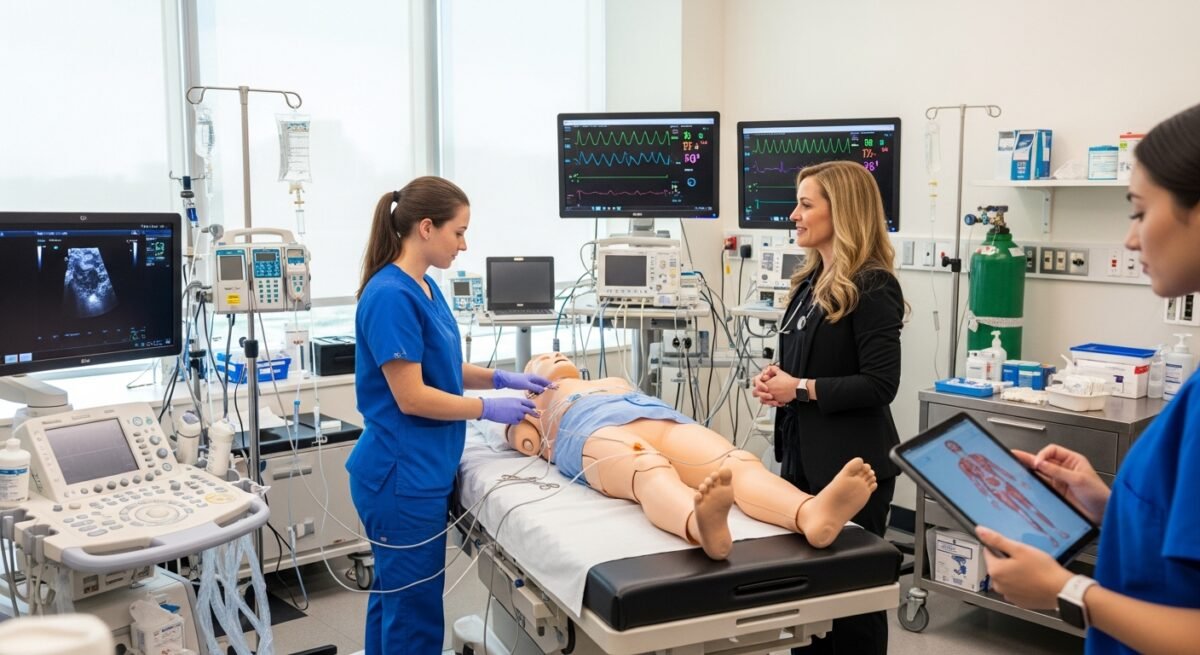
The immersive learning ecosystem often includes state-of-the-art simulation centers that go beyond basic task training. These centers feature high-fidelity manikins that mimic physiological responses, standardized patient actors, and virtual reality scenarios that recreate complex, high-stakes clinical situations in a risk-free environment. This simulation-based learning allows for the deliberate practice of technical skills, clinical reasoning, and interprofessional teamwork. The following elements are typically present in a robust clinical partnership model for an elite nursing department:
- Guaranteed placements at magnet-status or academically renowned medical centers.
- Preceptorship models pairing students with expert nurse clinicians for one-on-one training.
- Clinical rotations in specialized units like cardiac ICU, oncology, neonatal intensive care, and community-based public health.
- Integrated interprofessional education experiences with medical, pharmacy, and social work students.
- Opportunities for global health clinical electives in diverse international settings.
This level of immersion ensures that graduates enter the workforce with a confidence and clinical judgment typically seen in more experienced nurses, dramatically reducing the transition shock often associated with new graduate roles.
Outcomes and Career Trajectory of Graduates
The ultimate measure of an elite department of nurse education is the success of its alumni. Outcomes are quantitatively and qualitatively superior. Quantitatively, this is reflected in first-time NCLEX-RN pass rates consistently well above state and national averages, high graduation rates, and strong employment placement statistics, often with graduates receiving multiple job offers prior to graduation. Qualitatively, the outcomes are even more telling. Graduates from these programs are aggressively recruited into highly competitive nurse residency programs at prestigious hospitals, which are designed to support the transition into complex specialties.
The career trajectory of these graduates is accelerated and expansive. They are more likely to quickly assume charge nurse or leadership positions, pursue advanced practice registered nurse (APRN) certifications, and eventually move into executive leadership, policy, or academic roles. The network cultivated during their education—comprising influential faculty, clinical preceptors, and high-achieving peers—serves as a powerful professional asset throughout their careers. The elite program provides not just a degree, but a launchpad and a lifelong professional identity associated with excellence.
Selecting the Right Program for Your Aspirations
For a prospective student, identifying a truly elite department requires diligent research that looks deeper than rankings. Essential factors to investigate include the credentials and active engagements of the full-time faculty, the specifics of clinical placement partnerships, the availability of undergraduate research opportunities, and the career support services. Campus visits, conversations with current students and alumni, and reviewing graduate outcome data are invaluable. It is also crucial to assess the program’s culture and values: does it emphasize leadership, innovation, and social responsibility in alignment with your personal goals? The investment in such an education is significant, but the return—in terms of skill, opportunity, professional network, and career fulfillment—can be profound.
The pursuit of excellence in nursing education mirrors the quest for quality in all higher learning, underscoring the importance of thorough program evaluation. As explored in our resource on accredited degree programs and verified education, the bedrock of any reputable program, especially in a field as critical as nursing, is proper accreditation and a transparent record of educational quality.
Choosing to pursue a nursing degree within an elite educational framework is a decision that shapes a lifetime of practice. It represents a commitment to entering the profession at its highest standard, equipped not only to deliver exceptional patient care but also to question, improve, and lead the systems of care. These distinguished departments of nurse education are more than schools; they are incubators for the future leaders of healthcare, where clinical skill meets intellectual curiosity and a deep sense of professional duty. In doing so, they elevate the entire profession, one exceptional graduate at a time.