
What Defines Nursing Education at Its Best for Modern Students
Discover the key pillars that define top-tier nursing programs, from integrated clinical practice to robust student support systems, ensuring graduates are practice-ready leaders.

By Stacy Cignetti
The journey to becoming a nurse is more than just earning a degree, it is a transformative process that builds clinical expertise, ethical fortitude, and compassionate leadership. In an era of complex healthcare challenges and rapid technological advancement, aspiring nurses need an educational foundation that is both timeless in its values and cutting-edge in its methods. The quest for nursing education at its best is a search for programs that do not merely teach to a test, but instead cultivate the critical thinkers, empathetic caregivers, and adaptable professionals that the future of healthcare demands. This exploration goes beyond accreditation checklists to uncover the core pillars that create exceptional, life-changing learning experiences for nursing students.
The Foundational Pillars of Exceptional Nursing Programs
Superior nursing education rests on a tripod of equally critical components: rigorous academic theory, immersive clinical practice, and the intentional development of professional identity. The most effective programs seamlessly integrate these elements, ensuring that what is learned in the classroom is immediately reinforced and contextualized in real-world settings. This integration prevents the dangerous disconnect that can occur when theory and practice are taught in isolation. For instance, a lesson on pharmacokinetics is profoundly more impactful when a student can later discuss a patient’s specific medication response under the guidance of a clinical instructor.
Furthermore, nursing education at its best is inherently student-centered. It recognizes the diverse backgrounds of learners, from traditional undergraduates to career-changing adults in accelerated programs. This requires flexible, yet demanding, pathways that maintain high standards while providing the support necessary for different types of students to succeed. The curriculum is not static, it is a living framework that evolves in response to new evidence, public health trends, and feedback from both students and healthcare industry partners. This agility ensures graduates are prepared not for the healthcare system of yesterday, but for the realities they will face on their first day and throughout their careers.
Beyond the Classroom: Clinical Excellence and Simulation
The clinical component is the crucible where nursing students are forged into competent professionals. The best programs provide diverse, high-quality clinical placements that expose students to a wide spectrum of patient populations, acuity levels, and healthcare settings. These are not passive observation opportunities, they are structured, progressive experiences where responsibility increases alongside competency. A hallmark of excellence is strong, collaborative partnerships between the educational institution and leading hospitals, community clinics, long-term care facilities, and public health organizations. These partnerships ensure students learn in environments that are at the forefront of patient care.
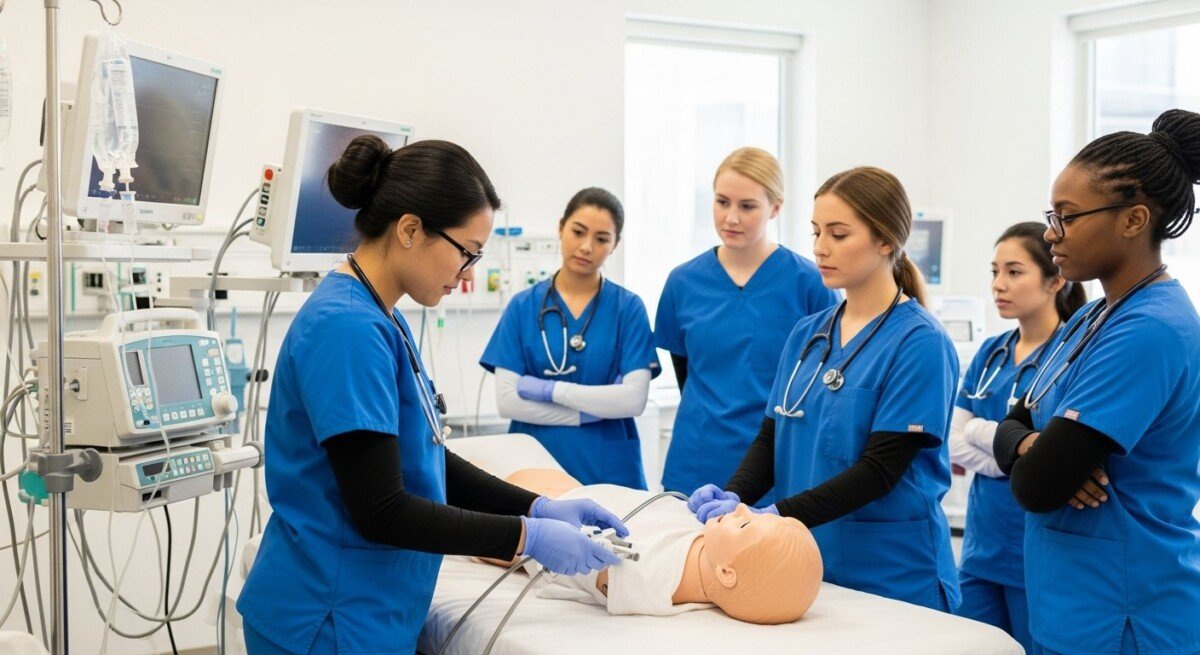
To bridge the gap between theory and live patient care, top-tier programs invest heavily in advanced simulation laboratories. These are not simple rooms with mannequins, they are high-fidelity environments that replicate hospital wards, emergency rooms, and home care settings. Simulation allows students to safely practice complex, high-stakes procedures, develop clinical judgment, and hone team communication skills without risk to patients. The most effective simulation experiences are followed by detailed debriefing sessions, a critical reflective practice that solidifies learning. This combination of extensive real-world clinical hours and sophisticated simulation prepares nurses who are confident, capable, and ready to contribute from day one.
Curriculum Design for a Complex Healthcare Landscape
A modern, exemplary nursing curriculum moves far beyond the traditional medical-surgical core. While that foundation remains essential, the best programs expand their scope to address the pressing issues of our time. This includes deep coursework in population health, health equity, and social determinants of health, teaching future nurses to see the patient within the full context of their life and community. Ethics is not a single module, but a thread woven throughout every course, preparing nurses to navigate the moral complexities inherent in modern medicine, from end-of-life care to resource allocation.
Technology and data literacy are now non-negotiable components of nursing education at its best. Students must be trained to use complex electronic health records (EHRs), interpret data for patient care decisions, understand telehealth platforms, and engage with emerging tools like AI diagnostics. Furthermore, leadership and systems thinking are introduced early. Nurses are the backbone of healthcare, and they must be educated to lead teams, improve processes, and advocate for system-level changes that enhance patient safety and care quality. A curriculum that embraces these broader competencies produces nurses who are not just task-completers, but innovators and leaders.
For those drawn to specific patient populations, specialized pathways offer a route to expertise. For example, a focus on geriatric care is increasingly vital. Our detailed resource on elite geriatric nursing education explores the advanced knowledge required to care for the aging population effectively, a testament to how top programs develop niche excellence within the broader field.
The Critical Role of Faculty and Mentorship
The quality of a nursing program is directly reflected in the quality of its faculty. The most impactful educators are those who maintain a dual presence: they are scholars who contribute to the nursing knowledge base through research, and they are clinicians who remain actively engaged in practice. This practice-academia link ensures that instruction is relevant, current, and grounded in the realities of the bedside. Faculty in the best programs are not just lecturers, they are mentors and role models who demonstrate professional comportment, clinical reasoning, and compassionate care.
Effective mentorship is a structured component of nursing education at its best. It often extends beyond individual courses to include formal advisor relationships, peer mentoring programs, and connections with alumni. This network provides students with guidance on academic progression, clinical challenges, career planning, and personal resilience. Seeing a successful nurse educator who is also a practicing clinician provides an invaluable template for students’ own future careers. The support system created by dedicated faculty can make the critical difference in student retention, success, and long-term professional satisfaction.
Support Systems for Student Success and Wellbeing
Nursing school is notoriously demanding, and exceptional programs recognize that student support is an academic imperative, not an optional luxury. A comprehensive support ecosystem addresses the holistic needs of the learner. Key components of this system include:
- Robust Academic Support: On-demand tutoring, writing centers focused on clinical documentation, and dedicated success coaches who help students develop effective study strategies for rigorous science and nursing courses.
- Mental Health and Wellness Resources: Proactive programming that addresses burnout, stress management, and resilience training. This includes access to counselors familiar with the unique pressures of healthcare education.
- Financial Guidance: Clear advising on tuition, fees, scholarship opportunities, and loan management to reduce the economic anxiety that can derail a student’s focus.
- Career Development Services: Early and ongoing support with resume writing for healthcare, interview preparation, and clinical placement networking that extends past graduation.
This infrastructure acknowledges that a student struggling with overwhelming stress, financial panic, or academic confusion cannot fully engage with complex material. By intentionally building these supports into the program fabric, institutions demonstrate a commitment to developing not only successful students, but also healthy, sustainable nursing professionals. The goal is to model the self-care and resource-seeking behavior that nurses must practice throughout their careers to avoid burnout and provide consistent, high-quality care.
Frequently Asked Questions
What is the most important factor to look for in a quality nursing program?
While accreditation is the non-negotiable baseline, the single most important factor is the program’s first-time NCLEX-RN pass rate. This is the ultimate objective measure of how well the curriculum and instruction prepare students for the national licensing exam and, by extension, for safe entry-level practice. Consistently high pass rates (significantly above the national average) are a strong indicator of a rigorous and effective education.
How important are simulation labs compared to actual clinical hours?
Both are essential and serve different, complementary purposes. State boards of nursing mandate a minimum number of direct patient care clinical hours. Simulation does not replace these real interactions, but it enhances them by providing a safe space to practice rare, critical, or complex scenarios repeatedly. The best programs use simulation to prepare students for clinical, making their live patient hours more valuable and less stressful.
Can a nursing program be considered “the best” if it is entirely online?
For pre-licensure programs (where the student is becoming an RN for the first time), a program cannot be entirely online due to the required hands-on clinical and lab components. However, for RN-to-BSN or graduate nursing programs (MSN, DNP), fully online programs from accredited institutions can be excellent. The key is to ensure the online program has strong clinical coordination for any practicum requirements and uses engaging, interactive technology for instruction.
What questions should I ask on a tour of a nursing school?
Ask about the student-to-faculty ratio in clinical settings, the variety of clinical placement sites, the availability of academic and mental health support, the career placement rate for graduates, and how the curriculum incorporates current topics like health informatics and health equity. Also, ask to speak with current students about their authentic experiences.
Ultimately, nursing education at its best is a dynamic partnership between a committed institution and a dedicated student. It is characterized by a curriculum that challenges and expands the mind, clinical experiences that test and refine skills, and a supportive culture that nurtures professional growth and personal resilience. This ideal education produces more than just nurses, it cultivates healthcare leaders, patient advocates, and lifelong learners who are equipped to adapt, lead, and provide exceptional care throughout the twists and turns of a demanding and rewarding career. The investment in finding such a program is the first, and perhaps most significant, act of care a future nurse will undertake for their patients and for themselves.