
What Defines Superior Studies for Nurse Practitioners?
Identify NP programs with rigorous academics, guaranteed clinical placements, and strong certification pass rates to launch a successful advanced practice career.

By Giovanna Rivera
For ambitious nurses, advancing to a Nurse Practitioner (NP) role represents a significant leap in clinical autonomy, scope of practice, and professional impact. However, the journey hinges on a critical decision: selecting the right graduate program. Not all NP programs are created equal. The concept of superior studies for nurse practitioners transcends mere accreditation; it encompasses a holistic educational experience designed to cultivate expert clinicians, leaders, and patient advocates. This article explores the defining characteristics of top-tier NP programs and provides a framework for identifying the educational pathway that will best prepare you for a successful and fulfilling career at the forefront of modern healthcare.
The Hallmarks of an Exceptional NP Program
Superior NP education is built upon a foundation of rigorous academics, robust clinical preparation, and a forward-thinking curriculum. The first and non-negotiable hallmark is full accreditation by either the Commission on Collegiate Nursing Education (CCNE) or the Accreditation Commission for Education in Nursing (ACEN). This ensures the program meets national standards for quality and is a prerequisite for licensure and certification. Beyond this baseline, exceptional programs demonstrate a commitment to outcomes. They publish strong first-time pass rates for national certification exams (e.g., through the American Nurses Credentialing Center or the American Academy of Nurse Practitioners), a direct indicator of how well they prepare students for the realities of board testing.
Furthermore, a superior curriculum is not static. It evolves to address contemporary healthcare challenges, integrating content on telehealth, population health management, health informatics, and social determinants of health. The faculty are not just academics but are often actively practicing NPs themselves, bringing current, real-world insights into the classroom. They serve as mentors, bridging the gap between theory and practice. Finally, these programs foster a culture of scholarly inquiry, encouraging students to engage in evidence-based practice projects or research, which is essential for advancing the nursing profession.
Curriculum Depth and Specialization Pathways
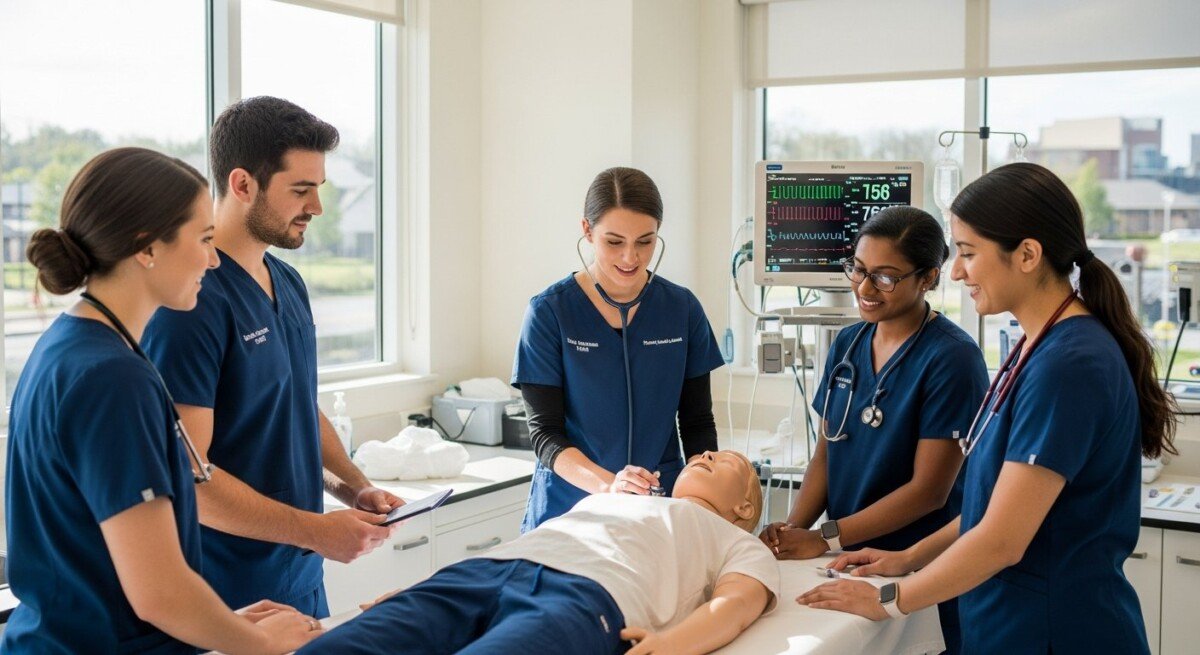
The core of any NP program is its curriculum, but depth and flexibility distinguish superior studies. All programs cover advanced pathophysiology, pharmacology, and physical assessment, but the delivery and application of this knowledge matter greatly. Look for programs that utilize high-fidelity simulation labs for complex patient scenarios before you enter live clinical rotations. This safe, controlled environment is invaluable for building confidence and clinical reasoning skills.
Perhaps the most significant decision within your NP studies is your chosen population focus. This specialization defines your future career path and patient population. Superior programs offer clear, well-developed tracks and the resources to support them. The primary options include:
- Family Nurse Practitioner (FNP): Prepares you to provide comprehensive care across the lifespan, from pediatrics to geriatrics. This is the most versatile and in-demand specialization.
- Adult-Gerontology Primary Care NP (AGPCNP): Focuses on health promotion, disease prevention, and management of acute and chronic illnesses in adults and older adults.
- Adult-Gerontology Acute Care NP (AGACNP): Trains you to manage complex, acute, and critical conditions in adult and elderly patients, often in hospital or specialty clinic settings.
- Psychiatric-Mental Health NP (PMHNP): Equips you to assess, diagnose, and provide therapy and medication management for patients with psychiatric and mental health disorders.
- Pediatric NP (PNP): Specializes in the care of infants, children, and adolescents, with options for primary or acute care focus.
When evaluating programs, scrutinize the specific course sequence for your desired track. A superior program will have a logical progression, integrated clinical hours specific to the population, and dedicated faculty experts in that specialty. The choice of specialization should align with your passions, career goals, and the healthcare needs you wish to address.
The Critical Role of Clinical Placements
Clinical rotations are the crucible where NP students transform knowledge into competent practice. A program’s approach to clinical placements is a paramount differentiator. Superior studies for nurse practitioners do not leave students to find their own preceptors. Instead, they have a dedicated clinical placement office with established partnerships across diverse healthcare settings: community health centers, private practices, hospitals, specialty clinics, and rural health facilities. This structured support is invaluable, reducing student stress and ensuring access to quality, vetted preceptors.
The quality and variety of these placements are crucial. A strong program will guarantee the required number of direct patient care hours (typically 500-800+ for Master’s programs and more for Doctorates) and will strive to provide experiences that match your interests. For example, an FNP student should have rotations in pediatrics, women’s health, adult primary care, and geriatrics. The best clinical experiences offer progressive autonomy under the guidance of a supportive preceptor, allowing you to gradually manage your own patient panel. Before enrolling, ask specific questions about the placement process, the types of sites available, and the level of support provided when challenges arise in a clinical setting.
Online vs. On-Campus Delivery: Evaluating the Modality
The proliferation of high-quality online NP programs has expanded access to superior studies dramatically. The decision between online and on-campus formats is personal and logistical, but both can offer excellent education. Top-tier online programs are not simply correspondence courses. They are dynamic, interactive, and intentionally designed for the working professional. They utilize synchronous (live) virtual classes, asynchronous discussion boards, recorded lectures from expert faculty, and sophisticated simulation software. A key indicator of quality is how they handle clinicals: reputable online programs still provide robust placement support in the student’s geographic region.
On-campus programs offer the traditional collegiate experience with more frequent face-to-face interaction with faculty and peers, which some students prefer for networking and hands-on skill labs. The hallmarks of a superior program in either modality include: a user-friendly learning management system (like Canvas or Blackboard), responsive technical support, accessible faculty office hours (virtual or in-person), and opportunities for student engagement beyond the classroom. When researching, prioritize programs that are transparent about their time commitments, technology requirements, and on-campus intensives (if any), often called “immersion” experiences in online programs for hands-on training.
Beyond the Master’s: The Value of the Doctor of Nursing Practice
While the Master of Science in Nursing (MSN) remains the entry-level degree for NP licensure, the Doctor of Nursing Practice (DNP) is increasingly recognized as the terminal practice degree and a marker of advanced study. Pursuing a DNP represents a commitment to the highest level of clinical expertise, systems leadership, and evidence-based practice. A DNP program builds upon MSN competencies, diving deeper into healthcare policy, organizational leadership, quality improvement science, and advanced clinical scholarship.
Superior DNP programs are practice-focused, not research-focused like a PhD. The culmination is often a large-scale DNP project that addresses a real-world clinical problem, such as implementing a new patient screening protocol, improving chronic disease management outcomes in a clinic, or analyzing the cost-effectiveness of a telehealth intervention. For NPs aiming for leadership roles in administration, healthcare policy, or complex clinical settings, the DNP can provide a significant competitive edge and the skills to drive change at a systemic level. Many superior MSN-to-DNP programs are designed for working NPs, offering flexible online formats to accommodate professional commitments.
Financial and Career Return on Investment
Investing in an NP education is a major financial decision. Superior studies should be evaluated through the lens of return on investment (ROI). This involves looking beyond just tuition costs. Consider the program’s length (time to degree), availability of scholarships, graduate assistantships, and employer tuition reimbursement partnerships. A slightly more expensive program with a shorter time-to-completion and strong placement support may lead you to a high-paying NP salary faster, offering a better overall ROI.
Furthermore, investigate the program’s career support services. Do they have a dedicated career counselor for graduate nursing students? Do they host networking events with healthcare employers? What is the employment rate for graduates within six months of licensure? A program invested in your long-term success will actively support your transition from student to practicing NP. The ultimate value of superior studies is measured not just in educational quality, but in how effectively they launch and sustain a rewarding, impactful career.
Frequently Asked Questions
What is the most important factor when choosing an NP program?
While multiple factors are important, the non-negotiable priority is ensuring the program is fully accredited by CCNE or ACEN. Without this, you cannot sit for certification or obtain state licensure. Immediately following accreditation, prioritize programs with a strong track record of certification exam pass rates and structured clinical placement support.
Can I work full-time while completing a superior NP program?
Many students do, especially in well-designed online or part-time programs. However, it requires exceptional time management. The most demanding periods will be during clinical rotations, which often mimic a full-time or part-time work schedule. Superior programs are transparent about weekly time commitments to help you plan accordingly.
How do I assess the quality of a program’s faculty?
Review faculty biographies on the program’s website. Look for a mix of academic credentials (Doctoral degrees) and relevant, current clinical practice experience. Faculty who are actively publishing, presenting at conferences, or involved in professional organizations are often engaged in cutting-edge practice.
Is the DNP degree required to practice as an NP?
No, currently an MSN is sufficient for entry-level NP practice and licensure. However, several national nursing organizations have discussed moving the entry-level requirement to the DNP in the future (a proposal often called “the DNP by 2026”), though no mandate is currently in place. A DNP is highly valuable for leadership roles.
What questions should I ask during a program interview or information session?
Ask about first-time certification pass rates for your specific track, the student-to-faculty ratio in clinical courses, the process and success rate for clinical placement assistance, the support systems for student wellness, and examples of where recent graduates are employed.
Choosing the right path for your advanced nursing education is a decision that will shape your professional identity and capacity for patient care. Superior studies for nurse practitioners are characterized by a synergistic blend of rigorous academics, immersive and supported clinical training, expert faculty mentorship, and a steadfast commitment to student success. By meticulously evaluating programs against these criteria, you invest not only in a degree but in a foundation for a lifetime of leadership and clinical excellence at the highest level of nursing practice.