
Navigating Premier Nursing Education Options for Your Career
Identify the right nursing pathway, from BSN to DNP, to maximize your career opportunities and clinical impact. Explore premier nursing education options for every ambition.

By Jeffrey Hartford
Choosing the right educational path is the single most critical decision a future nurse can make. It sets the foundation for clinical competency, career trajectory, and lifelong professional impact. The landscape of premier nursing education options is vast and varied, designed to meet diverse backgrounds, goals, and life circumstances. From accelerated programs for career-changers to doctoral tracks for aspiring leaders, understanding the nuances of each pathway is essential for making an informed investment in your future. This guide will demystify the tiers of nursing education, helping you identify the program that aligns with your ambition to join this vital profession.
Understanding the Tiers of Nursing Credentials
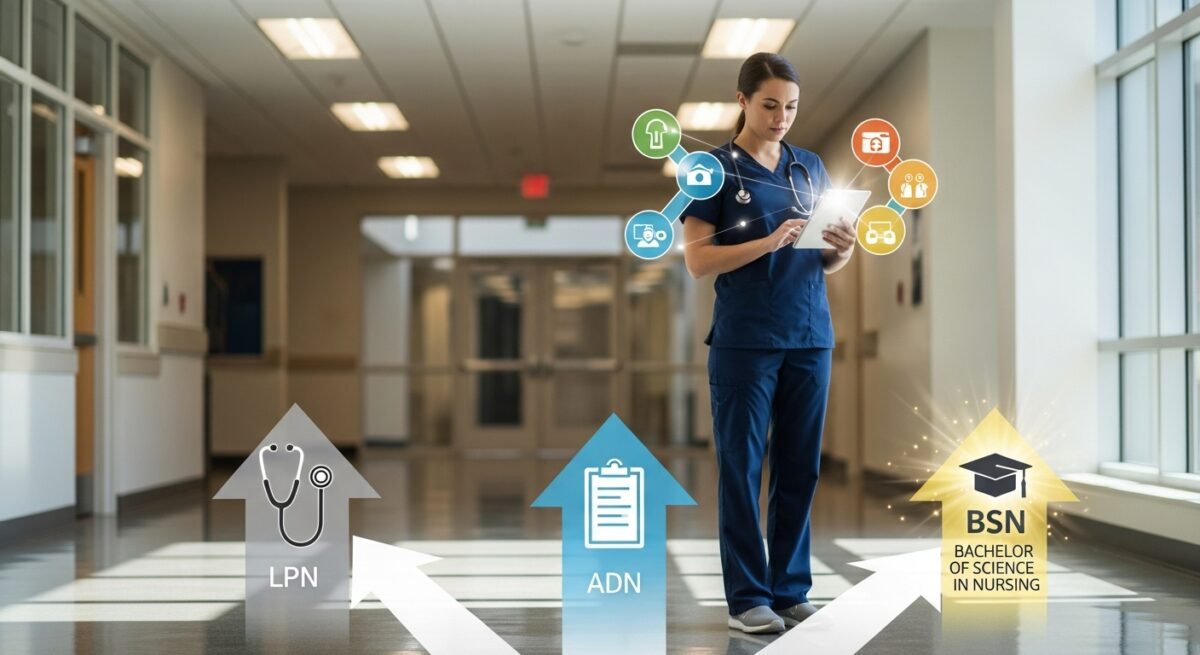
The journey to becoming a nurse typically begins with one of three primary entry points: the Practical/Vocational Nurse Diploma (LPN/LVN), the Associate Degree in Nursing (ADN), or the Bachelor of Science in Nursing (BSN). Each represents a different level of preparation, scope of practice, and career ceiling. LPN/LVN programs, often offered at community colleges or technical schools, provide foundational training in basic nursing care and can be completed in about 12 months. ADN programs, also commonly found at community colleges, take approximately two to three years and prepare graduates to sit for the RN licensure exam (NCLEX-RN). The BSN, a four-year degree offered at universities, encompasses all the clinical training of an ADN but adds deeper coursework in leadership, community health, research, and the sciences. This broader educational base is increasingly becoming the industry standard for premier nursing education options.
While all three pathways can lead to RN licensure (with the LPN requiring a bridge program), the distinction matters profoundly for long-term career advancement. Many premier healthcare institutions, especially large academic medical centers and magnet hospitals, now strongly prefer or exclusively hire BSN-prepared nurses. This “BSN preference” is driven by studies linking higher education levels to better patient outcomes, including lower mortality rates and fewer medication errors. Furthermore, a BSN is often a prerequisite for moving into specialized nursing roles, management, or graduate study. Therefore, when evaluating programs, consider not just the time to licensure, but the long-term flexibility and opportunities each degree affords.
The Hallmarks of a Truly Premier Nursing Program
Not all nursing programs are created equal. Identifying a premier option requires looking beyond basic accreditation (which is non-negotiable) to specific indicators of quality and student success. The most reliable marker is a consistently high NCLEX-RN first-time pass rate, which reflects the program’s effectiveness in preparing students for the rigors of licensure and practice. You should also investigate the program’s clinical placement partnerships. Premier programs have strong relationships with a variety of top-tier healthcare facilities, ensuring students gain hands-on experience in diverse settings like emergency departments, pediatric units, and community clinics. This real-world training is irreplaceable, as discussed in our resource on building clinical expertise in nursing education.
Other critical factors include faculty credentials (look for instructors who maintain active clinical practice), student support services like tutoring and NCLEX preparation, and simulation lab technology. Modern simulation labs with high-fidelity manikins allow students to practice complex procedures and critical decision-making in a risk-free environment. When researching, consider the following key differentiators of top-tier programs:
- Consistently High NCLEX Pass Rates: Significantly above state and national averages.
- Robust Clinical Partnerships: Access to respected hospitals and healthcare systems for rotations.
- Expert Faculty: Instructors with advanced degrees and current clinical experience.
- Comprehensive Student Support: Dedicated academic, career, and licensure coaching.
- Advanced Simulation Resources: State-of-the-art labs that mimic real clinical environments.
Ultimately, a premier program is characterized by a culture of excellence that supports students from admission through graduation and into their first nursing position. It invests in resources that translate directly to clinical confidence and professional readiness.
Accelerated and Second-Degree Pathways
For individuals who already hold a bachelor’s degree in another field, accelerated BSN (ABSN) programs represent a premier and efficient nursing education option. These intensive, full-time programs compress the standard BSN curriculum into 11 to 18 months of rigorous study. They are designed for highly motivated, academically proven students who can manage a fast-paced schedule of lectures, labs, and clinical rotations. The appeal is clear: a rapid transition into a high-demand profession. However, the intensity cannot be overstated, these programs typically require a full-time commitment, making it difficult to maintain employment while enrolled.
Similarly, RN-to-BSN programs cater to nurses who initially earned an ADN or diploma and are now seeking to advance their education. These programs, often offered online to accommodate working nurses, build upon prior knowledge and clinical experience. They focus on the baccalaureate-level competencies in research, public health, leadership, and informatics that are essential for modern nursing practice. Many hospitals now offer tuition reimbursement or incentives for nurses to complete their BSN, recognizing the value it brings to the organization. For the practicing RN, these programs are a premier option for career advancement without stepping away from the bedside.
Graduate Level Nursing Education: MSN and DNP
For nurses aiming at the highest levels of clinical specialization, leadership, or academia, graduate education is the definitive premier pathway. The Master of Science in Nursing (MSN) is the gateway to becoming an Advanced Practice Registered Nurse (APRN), which includes roles like Nurse Practitioner (NP), Clinical Nurse Specialist (CNS), Certified Nurse-Midwife (CNM), and Certified Registered Nurse Anesthetist (CRNA). These roles come with significantly greater autonomy, prescriptive authority, and earning potential. MSN programs are highly competitive and require intensive specialization in areas such as family practice, psychiatry, pediatrics, or anesthesia.
The Doctor of Nursing Practice (DNP) has emerged as the terminal practice-focused degree in nursing. While an MSN is sufficient for APRN licensure, the DNP represents a shift toward requiring doctoral-level preparation for advanced practice. The DNP curriculum emphasizes evidence-based practice, quality improvement, systems leadership, and healthcare policy. It prepares nurses to translate research into practice at the highest level, whether leading organizational change, designing public health initiatives, or managing complex patient populations. For nurses committed to shaping the future of healthcare delivery and patient outcomes, the DNP is increasingly viewed as the premier educational credential.
Selecting the Right Program for Your Goals
The choice among these premier nursing education options is deeply personal and strategic. It requires an honest assessment of your current situation, resources, and ultimate career vision. A prospective student should start by defining their “why.” Are you seeking the fastest route to licensure, the strongest foundation for a long-term career, or preparation for an advanced practice role? Your answer will point you toward the appropriate degree level. Next, conduct a practical inventory of your life. Consider factors like time availability, financial resources, geographic flexibility, and family obligations. An accelerated BSN demands a different lifestyle than a part-time online RN-to-BSN program.
Once you have a target pathway, research becomes paramount. Utilize official program websites, but go further. Attend virtual or in-person information sessions. Reach out to admissions counselors with specific questions. If possible, connect with current students or alumni on professional networks like LinkedIn to gain insider perspectives on the program’s strengths and challenges. Compare concrete data points: total cost (including fees), NCLEX pass rates for the past five years, graduation rates, and job placement statistics. This due diligence ensures your choice is not just prestigious on paper, but the right fit for your success. The ideal premier nursing program is one that challenges you, supports you, and aligns perfectly with your professional aspirations, equipping you not just to pass a test, but to excel in a demanding and rewarding career.