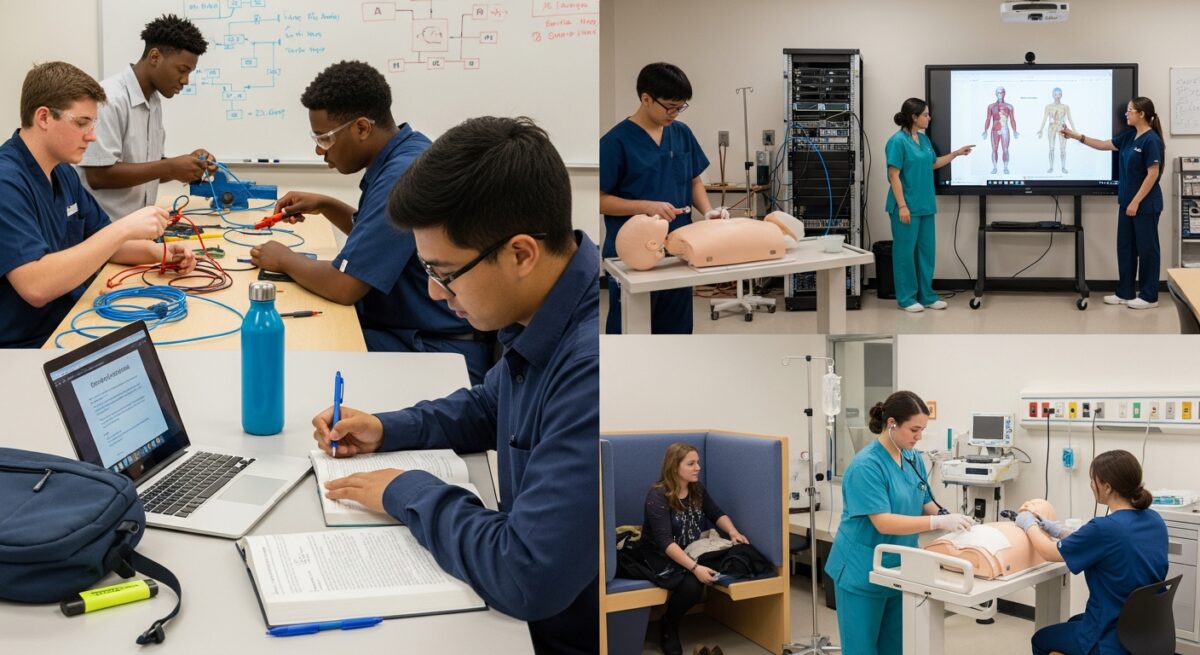
In today’s fast-paced economy, the traditional four-year degree is no longer the only viable path to a stable, high-paying career. A growing number of individuals are turning to targeted, high paying certificate programs for fast careers, seeking to gain specific, in-demand skills without the significant time and financial investment of a full degree. These short term certification careers offer a direct route to employment, often in fields experiencing critical talent shortages. Whether you’re a recent high school graduate, a career changer, or a professional looking to upskill, understanding the landscape of quick skill programs can be the key to unlocking new opportunities and achieving financial security in a matter of months, not years.
The Strategic Value of Career-Focused Certificates
The appeal of certificate programs lies in their laser focus on employability. Unlike broader academic degrees, these programs are designed in close consultation with industry leaders to teach the precise technical and practical skills employers need right now. This creates a direct pipeline from the classroom to the workplace. For many, the return on investment is clear: lower upfront costs, shorter completion times (often between three months to a year), and a curriculum devoid of general education requirements that may not directly contribute to job readiness. This model is particularly powerful in technology, healthcare, and skilled trades, where methodologies and tools evolve rapidly and the market rewards current, hands-on competency over theoretical knowledge alone.
It is crucial, however, to approach these programs with a discerning eye. Not all certificates hold equal weight. The value of a credential is tied to its industry recognition, the reputation of the issuing institution, and its alignment with actual job requirements. Prospective students should prioritize programs that offer hands-on projects, potential internship placements, and career support services. Furthermore, while these programs provide fast entry, they often represent the beginning of a learning journey. Many professionals use a certificate as a stepping stone, later complementing it with additional certifications or even applying credits toward an associate or bachelor’s degree, a pathway explored in our guide on high paying careers with short term degrees.
Leading High Paying Certificate Pathways
Several fields stand out for offering robust salaries to certificate holders, often rivaling or exceeding those of careers requiring traditional four-year degrees. The common thread is a high demand for specific technical skills that solve immediate business or societal needs.
Technology and IT Certifications
The digital transformation across all sectors has created an insatiable demand for IT professionals. Certificates in this field are highly standardized and respected, often offered by vendors like Cisco, Microsoft, Amazon Web Services (AWS), and CompTIA. These credentials validate an individual’s ability to manage networks, secure data, develop software, or work with cloud infrastructure. For example, an AWS Certified Solutions Architect or a Certified Ethical Hacker can command a significant salary premium immediately after certification. These programs are intensive and require dedicated study, but they directly correlate to job roles such as network administrator, cybersecurity analyst, or cloud support engineer.
Healthcare and Clinical Support Roles
Healthcare remains one of the most stable and growing career sectors. Numerous patient-facing and technical roles require certificates rather than degrees, offering a critical entry point into this rewarding field. Programs for roles like Radiologic Technologist, Surgical Technologist, Dental Hygienist, or Medical Coder/Biller typically take one to two years and include mandatory clinical hours. These positions are essential to clinical operations, offer competitive pay and benefits, and provide a profound sense of purpose. The certification process often includes a national exam, ensuring a standardized level of competency that is recognized by employers nationwide.
Skilled Trades and Technical Specialties
The skilled trades gap is a well-documented economic challenge, making certificates in these areas incredibly valuable. Programs for electricians, welders, HVAC technicians, and industrial maintenance mechanics are often offered through community colleges or union apprenticeships. These paths combine classroom instruction with paid, on-the-job training. The earning potential is high, with opportunities for overtime, specialization, and eventually business ownership. These careers are largely recession-resistant and cannot be outsourced, providing long-term job security.
Selecting the Right Program for Your Goals
Choosing among the many available high paying certificate programs requires careful research and self-assessment. A strategic approach will maximize your chances of success and a strong return on investment.
First, conduct a thorough analysis of your target job market. Use job boards like LinkedIn and Indeed to identify the most frequently requested certificates for the roles you desire. Note the specific skills mentioned and the names of the certifying bodies. Second, investigate the program provider. Is it an accredited community college, a reputable technical school, or an industry-recognized training institute? Look for programs with high graduation rates, strong job placement statistics, and partnerships with local employers. Be wary of programs that make exaggerated claims about salaries or job guarantees without providing verifiable data.
Finally, consider the total cost and format. Compare tuition, fees, and required materials. Determine if the program is offered online, in-person, or in a hybrid format to fit your schedule. Many quality degree programs online also offer certificate tracks, providing flexibility for working adults. Remember to explore financial aid options, including federal aid (if the institution is eligible), scholarships, employer tuition reimbursement, and state-specific workforce development grants designed to fund training for in-demand occupations.
Maximizing Success During and After Your Program
Enrolling in a certificate program is just the first step. To truly capitalize on this investment and launch a fast career, you must be proactive. During the program, treat it like a job. Network with your instructors, who are often industry professionals, and with your classmates. Engage fully with hands-on labs and projects, as these will become the core of your professional portfolio. Seek out volunteer or freelance opportunities to apply your nascent skills in real-world settings, even if unpaid initially, as this experience is invaluable.
Upon completion, the work continues. Immediately prepare for any required certification exams. Update your resume and LinkedIn profile to prominently feature your new credential and the concrete skills you mastered. Use the career services office extensively for resume reviews, mock interviews, and job leads. When applying for jobs, tailor your cover letter to explain how your specific certificate training directly addresses the challenges mentioned in the job description. Frame yourself not just as a candidate, but as a problem-solver who can contribute from day one.
Frequently Asked Questions
Are certificate programs worth it financially compared to a degree?
For many in-demand fields, yes. The key metric is return on investment (ROI). Certificates typically have a lower upfront cost and shorter time to completion, allowing you to enter the workforce and start earning a salary much sooner. While some degree-holding roles may have a higher long-term ceiling, certificates can provide immediate, high-paying employment with less student debt.
Can I get financial aid for a certificate program?
It depends on the institution. If the certificate program is offered by an accredited college or university that participates in federal student aid programs, you may be eligible for grants and loans. Many trade schools and private institutes also offer payment plans or private financing. Always complete the Free Application for Federal Student Aid (FAFSA) to check eligibility and research state workforce development grants.
Do employers really value certificates?
In technical, healthcare, and trade fields, respected industry certifications are not just valued, they are often mandatory hiring requirements. They provide a standardized, trusted validation of your skills. For career changers, a certificate demonstrates a committed, focused investment in gaining relevant skills, which employers view positively.
Can I transfer certificate credits to a degree program later?
Many community colleges and some universities have “stackable credential” models where credits from a certificate can be applied toward an associate or bachelor’s degree in a related field. This is a powerful strategy for career advancement. You must confirm this articulation agreement with the specific schools before enrolling in the certificate program.
How do I avoid certificate program scams?
Research is your best defense. Avoid programs that pressure you to enroll immediately, promise guaranteed unrealistically high salaries, have no physical address or verifiable accreditation, or require you to sign a confusing contract. Always check reviews, contact the school’s career services department directly, and verify job placement rates with independent sources if possible.
The landscape of education and career preparation is evolving. High paying certificate programs for fast careers represent a pragmatic and powerful alternative for achieving professional and financial goals. By carefully selecting an in-demand field, choosing a reputable program, and proactively managing your career launch, you can build a stable, rewarding future on an accelerated timeline. These short term certification careers prove that focused, applied learning is a direct and effective pathway to success in the modern workforce.