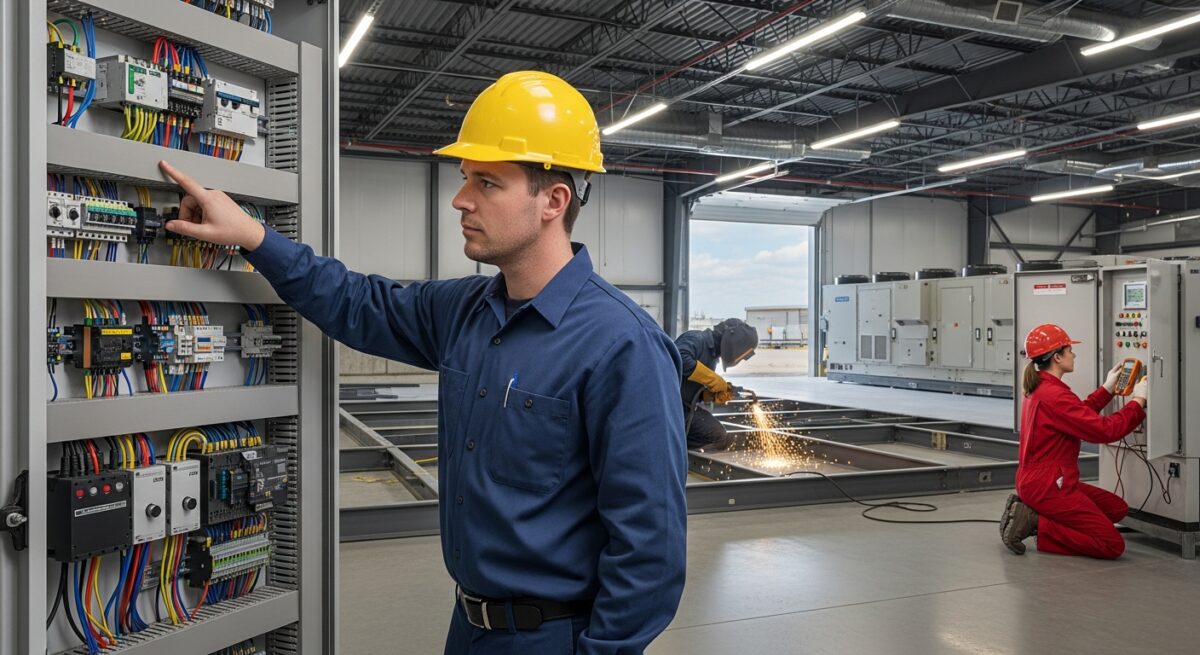
For decades, the narrative around career success has centered on a four-year college degree as the only reliable path to a comfortable life. Yet a quiet revolution is underway. Skilled trades and manual labor roles are commanding salaries that rival or surpass many white-collar positions, often with far less student debt. The demand for electricians, plumbers, welders, and HVAC technicians has never been higher, driven by infrastructure needs, an aging workforce, and a growing appreciation for hands-on expertise. This article explores the most lucrative opportunities in this space and provides a roadmap for entering these high paying manual labor jobs and skill based careers.
Understanding the landscape of trade careers salary expectations is the first step. While the public perception often undervalues physical work, the numbers tell a different story. A commercial diver, for example, can earn over $100,000 annually, while a power plant operator often exceeds $90,000. These roles require specialized training, but the investment in time and money is typically far lower than a traditional bachelor’s degree. For those willing to learn a craft and work diligently, the financial rewards are substantial. This guide will break down the top roles, the training pathways, and how to position yourself for success in this thriving sector of the economy.
What Defines a High Paying Manual Labor Job?
Let us clarify what we mean by manual labor in this context. We are not referring to unskilled, low-wage work. Instead, we are focusing on skilled labor jobs that demand technical knowledge, physical dexterity, and often a certification or apprenticeship. These are roles where you solve complex problems with your hands and your mind. The compensation reflects the value of that expertise. For instance, an elevator installer must understand sophisticated electronics and safety systems, and the median pay for this role exceeds $90,000 per year.
The definition of a high paying manual labor job also includes roles that carry physical risk or require work in challenging environments. Linemen who restore power after storms, underwater welders who repair oil rigs, and heavy equipment operators who shape the landscape all command premium wages. These are not jobs everyone can do, which is exactly why they pay so well. The combination of skill, risk, and demand creates a powerful economic opportunity for those who pursue these paths.
Top Skilled Labor Jobs with Excellent Salaries
When people search for high paying manual labor jobs and skill based careers, they often want concrete examples. The following list represents some of the most financially rewarding roles in the trades. Each entry includes typical duties, training requirements, and salary ranges to help you evaluate your options.
1. Elevator Installer and Repairer
Elevator installers work on escalators, moving walkways, and passenger elevators. They read blueprints, install electrical components, and test systems for safety and performance. This job requires strong mechanical aptitude and a willingness to work at heights. Most workers enter through a four-year apprenticeship program. The median annual wage is around $95,000, with experienced workers earning significantly more.
2. Power Plant Operator
Power plant operators control the systems that generate electricity. They monitor gauges, adjust controls, and respond to emergencies. This role demands attention to detail and the ability to work in shifts. Training often involves a combination of on-the-job experience and technical coursework. Salaries typically range from $80,000 to $100,000 per year, with top earners in nuclear plants exceeding $120,000.
3. Commercial Diver
Commercial divers perform underwater construction, inspection, and repair. They work on bridges, dams, oil rigs, and ships. This is one of the most physically demanding and risky skilled labor jobs, which is reflected in the pay. Divers must complete a rigorous training program and maintain certification. Earnings can reach $100,000 annually, and experienced saturation divers can earn $200,000 or more.
4. Electrician
Electricians install and maintain electrical systems in homes, businesses, and factories. The field offers excellent job security and a clear career progression. Apprenticeships last four to five years and combine paid work with classroom instruction. Journeyman electricians earn a median of $60,000, while master electricians and those who start their own businesses can earn well over $100,000.
5. Plumber, Pipefitter, and Steamfitter
Plumbers and pipefitters work with piping systems for water, gas, and waste. They install fixtures, repair leaks, and assemble complex systems in industrial settings. The training path is similar to electricians, involving a multi-year apprenticeship. Median wages hover around $60,000, but experienced workers in high-demand areas can earn $90,000 or more.
Training Pathways for Trade Careers Salary Growth
One of the most appealing aspects of trade careers salary progression is the low barrier to entry. You do not need a university degree. Instead, you need a combination of technical education and hands-on experience. The most common pathways include apprenticeships, vocational schools, and community college programs. Apprenticeships are particularly valuable because you earn while you learn, avoiding the debt trap that plagues many college graduates.
For example, the International Brotherhood of Electrical Workers (IBEW) offers a structured apprenticeship that takes you from beginner to journeyman in about five years. During that time, your wages increase steadily as you gain skills. After completing the program, you are a certified professional with a clear career trajectory. Similarly, the United Association of Plumbers and Pipefitters runs one of the most respected apprenticeship programs in the country. These programs are competitive but provide a direct route to high paying manual labor jobs and skill based careers.
Vocational schools offer a faster path for some roles. You can complete a welding certificate in six months or a heavy equipment operator program in a few weeks. These shorter programs are ideal for people who want to start working quickly. However, the long-term earning potential is often higher for those who complete a full apprenticeship, as the depth of training leads to more advanced certifications and specialties.
How to Choose the Right Skilled Labor Job for You
Selecting among these skilled labor jobs requires honest self-assessment. Consider your physical abilities, your tolerance for risk, and your interest in working indoors versus outdoors. Do you enjoy working with your hands on small components, or do you prefer operating large machinery? Are you comfortable working at heights or in confined spaces? These questions will guide you toward the right fit.
It is also wise to research local demand. Some trades are booming in specific regions. For example, welders are in high demand in oil and gas states like Texas and North Dakota, while electricians are always needed in growing cities. Use job boards and Bureau of Labor Statistics data to identify which roles are growing fastest in your area. This research will help you invest your training time in a path with strong job prospects.
For readers exploring all career options, including traditional academic routes, our guide on 15 High Paying College Degrees for a Secure Career Path provides a useful comparison. That resource outlines degree-based careers that also offer strong financial returns, which may be worth considering alongside trade paths.
The Role of Certification and Licensing
In most trades, certification and licensing are not optional. They are legal requirements that protect public safety. For example, you cannot work as an electrician or plumber without a state-issued license. These credentials require passing an exam and demonstrating a certain number of work hours. While the process takes time, it also creates a barrier to entry that keeps wages high for those who qualify.
Certifications also allow you to specialize. A welder with a certification in underwater welding can earn multiples of a general welder’s salary. A crane operator with a National Commission for the Certification of Crane Operators (NCCCO) credential is far more employable than one without. Investing in advanced certifications is one of the best ways to increase your earnings in high paying manual labor jobs and skill based careers.
Benefits Beyond Salary
While the pay is excellent, the benefits of trade careers go beyond the paycheck. Many trades offer strong union representation, which means better benefits, retirement plans, and job security. Union electricians and plumbers often have health insurance and pension plans that rival those in corporate America. Additionally, the work is often portable. A licensed electrician can find work in almost any city in the country, providing geographic flexibility that many white-collar jobs lack.
Another intangible benefit is the satisfaction of creating tangible results. When you install a wiring system or repair a critical pipe, you can see the direct impact of your work. This sense of accomplishment is a powerful motivator that many office workers never experience. For those who value autonomy and hands-on problem-solving, these careers offer a level of fulfillment that is hard to find elsewhere.
Frequently Asked Questions
1. What is the highest paying manual labor job?
Commercial diving, particularly saturation diving, is among the highest paying manual labor roles, with experienced divers earning over $200,000 annually. Elevator installers and power plant operators also earn six figures.
2. Do I need a college degree for these jobs?
No. Most high paying manual labor jobs and skill based careers require a high school diploma and completion of an apprenticeship or vocational program. Some roles require certification or licensing, but not a college degree.
3. How long does it take to become a skilled tradesperson?
Apprenticeships typically last 4-5 years and combine paid work with classroom training. Some vocational programs can be completed in 6-12 months for specific skills like welding or heavy equipment operation.
4. Are trade careers stable in the long term?
Yes. Many trades face a labor shortage as experienced workers retire. The Bureau of Labor Statistics projects strong growth for electricians, plumbers, and HVAC technicians over the next decade.
5. Can I make a six-figure income in the trades?
Absolutely. Electricians, plumbers, elevator installers, and commercial divers commonly earn six-figure incomes, especially with overtime, specialization, or union membership.
For more detailed guidance on career planning and educational pathways, explore the resources available at CollegeDegree.school, where you can find program comparisons and school listings tailored to your goals.
Final Thoughts on Building a Career in the Trades
The evidence is clear: high paying manual labor jobs and skill based careers offer a viable, often superior alternative to the traditional college path. The combination of strong wages, low educational debt, and high job satisfaction makes these roles attractive for a wide range of people. Whether you are a high school graduate looking for a direct route to a good living, or a career changer seeking more hands-on work, the trades provide a clear and rewarding path.
Take the time to research the specific trade that aligns with your interests and local market conditions. Reach out to local unions or trade schools to learn about apprenticeship openings. The demand for skilled workers is not going away, and those who enter these fields now are positioning themselves for a prosperous future. The tools of the trade are waiting, and the earning potential is real.